Swap lines as diplomatic currency
Updated 1 hour ago

Annual inflation-adjusted hikes, climate tax on industry recommended
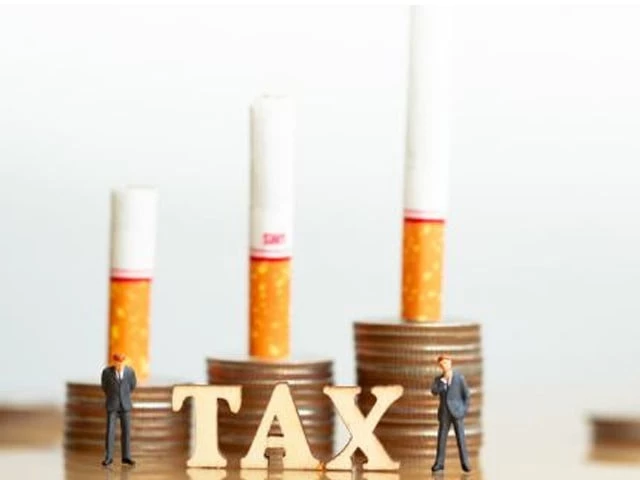
Economists, public health and environmental experts have called upon the government to end the freeze on tobacco taxation, introduce inflation-adjusted annual increases in cigarette taxes, and consider a climate tax on the tobacco industry, warning that continued inaction is imposing high costs on Pakistan's health system, economy and environment.
The recommendations were made during a policy dialogue titled "The Cost of Inaction: Tobacco Tax Freeze in Pakistan's 2026-27 Budget," jointly organised by the Sustainable Development Policy Institute (SDPI) and the Social Policy and Development Centre (SPDC).
Dr Irfan Chatha, Research Fellow at SDPI, said tobacco taxation should be viewed primarily as a public health measure rather than merely a revenue-generating tool. He noted that many countries impose significantly higher tobacco taxes than Pakistan, citing Vietnam where tobacco taxes account for around 60% of the retail price.
Asif Iqbal, Managing Director of SPDC, said no changes had been made in federal excise duty on cigarettes since 2023 despite Pakistan's fiscal challenges. Because cigarette taxes are imposed as specific taxes rather than ad valorem taxes, inflation has significantly eroded their real value. According to SPDC estimates, the real tax burden on economy cigarette brands has declined by around Rs26 per pack, while the tax burden on premium brands has fallen by approximately Rs84 per pack.
Iqbal argued that the freeze effectively subsidises both tobacco manufacturers and smokers by making cigarettes more affordable in real terms. He recommended institutionalising annual inflation-based adjustments and gradually increasing the tax burden on economy cigarette brands to reduce consumer shifting from premium to cheaper products.
Waseem Iftikhar Janjua, Visiting Researcher at SDPI, said tobacco causes environmental damage throughout its entire life cycle. Presenting SDPI's findings, he said tobacco cultivation contributes to land degradation, deforestation and excessive pesticide use. Manufacturing, transportation and consumption further add to greenhouse gas emissions.
Janjua stated that producing a single cigarette consumes approximately 3.7 litres of water and generates around 14 grams of carbon dioxide emissions. Tobacco filters are a major source of microplastic pollution, while cigarette butts contaminate water bodies and soil with toxic chemicals. He estimated that tobacco-related waste and environmental degradation impose billions of rupees in annual costs.
He urged authorities to require the tobacco industry to publicly report emissions and pollution data and comply fully with environmental regulations. He also proposed introducing a climate tax on the tobacco industry in the next federal budget.
Waseem Saleem, representative of the World Health Organisation (WHO) Pakistan, emphasised that the primary purpose of tobacco taxation is to reduce consumption and improve public health. He rejected the industry's claim that higher taxes reduce government revenues, noting that evidence shows significant tax increases lower cigarette consumption while increasing revenue collection.
Saleem said affordability remains a key challenge, as rising incomes and population growth can offset the impact of static tax rates. He also challenged the industry's argument linking higher taxes with illicit trade, noting that experiences from Bangladesh and Sri Lanka demonstrate that illicit trade is more closely related to enforcement and tax administration than tax rates themselves.













This material may not be published, broadcast, rewritten, redistributed or derived from. Unless otherwise stated, all content is copyrighted © 2026 The Express Tribune.







COMMENTS
Comments are moderated and generally will be posted if they are on-topic and not abusive.
For more information, please see our Comments FAQ