CM Maryam claims improved rainwater drainage
Updated 5 hours ago

As the government pushes a monitoring system to improve accountability and patient services, concerns over privacy con

The Punjab government's body camera initiative in public hospitals, aimed at improving healthcare services, strengthening staff accountability, and ensuring faster complaint resolution, is being projected as a major reform in the province's health system. However, months after its launch, the project continues to face scrutiny over its cost, contract details, data security measures, and protection of patient privacy, while full-scale implementation remains incomplete.
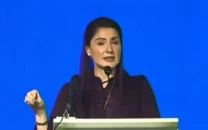
On the instructions of Punjab Chief Minister Maryam Nawaz, the government decided this year to introduce body-worn cameras in public hospitals. The pilot phase began in Lahore's major teaching hospitals, including Mayo Hospital, Services Hospital, Jinnah Hospital, Lahore General Hospital, Sir Ganga Ram Hospital, and Children's Hospital Lahore. Initially, pharmacists, security personnel, storekeepers, and some paramedical staff were provided with cameras, with plans to expand the program to other departments.
According to Health Department officials, the project aims to reduce disputes between patients and staff, improve complaint handling, strengthen oversight of medical services, and enhance discipline in hospitals. The government argues that body cameras and CCTV monitoring will help ensure more respectful and timely care for patients.
As part of the initiative, several government hospitals are also being connected to the monitoring network of the Punjab Safe Cities Authority to improve surveillance in emergency wards, outpatient departments, and other key areas.
Despite these objectives, implementation has faced challenges. Hospital administrations across Punjab claimed that they have not yet received the full technical infrastructure, training, and equipment required for the program. While some hospitals have partially adopted the system, progress in many districts remains limited.
Doctors and healthcare workers have also raised concerns, arguing that recording in sensitive areas such as emergency rooms, intensive care units, gynaecology wards, and labour rooms could compromise patient privacy. Medical professionals noted that patients often share highly personal and confidential information during treatment, and continuous recording may conflict with medical ethics.
A representative of the Young Doctors Association, speaking anonymously, noted that the government should first establish clear rules and safeguards to protect the rights of both patients and healthcare workers.
Patients, however, have expressed mixed but generally positive views. Muhammad Ejaz, a relative of a patient at Mayo Hospital, believed that if cameras improve staff behavior and allow complaints to be addressed more quickly, the initiative would be beneficial. However, the privacy of women and vulnerable patients must be fully protected.
The project has also raised questions about financial transparency. Government records show that the Health Department issued tenders for 100 body-worn cameras, docking stations, data-storage systems, and related software, but the total cost of the project has not been made public. It is also unclear which company received the contract or how the procurement process was completed.
Civil society leader Abdullah Malik argued that the government should disclose the project's total cost, the number of cameras purchased, the contractor's identity, the price of each camera, where recordings will be stored, who will have access to the data, what legal protections exist for patient privacy, and when the project will be expanded across Punjab.
Healthcare expert Dr Salman Kazmi noted that surveillance systems can be useful, but their success depends not only on installing cameras. Effective policies, financial transparency, data security, and strong protections for patients' rights are equally important.
For now, the Lahore pilot is being viewed as an important experiment in modernizing Punjab's healthcare system. However, until its financial, administrative, and legal details are fully disclosed, public debate and questions surrounding the initiative are likely to continue.













This material may not be published, broadcast, rewritten, redistributed or derived from. Unless otherwise stated, all content is copyrighted © 2026 The Express Tribune.






COMMENTS
Comments are moderated and generally will be posted if they are on-topic and not abusive.
For more information, please see our Comments FAQ