
Partnership with Google
Updated Aug 26, 2026

Perils of this practice are largely unaccounted for, yet its implications can be far and wide

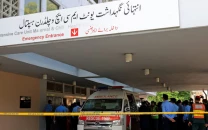
The only thriving recycling business in Pakistan is inadvertently doing more harm and foul than any non-eco-friendly business. The secret that makes this irony possible is in the source. All across the country, major hospitals unknowingly provide dangerous and bio-hazardous waste with high risks of contamination to informal waste pickers by failing to arrange its safe disposal. This collected waste is then sorted, cleaned, melted and reshaped into local household goods made of plastic.
The perils of this practice are largely unaccounted for, yet its implications can be far and wide. Hospitals carelessly discard used syringes, patients' dressings contaminated with blood, expired drugs, surgical gloves, medicinal vials and fluid bottles that can very easily find their way into our homes when it should be segregated and destroyed instead. The very places meant to be sterile and secure treatment facilities then become part of a larger cycle that cements the country's deteriorating health.
In a proper healthcare system, certain designations are assigned the task of managing and teaching the proper disposal of healthcare waste. A head nurse is tasked with training their staff in safe practices, a head pharmacist ensures that expired products are labelled and discarded, the head of a laboratory is responsible for managing chemical waste. But the Pakistani healthcare system is seemingly above such responsibilities that are essential instead of optional. The result is a greater risk of hepatitis B and C in the population, as well as various other completely avoidable maladies.
The federal government must not be lax towards a matter of such grave importance. The medical sector should operate under the strictest regulations, with much higher penalties for non-compliance. When the risk is greater, so is the responsibility. And an entire population's health cannot be neglected simply because a hospital staff cannot manage a few extra steps for safety.



This material may not be published, broadcast, rewritten, redistributed or derived from. Unless otherwise stated, all content is copyrighted © 2026 The Express Tribune.









COMMENTS
Comments are moderated and generally will be posted if they are on-topic and not abusive.
For more information, please see our Comments FAQ