Pindi gears up for Milad processions
Updated 1 hour ago

Some believe they served as shelter for members of the Mughal royal family during times of crisis
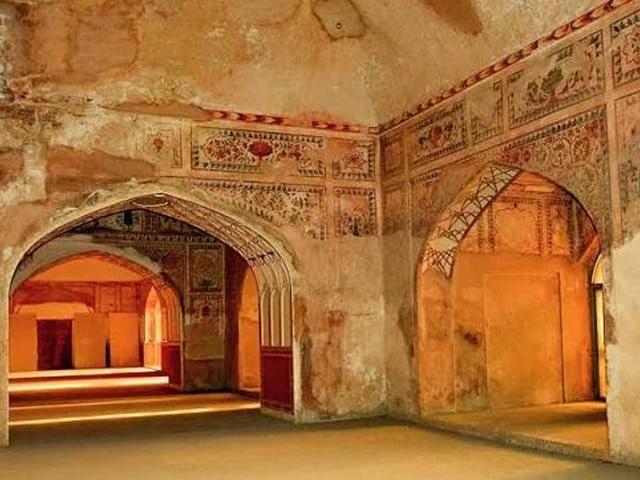
Standing beneath the towering walls of Lahore Fort, visitors are often captivated by its majestic gateways, marble palaces and centuries-old Mughal architecture. Few realise, however, that beneath their feet lies another world, a maze of underground chambers, hidden corridors and forgotten spaces that have remained shrouded in darkness and mystery for centuries.
It is a world where sunlight rarely penetrated, where passages disappeared beneath layers of earth and debris, and where history itself offers remarkably few answers.
Today, as conservation work gradually uncovers these long-forgotten spaces, a question continues to intrigue historians, archaeologists and visitors alike: What exactly happened inside these underground chambers hundreds of years ago?
The subterranean network beneath Lahore Fort consists of dozens of interconnected rooms and passageways that have recently re-emerged during restoration efforts. Over time, numerous theories have developed around their purpose.
Some believe they served as shelters for members of the royal family during times of crisis. Others suggest they may have functioned as detention cells or punishment chambers for prisoners. Yet many historians argue that the structures were simply part of the fort’s complex architectural and defensive system.
The truth remains uncertain.
“This is one of those rare chapters of history where many pages are missing,” says Naheed Iftikhar, Conservation Manager with Aga Khan Cultural Services Pakistan, while standing inside one of the fort’s dimly lit underground chambers.
“Historical records do not provide clear evidence about how these spaces were used,” she explains. “They are among the few places where history is almost silent”.
According to Iftikhar, when restoration work began, the chambers were buried beneath layers of soil, dust and moisture. Several ceilings had deteriorated, while deep cracks had appeared in many walls.
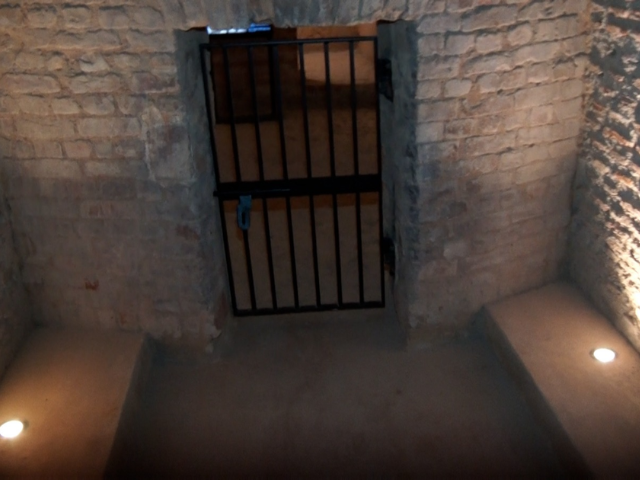
“We knew there was something unusual here,” she recalls. “But as debris was removed, new stories seemed to emerge with every layer”.
Above ground, Lahore Fort presents visitors with iconic attractions such as the Sheesh Mahal, the Alamgiri Gate and a range of magnificent Mughal structures. Descending underground, however, reveals an entirely different landscape.
Narrow staircases lead to vaulted passageways and labyrinth-like corridors connecting approximately 30 to 35 chambers. The arrangement creates the impression of a second fort hidden beneath the first.
Some rooms contain no visible source of natural light or ventilation. Niches carved into walls suggest places where oil lamps may once have illuminated the darkness.
Experts believe different sections of the underground complex were constructed during different periods. Some appear to date back to the reign of Emperor Jahangir, while others display architectural features associated with the era of Emperor Shah Jahan.
Among the most intriguing discoveries are several dry-style toilets attached to some chambers — a feature rarely encountered in conventional Mughal architecture.
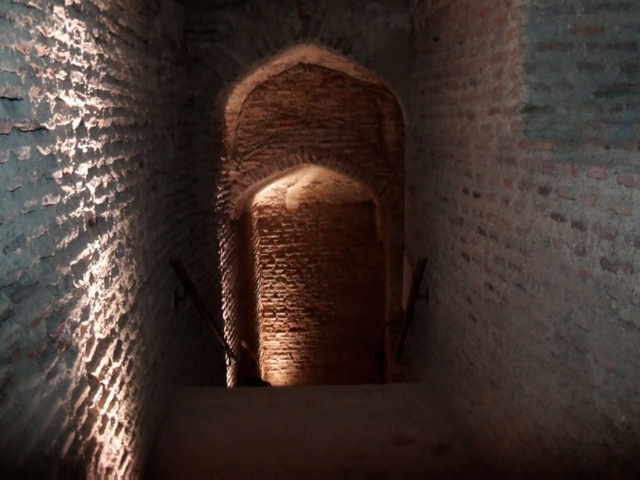
The presence of these facilities has prompted speculation that certain occupants may have remained confined for extended periods.
Yet Iftikhar urges caution.
“We have no direct historical evidence proving these were torture chambers or prisons,” she says. “However, certain architectural characteristics mean such possibilities cannot be completely dismissed either”.
The walls themselves preserve traces of the fort’s more recent history.
Visitors can still find names, dates and inscriptions written in both English and Urdu. Some markings appear to predate the Partition of the Indian subcontinent in 1947, while others date from the 1950s and 1970s.
These inscriptions suggest that although the chambers remained hidden from public view, they continued to be used in one form or another throughout different periods.
One chamber in particular adds another layer to the mystery.
A doorway constructed during the British colonial era, along with an adjoining toilet facility, has led some researchers to speculate that the space may have been adapted for use as a holding area for prisoners during the colonial period.
Today, after centuries of darkness, modern technology is being carefully introduced into these historic spaces.
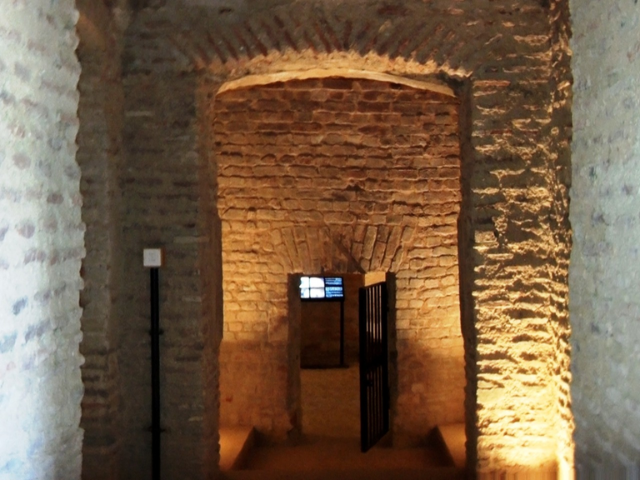
Tanzeeruddin, an electrical engineer involved in the restoration project, says installing modern lighting within a 500-year-old monument presented significant challenges.
“When these structures were built, electricity did not exist,” he explains. “Our goal was to design a system that would allow visitors to safely experience the chambers without damaging the historic fabric of the monument.”
The new lighting system is expected to allow visitors to explore parts of the underground complex even during evening hours.
For now, the chambers echo with the footsteps of conservation workers and curious visitors. Yet the questions that have surrounded them for centuries remain unresolved.
Were political prisoners once confined here? Did royal opponents spend their final days within these walls? Or were these spaces simply components of an elaborate architectural and defensive design?
Definitive answers may never emerge.
What is clear, however, is that a forgotten world beneath Lahore Fort is slowly coming back to life.
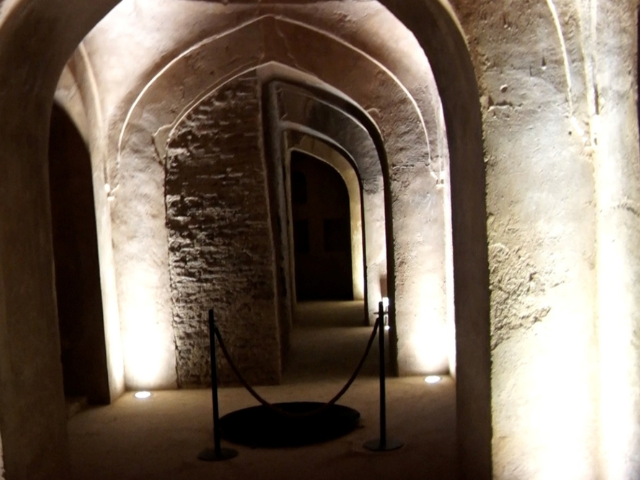
For centuries, these chambers remained buried beneath soil, darkness and neglect. Soon they will open to the public, offering visitors more than bricks and stone.
They will offer a rare opportunity to step into one of Lahore’s least understood historical spaces, a place where mystery endures, and where history still refuses to tell its full story.














This material may not be published, broadcast, rewritten, redistributed or derived from. Unless otherwise stated, all content is copyrighted © 2026 The Express Tribune.



1727268465-0/Untitled-design-(42)1727268465-0-208x130.webp "independence 2 0")



COMMENTS (2)
Comments are moderated and generally will be posted if they are on-topic and not abusive.
For more information, please see our Comments FAQ