Green CPEC offers Pakistan a win-win
Updated 1 hour ago

Economists warn indirect taxes, reduced subsidies risk inflation, hurting households and industry
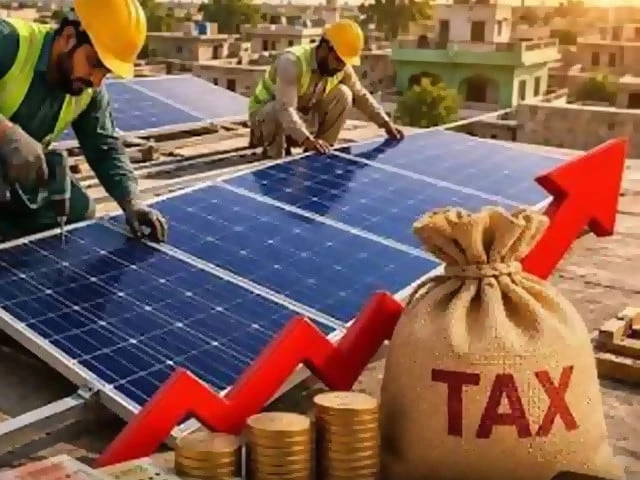
As the government prepares to unveil the FY2027 budget, concerns are mounting that fiscal consolidation could come at a significant economic and social cost. In conversation with The Express Tribune, economists warn that a strategy centred on higher indirect taxes and reduced subsidies risks further increases in energy prices, intensifying inflationary pressures and placing additional strain on both households and businesses.
Pakistan's leading energy and regulatory economist Dr Afia Malik cautions that the expected policy direction could undermine industrial competitiveness, slow economic activity and disproportionately affect middle and lower-middle-income households already struggling with rising living costs.
Deputy Executive Director and founding head of the Policy Solutions Lab at the Sustainable Development Policy Institute (SDPI), Dr Sajid Amin Javed, said: "The government is once again retreating into short-term, inflationary measures to bridge its fiscal deficit in the name of fiscal consolidation. This over-reliance on easy-to-come revenues, predominantly regressive indirect taxes and arbitrary non-tax revenues like the petroleum development levy (PDL), is fundamentally detrimental to the economy."
Conveniently categorised as non-tax revenue, PDL is the most regressive indirect tax on the masses. A target of collecting around Rs1.7 trillion from PDL shows that what was originally designed as a cushion for fiscal consolidation has degenerated into a pure revenue-generation tool, he added.
"The government must understand that sustainable fiscal consolidation must not come at the cost of the common citizen. Instead, the state must broaden the tax base rather than disproportionately punishing captive taxpayers and sectors that are already formally compliant," Javed emphasised.
According to Dr Malik, a former economist at the Pakistan Institute of Development Economics (PIDE), consumers pay well above the average electricity tariff of around Rs33.4 per unit after taxes and levies, while capacity payments alone account for more than Rs17 per unit.
She argues that while blanket subsidies create economic distortions, everyone must pay cost-reflective tariffs. Equally important is reducing electricity costs inflated by inefficiencies and capacity payments.
"System inefficiencies, transmission and distribution losses, and the growing burden of capacity payments continue to inflate electricity prices, forcing consumers to pay not only for the energy they use but also for inefficiencies embedded within the system."
Malik warns that proposed tariff rationalisation could create affordability and competitiveness challenges. Rs25-30 per unit is the key affordability threshold for middle-class households and industry, achievable by reducing inefficiencies and removing debt costs from electricity bills.
The existing slab-based tariff structure, originally designed to support low-income households, has often produced unintended outcomes, benefiting higher-income consumers while creating distortions across consumer categories.
The warning comes as the power sector struggles with high losses and uneven recovery rates. Malik says reducing losses could lower tariffs, while higher taxes and non-energy charges risk adding to consumer burdens.
Another major concern relates to subsidy reforms. While targeted subsidies are widely viewed as more efficient than blanket support, Malik warns that reforms may leave gaps as the Benazir Income Support Programme (BISP) may not cover all vulnerable groups.
"Rising energy costs could deepen energy poverty and potentially encourage power theft among financially stressed urban households."
On the supply side, Malik notes that reducing capacity payments remains difficult due to long-term contractual obligations. However, generation costs can still be lowered through better utilisation of renewable energy. Pakistan has already installed significant solar capacity, but inadequate grid infrastructure limits its full integration into the national power system. She argues that the upcoming budget should prioritise investment in grid modernisation and expand time-of-use tariffs to encourage electricity consumption during periods of lower-cost solar generation.
Industry leaders are also watching the budget closely. Escalating electricity and gas prices have emerged as a major challenge for manufacturers, eroding competitiveness and constraining economic growth. Malik stresses that market-based reforms, including the operationalisation of the Competitive Trading Bilateral Contract Market (CTBCM), are essential to remove pricing distortions and create a more efficient energy market.
Many industries are investing in alternative fuels such as solar, biomass and bagasse to meet their high electricity demand. However, they still need a competitive grid electricity rate. Rather than penalising industries for having their own sources, they must be charged according to their actual service costs when they use grid electricity, she argued.









This material may not be published, broadcast, rewritten, redistributed or derived from. Unless otherwise stated, all content is copyrighted © 2026 The Express Tribune.






COMMENTS
Comments are moderated and generally will be posted if they are on-topic and not abusive.
For more information, please see our Comments FAQ