Dolly Parton's absence prompts health concerns
Updated 5 hours ago

Lollywood veteran calls out luxury demands, lack of industry support while urging a return to entertaining cinema
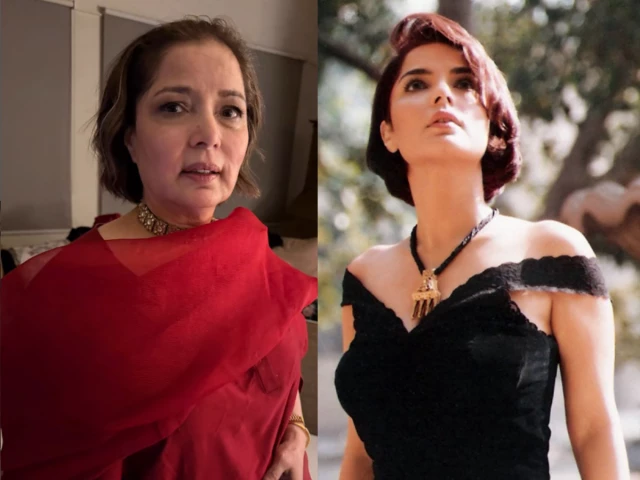
Babra Sharif remains one of the most enduring icons of Pakistani cinema, widely regarded as the defining face of Lollywood's golden era throughout the 1970s and 1980s. Celebrated for her versatility and screen presence, the veteran actor has a clear message for the new generation of performers: drop the attitude, ditch the luxury demands, and focus on your craft.
Speaking at a recent star-studded press conference, Sharif offered a candid assessment of the differences between her generation and today's stars, touching on everything from on-set vanity culture to the lack of solidarity within the industry.
“I know I might not be politically correct, but I firmly stand by this: actors should not make life difficult for their producers,” she said, criticising what she described as the growing material demands of modern performers.
Sharif expressed disappointment over the culture of luxury that she believes has become commonplace on contemporary film sets, arguing that many newcomers are overly focused on comfort and status. “Today's actors have so much attitude and so many demands, like wanting their own caravans and private hotel rooms,” she observed.
Reflecting on her own time at the height of Lollywood, Sharif recalled a far more grounded working environment. “When it was our time, we used to bring our own food from home. We didn't want to be a burden on the producer or anyone else on set. New artists need to learn to provide comfort to their producers, not stress,” she said.
The Mera Naam Hai Mohabbat star was also quick to share the credit for her success, shifting the spotlight away from herself and co-star Ghulam Mohiuddin.
“The credit shouldn't just go to us,” she said. “The directors and technicians of that era made our films successful. They handled everything so beautifully that we had to do nothing but show up and act. The real key to success is simply being confident and letting that reflect in your performance.”
Addressing the financial challenges facing Pakistani filmmakers, Sharif argued that limited resources should not prevent the creation of quality cinema. “If you think smartly and work collaboratively with the budget in mind, making a great film is entirely possible,” she noted.
However, she suggested that the industry's biggest challenge is not financial but cultural, pointing to what she sees as a lack of support among artists themselves.
“Today's artists don't even go out to watch other artists' films or support their own fraternity,” she said. “What we are seeing right now isn't a massive revival of the industry yet. These are just small, scattered efforts. But if we work together, those efforts will eventually help us reach our old glory days.”
Sharif also criticised casting directors who frequently complain about the shortage of fresh talent. “If older directors could find us and mould us, why can't they find good actors now?” she asked.
“Back then, directors sat down with us and actively taught us our craft. You should be doing the same with today's actors. Stop relying on favouritism or prioritising actors just because they are your friends. Favouritism only restricts the growth of true talent,” she added.
Turning to contemporary filmmaking trends, Sharif made a passionate appeal for lighter and more uplifting stories on the big screen. “Films shouldn't be depressing, and they shouldn't revolve around sadness. Even the titles shouldn't sound depressing,” she said.
“Cinema is fundamentally a source of entertainment, and that should be the main goal. If filmmakers keep making projects about sad and dark concepts, won't audiences just choose to watch television dramas at home? Those dramas already reflect emotional sadness and depression, and they rarely offer happy endings,” she added.
According to the veteran actor, cinema carries a different responsibility. “Film is a fantasy. It's a dream world that people want to watch and relive long after they leave the theatre. You cannot give them real-world miseries like robbery or killing. People go to the cinema to forget those exact real-life issues,” she said.
Sharif also defended the role of music in Pakistani cinema, dismissing the trend of removing songs to emulate Western filmmaking styles. “Songs are an essential part of our cinema. No local film can truly exist without songs,” she said, citing veteran filmmaker Syed Noor as an example.
“Syed Noor isn't mad to keep songs in his films. He knew the audience wanted music; it's completely interlinked with our style of storytelling. You can't remove music. Even if it's just one song, there must be music in a film.”
Concluding her remarks, Sharif urged the industry to look inward for inspiration and revisit Pakistan's cinematic heritage. “We should look into remaking our own classic films. Our neighbouring country has frequently used our old films to make their own remakes, so why shouldn't we utilise our own rich history?” she remarked.













This material may not be published, broadcast, rewritten, redistributed or derived from. Unless otherwise stated, all content is copyrighted © 2026 The Express Tribune.

1727268465-0/Untitled-design-(42)1727268465-0-208x130.webp "independence 2 0")



COMMENTS (1)
Comments are moderated and generally will be posted if they are on-topic and not abusive.
For more information, please see our Comments FAQ