Oil rises as doubts over US-Iran deal heighten supply concerns
Updated 5 hours ago

Globally competitive industry cannot be developed behind walls, without assuming additional risk
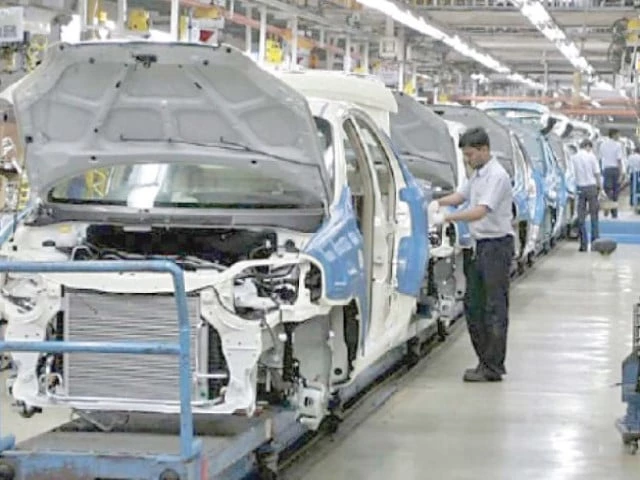
In the 1990s, two new auto assemblers in Pakistan, Toyota and Honda, joined Suzuki, and sought protection of their 'infant' industry in exchange for a promise to grow the car market and increase localisation. A series of three-year auto policies followed; a rare island of predictability within Pakistan's otherwise tumultuous industrial landscape.
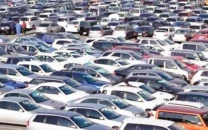
Fast forward to 2026, and according to the Pakistan Automobile Manufacturers Association (PAMA), Pakistan sold a measly 127,042 passenger cars from July 2025 to April 2026 (although sales were up from 83,401 in the previous comparable 10 months) in its local market, many with primitive quality standards.
The country's passenger car usage levels have risen glacially from 7.5 cars per 1,000 people in 2000 to 17/1,000 in 2026 (India 6.7/1,000 to 36/1,000; China 6/1,000 to 235/1,000, and Vietnam 2.1/1,000 to 41/1,000 over the same period). Whereas Pakistan succeeded in building its motorcycle industry, cutting duty protections and producing more than a million units annually, and even exporting to second tier markets, it could not do the same for cars.
Subsequently, a new wave of cars was allowed in, initially in the completely knocked down (CKD) form, with their own timelines for localisation. Though resisted by the existing players, and combined with the on-again/off-again used car import policy, they increased the options available to car buyers.
In 2025, Pakistan opened up its market by launching the National Tariff Policy (NTP) to transform tariffs from a revenue-generation tool to a driver of industrial growth, eliminate 'anti-export bias', and make domestic manufacturing globally competitive by reducing costs and integrating Pakistan into global value chains (GVCs).
Multiple slabs were reduced to a four-slab framework of 0%, 5%, 10% and 15%, and there was phasing out of additional customs duties (ACDs) and regulatory duties (RDs). The auto industry was exempt from the NTP, as a new auto policy was expected in 2026, yet the same arguments that make the NTP good for other sectors, also make it good for the auto sector.
Clearly, Pakistan's willingness to open up its economy was signalled by the NTP, and so far, the government has held its ground. Now, a new auto policy is due in July 2026, and a ferocious lobbying effort is underway, citing a weak national economy and possible factory closures. Many worry that the new auto policy may not be in sync with the NTP. Recent global trade wars and the US-Iran conflict have upended GVCs, and globally protectionism beckons. Yet, islands of freer trade, within global trading groups, exist. If Pakistan wants to build globally competitive cars and export them, it must lower its protectionist walls, access lower cost parts, and frictionlessly integrate into GVCs.
Local conditions have been difficult. Energy is expensive, infrastructure patchy and interest rates are rising amidst inflation. However, with the crashing prices of photovoltaic solar panels and batteries, new possibilities of reducing energy costs are emerging. The regional conflict has broken up existing GVCs, and there may be new opportunities to integrate within new GVCs, but only if tariffs are low.
The auto industry can either lobby hard and bring back the high protectionist walls of the old days, and be content with delivering lower-quality cars to trapped customers. Or it can take off the training wheels, and go after the big leagues.
Why would it want to remain protectionist? Protectionism means not changing behaviour. Existing products can be sold to captive buyers, fenced off from the global market. Limited new investment is required. For trade liberalisation, products must meet global standards, and new investment is required. But no globally competitive auto industry was built behind walls, and without assuming additional risk.
The new auto policy is not simply about tariff protections and customs duties. Its scope must include a battery electric vehicle (BEV), plug-in hybrid electric vehicle (PHEV), range-extended electric vehicle (REEV), hybrid vehicle, and battery policy. Pakistan's BEV/PHEV/REEV/battery policies must be futuristic.
Pakistan may have missed the opportunity of building a photovoltaic solar panel manufacturing industry (not totally missed, it still may be able to recover and capture it), but the opportunity to build a battery industry on the back of upcoming battery demand is within reach. Surely, the auto policy will only be able to integrate well with these different related components if it is forward-looking, and not backward-looking, protectionist and defensive.
In 2026, the passenger car industry is at the cusp of the EV revolution in Pakistan (EVs less than 1%), in which China is leading the way (45-50% EVs) and India gathering pace (5-7% EVs). As the world bids farewell to the internal combustion engine (ICE), will Pakistan keep abreast or fall behind in this change?
For the industry to transform, cross-border trade frictions must be minimal. Is the auto industry ready to embrace the brave new world, or determined to cling to the old world?
The writer is CEO of Think Build Scale and a member of the Economic Advisory Group










This material may not be published, broadcast, rewritten, redistributed or derived from. Unless otherwise stated, all content is copyrighted © 2026 The Express Tribune.








COMMENTS (2)
Comments are moderated and generally will be posted if they are on-topic and not abusive.
For more information, please see our Comments FAQ