PSX dips 1,464 points on oil jitters
Updated 56 minutes ago

China offering new opportunities, but Pakistan must strengthen institutions, trust indigenous expertise to benefit
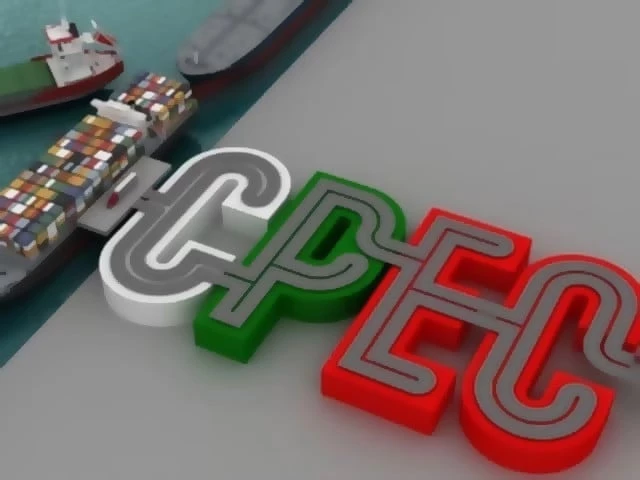
Recently, Prime Minister Shehbaz Sharif concluded a highly successful visit to China. The visit came shortly after the leaders of two major powers, the United States and Russia, had engaged with Beijing. Since then, discussions on a new world order and multipolarity have intensified. At the same time, Pakistan-mediated talks between Iran and the United States are moving towards conclusion. China and Pakistan are also celebrating 75 years of diplomatic relations. Against this backdrop, the timing, context and symbolism of the visit reaffirmed the deep-rooted strategic partnership and ironclad brotherhood between the two countries.
During the visit, the prime minister held important meetings with President Xi Jinping and Premier Li Qiang. These engagements provided an opportunity to exchange views, coordinate positions and discuss future policies to navigate an emerging multipolar world.
President Xi described China and Pakistan as countries that have "understood, trusted and supported each other" over decades, forging an unbreakable friendship. During his meeting with PM Sharif, he reaffirmed that the relationship would remain rock-solid regardless of changing circumstances. He also called for steady implementation of the Action Plan to Foster an Even Closer China-Pakistan Community with a Shared Future in the New Era. He stressed the importance of "small and beautiful" projects, livelihood programmes and deeper cooperation in agriculture, industry, artificial intelligence and talent development.
The prime ministers of Pakistan and China also held extensive talks to strengthen bilateral cooperation, particularly in the economic sphere. They reviewed progress on CPEC-II and the Action Plan and signed 15 memorandums of understanding, protocols and agreements. The outcomes of these meetings clearly indicate that China remains willing to support Pakistan's efforts to revive its economy, pursue sustainable development and withstand external challenges. However, realising the full potential of these opportunities requires fundamental changes at home.
First, Pakistan must abandon the mindset that others will solve its problems. For decades, the country has relied on the International Monetary Fund (IMF), the World Bank, the Asian Development Bank and other external institutions to design and implement reforms aimed at addressing fiscal, financial and production-related challenges. Yet, despite repeated reforms and policy prescriptions, the situation has often worsened.
With every IMF programme, fiscal and financial vulnerabilities have deepened while the productive sectors have struggled. Rather than resolving structural problems, these institutions have expanded their influence over policymaking and implementation. Since entering the IMF programme in 2019, Pakistan has steadily surrendered policy space. Today, even budgetary decisions and key economic interventions require IMF consultation. External institutions have also begun influencing bilateral initiatives, including matters related to CPEC, which lie outside the IMF's mandate.
Second, planning and execution remain persistent weaknesses. To maximise the benefits of CPEC-II and the Action Plan, Pakistan needs a comprehensive implementation framework aligned with ground realities, national priorities and emerging opportunities.
An important part of this process is identifying the Chinese provinces most relevant to Pakistan's development goals. Xinjiang stands out in this regard. Often described as the "Golden Bridge" of the Belt and Road Initiative, it serves as a gateway for regional connectivity. The province possesses significant natural resources, including gas, coal and oil, and has emerged as a major centre for green energy.
China has invested heavily in transforming Xinjiang into a modern industrial and technology-driven economy. Key initiatives include the Kashgar Economic Development Zone, the Khorgos Special Economic Zone and the Xinjiang Pilot Free Trade Zone. Agriculture has also received substantial investment, leading to significant productivity gains and modernisation.
Against this backdrop, Xinjiang is ideally positioned to deepen cooperation under CPEC-II. Its role as a connectivity hub complements both CPEC and Gwadar. Its agricultural expertise offers opportunities for collaboration, while its special economic and free trade zones provide valuable avenues for trade and investment. It is noteworthy that around 150 enterprises from Xinjiang are already working with Pakistan.
This does not mean Pakistan should ignore other provinces. Rather, it should develop tailored engagement plans based on each province's strengths. Guangdong, Shanghai and Beijing are known for technological innovation, while Jiangsu is renowned for manufacturing. Pakistan should formulate province-specific strategies to maximise cooperation and replicate this approach across China.
Third, Pakistan must reform institutions so they facilitate business instead of creating obstacles. The right people must be placed in the right positions, and the culture of patronage and bureaucratic favouritism must end. Unfortunately, many institutions have underperformed because of bureaucratic and political interference. The Special Investment Facilitation Council (SIFC) is a recent example. It was created with a strong vision, but implementation has been disappointing. Excessive bureaucratic control has limited its effectiveness. The SIFC is neither the first institution to face this problem nor likely to be the last.
Pakistan should therefore consider an innovative approach. The Ministry of Planning, Development and Special Initiatives (MPDSI), which serves as the focal ministry for CPEC, could be entrusted with full authority over CPEC-II and Action Plan programmes related to economic development, innovation and science. Specific projects could then be delegated to relevant ministries with clearly defined timelines and accountability mechanisms. Pakistan should also study and adapt lessons from China's National Development and Reform Commission. Fourth, Pakistan must reduce its dependence on consultants, expatriates, foreign-funded think tanks and external institutions for planning and execution. This approach is neither sustainable nor effective. Many external actors are primarily driven by commercial interests or foreign policy priorities. In recent years, CPEC has frequently been targeted by critics who question its value and rationale in line with external agendas.
Pakistan possesses abundant intellectual capital and institutional knowledge. Yet it often fails to utilise its own expertise. The country must therefore prioritise indigenous wisdom and empower local institutions to lead decision-making and strategy development.
Pakistan-China cooperation under CPEC-II and the Action Plan can deliver meaningful economic transformation and shared prosperity. However, success depends on Pakistan's ability to plan effectively, execute efficiently and empower the institutions responsible for implementation, particularly the MPDSI.
Most importantly, Pakistan must change its mindset. It should move beyond excessive dependence on external advice and place greater trust in indigenous knowledge and institutions. China's development experience demonstrates the importance of building strong local institutions and relying on domestic expertise. Pakistan can learn from that example. Only then can the country fully capitalise on the opportunities emerging from its partnership with China.
THE WRITER IS A POLITICAL ECONOMIST AND A VISITING RESEARCH FELLOW AT HEBEI UNIVERSITY, CHINA













This material may not be published, broadcast, rewritten, redistributed or derived from. Unless otherwise stated, all content is copyrighted © 2026 The Express Tribune.







COMMENTS
Comments are moderated and generally will be posted if they are on-topic and not abusive.
For more information, please see our Comments FAQ