Oil rises as doubts over US-Iran deal heighten supply concerns
Updated 1 hour ago

Vocational skills offer faster jobs, higher earnings, resilience in AI-driven era
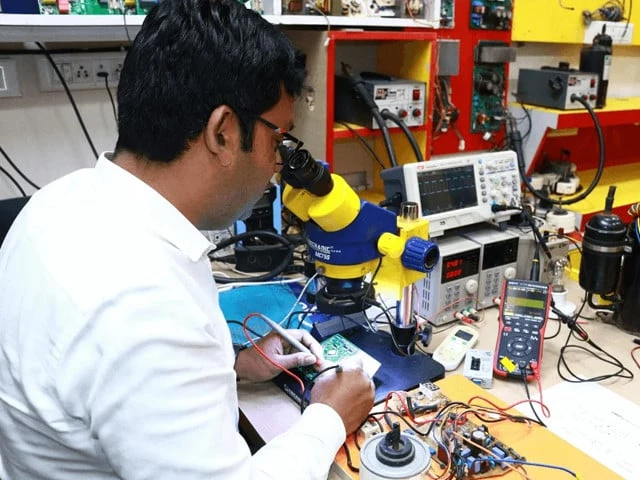
Pakistan today stands at a crossroads. With one of the world's youngest populations, a shrinking formal job market, and the rapid global rise of automation and artificial intelligence (AI), the country must rethink how it prepares its youth for work. For decades, the dominant belief has been that a university degree is the only respectable route to success.
Yet the economic data, labour-market trends, and Pakistan's own development needs tell a very different story. Technical and vocational education – plumbing, electrical work, refrigeration and AC repair, welding, automotive maintenance, CNC machining, solar installation, and dozens of other trades – offers far stronger employment prospects, higher earning potential, and far greater national benefit than the traditional university route.
AI is transforming global labour markets. The jobs most vulnerable to automation are precisely those that Pakistan's universities produce in excess: low-skilled office work, basic accounting, clerical roles, generic business degrees, and theoretical social sciences. These fields are already saturated, and AI will only accelerate the decline.
By contrast, technical trades are among the least automatable professions. A robot cannot install wiring in a new house in Karachi, repair a leaking gas line in Lahore, or service an air conditioning unit in Multan. These tasks require physical presence, manual skill, and situational judgement – areas where human technicians remain irreplaceable.
In other words, AI threatens university graduates far more than technical graduates. A plumber, electrician, or HVAC technician will remain in demand regardless of how advance AI becomes.
Who finds employment more easily: university graduates or technical graduates? Pakistan's unemployment statistics tell a stark story. According to multiple labour-market surveys, university graduates face some of the highest unemployment rates in the country, especially in fields like business administration, IT, and social sciences. Every year, universities produce far more graduates than the economy can absorb.
Meanwhile, technical graduates – those from NAVTTC institutes, Tevta colleges, Hunarmand Pakistan programmes, and private vocational centres – often secure employment within months. Many start earning even before completing their training through apprenticeships and on-site placements.
The reason is simple: Pakistan has a massive shortage of skilled technicians, not degree holders. Every household, factory, office, and construction site needs electricians, AC mechanics, plumbers, welders, and machine operators. These are real jobs tied to real demand. Compensation: Who earns more? There is a widespread misconception that university graduates earn more than technical workers. In Pakistan's current economy, the opposite is often true.
A fresh university graduate with a BBA or BA may earn Rs25,000-40,000 – if they find a job at all. Many remain unemployed for years or accept unpaid internships.
Meanwhile, a competent electrician can earn Rs60,000-120,000 per month. A skilled AC technician during the summer can earn Rs150,000+. A plumber working on construction sites can earn Rs80,000-150,000. A solar panel installer can earn Rs100,000-200,000, especially with Pakistan's shift toward renewable energy. Welders and machine operators in the Gulf earn Rs250,000-400,000 per month.
Technical skills translate directly into income. University degrees, in contrast, often translate into frustration, underemployment, and wasted years.
Which type of training does Pakistan need most today? Pakistan's economy is struggling with low productivity, weak industrial output, and a chronic shortage of skilled labour. The country imports technicians from abroad for major infrastructure projects, while millions of Pakistani graduates remain unemployed.
At this stage of national development, Pakistan urgently needs skilled construction, energy and manufacturing technicians for solar, HVAC and electrical systems, tradespeople for domestic and export labour markets, and workers who can support SMEs, repair services and local industries.
University education is important, but it cannot drive economic growth without a strong technical backbone. Countries like China, South Korea, and Germany built their industrial strength on vocational training, not mass university enrolment. Pakistan faces dangerously high levels of youth unemployment. The technical route is the only scalable solution to address this issue. Millions of young people enter the job market every year, but the economy cannot create enough white-collar jobs to absorb them.
Technical education offers the only realistic solution because it creates self-employment opportunities, enables migration to high-income labour markets, supports local industries and SMEs, requires shorter training periods (3-12 months), is affordable for low-income families and produces skills that are immediately monetisable.
A university degree takes four years and often leads nowhere. A technical diploma takes six months and leads directly to income. For decades, Pakistan has pushed its youth toward universities, believing that degrees equal success.
But the world has changed. AI is reshaping the job market, the economy is shifting toward practical skills, and Pakistan's development needs are rooted in technical capacity – not theoretical knowledge. Technical education offers: higher employability, better income, greater resilience against AI, faster training cycles and stronger national economic impact.
If Pakistan wants to reduce youth unemployment, strengthen its economy, and give its young people a real chance at prosperity, it must prioritise technical and vocational training over mass university enrolment. This is not just better for individuals; it is better for the country.
THE WRITER IS CHAIRMAN OF MUSTAQBIL PAKISTAN. HE HOLDS AN MBA FROM HARVARD BUSINESS SCHOOL









This material may not be published, broadcast, rewritten, redistributed or derived from. Unless otherwise stated, all content is copyrighted © 2026 The Express Tribune.










COMMENTS (1)
Comments are moderated and generally will be posted if they are on-topic and not abusive.
For more information, please see our Comments FAQ