President, PM pledge equality for minorities
Updated 1 hour ago

PML-N, PPP stake rival claims, PTI alleges 'pre-poll rigging'
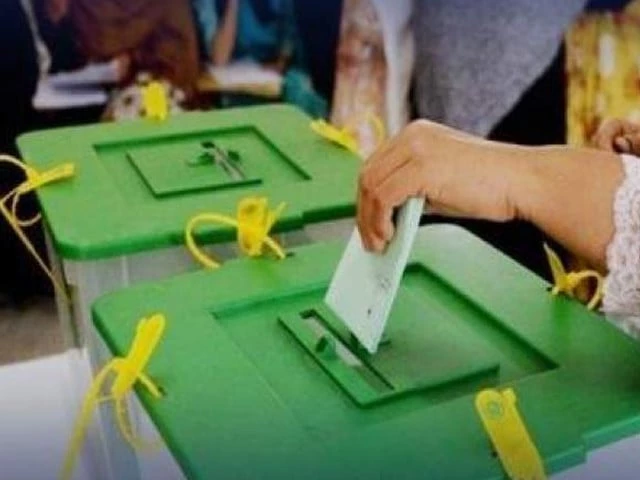
The race for power in Gilgit-Baltistan entered its final hours on Saturday as election authorities completed preparations for the June 7 (today) Legislative Assembly polls, with more than 963,000 voters set to decide the fate of 403 candidates contesting 24 seats.
Polling will be held from 8am to 5pm, with 13 seats required to form the next government in the strategically important region.
With the campaign period drawing to a close, the political contest has sharpened between major parties, while extensive security and administrative arrangements have been put in place across the region.
Election officials said polling material was being dispatched to stations across Gilgit-Baltistan and all logistical preparations had been finalised ahead of voting day.
According to the election commission, 7,678 officials have been assigned election duties.
Authorities said a comprehensive security plan has also been finalised to ensure peaceful polling, while the delivery of election material to remote areas was continuing ahead of the vote.
Meanwhile, internet services in Gilgit city remained suspended, with mobile internet, fibre-optic connections and Wi-Fi services unavailable.
The disruption has caused communication difficulties for residents. Although no official notification confirming the suspension has been issued, political leaders and local residents believe the shutdown is linked to election-related security concerns.
In Diamer district, authorities imposed Section 144 of the Criminal Procedure Code for 60 days to maintain law and order. A notification issued by Deputy Commissioner Lt (retd) Muhammad Owais banned the public display of weapons, aerial firing, the use of firecrackers, and unauthorised operation of drones and unmanned aerial vehicles (UAVs).
The order, effective from June 5, requires prior approval from the district magistrate for drone operations. Law enforcement agencies have been exempted from the restrictions. Officials warned that strict legal action would be taken against violators.
Election officials have also approved honorariums worth Rs276 million for approximately 7,500 officers and employees deployed on election duty. The allocations include payments for returning officers, assistant returning officers, presiding officers, assistant presiding officers, polling officers and supporting staff.
In Diamer district alone, 158,714 registered voters, including 81,655 men and 77,059 women, will cast ballots across four constituencies. Authorities have established 174 polling stations and 380 polling booths in the district, with 119 polling stations classified as highly sensitive, 22 as sensitive and 33 as normal.
Security arrangements have been significantly enhanced across the region. Punjab Police personnel have arrived in Gilgit-Baltistan to assist local authorities, including a deployment of 5,000 officers for election security duties.
In the Shigar district, 350 Punjab Police personnel will work alongside local police and other law enforcement agencies.
Election officials said all polling material would reach stations by Saturday night. Voting by polling staff has already begun in some areas, while the deployment of election personnel has entered its final phase.
Across Gilgit-Baltistan, 1,391 polling stations have been established. Of these, 551 have been categorised as highly sensitive, 349 as sensitive and 488 as normal. Security arrangements have been tailored according to the classification of each polling station.
Among the districts, Gilgit has 154 highly sensitive polling stations out of 253, while Diamer has 119 highly sensitive stations out of 174. All 46 polling stations in Diamer's GBA-17 Darel constituency and all 32 stations in GBA-18 Tangir have been declared highly sensitive.
PML-N, PPP stake rival claims
Meanwhile, the Pakistan Muslim League-Nawaz (PML-N) and Pakistan Peoples Party (PPP) have stepped up efforts to claim ownership of the region's political and development narrative as leaders of both parties asserted that their respective records have earned them enduring public support ahead of the vote.
As campaigning entered its final phase, Punjab Information Minister Azma Bukhari projected confidence in PML-N's electoral prospects, claiming the party was receiving an overwhelming response from voters across the region and attributing its popularity to its development record.
Meanwhile, former federal minister Qamar Zaman Kaira highlighted PPP's historical role in shaping Gilgit-Baltistan's political and constitutional landscape, arguing that the foundations of the region's governance and development were laid by successive PPP governments.
Azma Bukhari claimed that the PML-N was receiving an overwhelming response from voters across Gilgit-Baltistan.
"Everywhere in Gilgit-Baltistan, one can hear chants of 'Lion, Lion and Lion'," she said, adding that voters had always supported PML-N based on its performance. "No party besides PML-N has laid even a single brick in Gilgit-Baltistan."
Taking aim at PTI, Bukhari asserted that the party had virtually no electoral support in the region.
Referring to PTI's complaints about restrictions on campaigning, she said, "Their people have been making noise for a week that PTI is not being allowed to campaign. When they do not even have candidates in all constituencies, on what basis are they already crying rigging before the election?"
"As a political party, every narrative advanced by PTI eventually proves to be a wall of sand," she said.
"Compete with PML-N on performance. Lies and propaganda are failed political tactics."
She also pledged further development in the region. "We can proudly say that we will make Gilgit as beautiful as Lahore," she vowed.
Meanwhile, Qamar Zaman Kaira highlighted the PPP's historical role in Gilgit-Baltistan and credited it with introducing key political and administrative reforms.
"Shaheed Zulfikar Ali Bhutto liberated Gilgit-Baltistan from a feudal and oppressive system," Kaira said.
He stated that major reforms were introduced during Bhutto's tenure after the abolition of the Frontier Crimes Regulation (FCR) and the commissioner system.
"Reforms were introduced in Gilgit-Baltistan during Bhutto's era after ending the FCR and commissioner system," he said.
Kaira argued that the foundations of the region's development were laid during the governments of Zulfikar Ali Bhutto and Benazir Bhutto.
"Asif Ali Zardari provided Gilgit-Baltistan with a political and constitutional structure in 2009," he said. "Under the Empowerment and Self-Governance Order, Gilgit-Baltistan was granted a provincial-style system of governance."
"The system of chief minister, governor and state institutions in Gilgit-Baltistan was a historic initiative of the PPP government," he said.
Kaira further said the PPP had attempted to advance major projects such as the Bunji and Diamer-Bhasha dams and had introduced policies aimed at providing subsidised flour and travel facilities to residents.
"The PPP formulated policies to provide Gilgit-Baltistan with affordable flour and travel facilities," he said.
Claiming that the party's support base remained intact, Kaira said: "The people of Gilgit-Baltistan still maintain a historic relationship with the Pakistan Peoples Party."
PTI alleges 'pre-poll rigging'
Meanwhile, the PTI accused the federal and Gilgit-Baltistan governments of orchestrating "pre-poll rigging", alleging that an unprecedented deployment of more than 13,000 security personnel from outside the region, coupled with communication disruptions, arrests of workers and restrictions on campaigning, was aimed at influencing the electoral outcome.
Calling on the international community, human rights organisations and democratic forces to intervene, the party claimed that fundamental rights were being violated and democracy undermined in the run-up to the polls.
PTI Information Secretary Sheikh Waqas Akram alleged that a series of administrative and security measures were being used to suppress the party's electoral prospects in the region.
Addressing a press conference, Akram slammed the extraordinary deployment of external security personnel and the "systematic suppression" of the PTI.
"In a region with a total population of approximately 900,000 and only 5,600 GB police personnel, the federal government has deployed over 13,000 additional security personnel from outside Gilgit-Baltistan, including 11,000 from the Punjab Police, 1,000 from the Sindh Police, 700 from the Frontier Constabulary (FC) and 140 from the ICT Police," he said.
"This overwhelming presence of external forces, far exceeding the requirements of the local population, lays bare the regime's alleged intent to seize control of polling stations, disrupt the voting process with the help of local proxies and engineer a pre-determined outcome on election day," he alleged.
Akram further claimed: "This massive influx of police is not for maintaining peace but for orchestrating large-scale rigging. The Form-47 government is deliberately pushing the peaceful region of Gilgit-Baltistan into an atmosphere of fear and hostility by attempting to prevent genuine voters from exercising their right to vote for the PTI."
He also alleged systematic pre-poll rigging, claiming that internet services and landlines had been disrupted across Gilgit in "a classic tactic to sever communication among PTI workers and supporters". He further claimed that key PTI workers had been arrested in Gilgit over the past two days, even as the party's electoral position in the region was improving.
"PTI MLAs (Members of the Legislative Assembly) were coerced and bribed to abandon the party. Leaders and workers loyal to Chairman Imran Khan were forced into exile from GB. The PTI election symbol was arbitrarily banned," Akram claimed.
Referring to electoral alliances, he alleged: "A last-minute alliance with the Gilgit-Baltistan Democratic Party was sabotaged when its symbol was abruptly withdrawn at midnight via a single text message to returning officers, without any written orders or legal justification from the Election Commission."
He further alleged irregularities in polling arrangements and ballot access.
"Polling schemes were manipulated to target PTI and local nationalist candidates. Postal ballots for PTI have been blocked under fabricated pretexts, while PPP and PML-N candidates enjoy unrestricted access," Akram alleged.
The PTI leader also accused authorities of restricting the party's political activities during the campaign.
"Rallies have been stopped and public movement restricted. Even the chief election commissioner told PTI lawyers that the party's candidates should be 'thankful' for being allowed to submit nomination forms - a shocking admission of the commission's alleged partisan role and complete abandonment of neutrality," he said.
Akram further claimed that government ministers had worked during the final phase of nominations to ensure that no viable PTI candidate remained in the field. He alleged that voters were being pressured to support the Pakistan Peoples Party and Pakistan Muslim League-Nawaz, while pre-poll rigging continued across constituencies.
"It is an open secret that both the PPP and PML-N are banking on yet another Form 47-style manipulation because they know the people of Gilgit-Baltistan overwhelmingly support Imran Khan and the PTI," he claimed.
"The message has been clearly conveyed to PTI leaders that the party will not be allowed to win any seats, and that any resistance or noise will result in the disqualification of candidates before polling. This is not an election; it is a state-orchestrated farce designed to crush the democratic will of the people," Akram asserted.
Warning that such tactics would not succeed, he said the people of Gilgit-Baltistan remained committed to the vision of Imran Khan and would resist efforts to undermine the democratic process. He reiterated the party's call on the international community, human rights organisations and democratic forces to take immediate notice of a gross violation of fundamental rights and the "blatant murder of democracy" in the region.
Separately, the PTI expressed concern over the Azad Jammu and Kashmir (AJK) government's decision to declare the Joint Awami Action Committee (JAAC) a proscribed organisation.
In an official statement, the party said: "The party strongly believes that political, social and constitutional grievances must be addressed through democratic engagement, meaningful dialogue and constitutional means, not through bans, coercion or the use of force."
Questioning the government's move, it added: "If JAAC was truly a terrorist organisation, why did the government spend months negotiating with it, signing agreements with it, implementing its demands, holding meetings with its leadership and treating it as a legitimate stakeholder?"
The PTI argued that the move reflected the "same failed model" previously used against the party, involving the suppression of peaceful protest, road blockades, communication shutdowns, intimidation of citizens and the branding of "every democratic demand as a threat to the state".







This material may not be published, broadcast, rewritten, redistributed or derived from. Unless otherwise stated, all content is copyrighted © 2026 The Express Tribune.




COMMENTS
Comments are moderated and generally will be posted if they are on-topic and not abusive.
For more information, please see our Comments FAQ