Dolly Parton's absence prompts health concerns
Updated 5 hours ago

Event brings together artists from across province, features over 70 diverse artworks
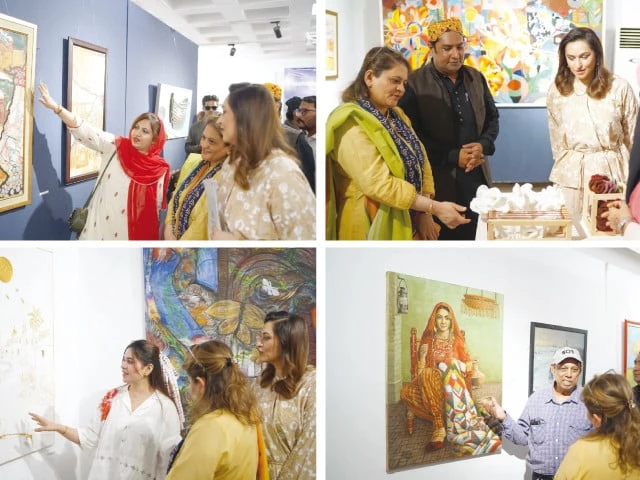
A vibrant display of colour, creativity and cultural heritage was unveiled at Karachi's Sambara Art Gallery, where the Sindh Culture and Tourism Department organised an art exhibition titled "Colours of Sindh."
Bringing together artists from across the province, the exhibition featured more than 70 artworks, including paintings, sculptures, photographs and mixed-media creations. The collection reflected various aspects of Sindh's cultural identity, from its traditions and rural life to its historical landmarks and evolving artistic expressions.
The exhibition was inaugurated by Ms Sadia Javed, MPA and Parliamentary Secretary to the Government of Sindh, who attended the event as the chief guest. Speaking on the occasion, she praised the participating artists for their creativity and highlighted the role of art in preserving and promoting the province's cultural heritage.
"Art is an important medium through which societies document their history, values and traditions," she said, adding that platforms such as Colours of Sindh help strengthen cultural awareness while encouraging emerging talent.
Inside the gallery, visitors were greeted by a diverse range of artworks portraying the colours and landscapes of Sindh. Several pieces captured scenes from village life, traditional Sindhi attire and local customs, while others explored the province's natural beauty, architectural heritage and Sufi traditions.
Artists taking part in the exhibition said that art serves not only as a form of personal expression but also as a means of safeguarding cultural identity. They noted that exhibitions such as this provide opportunities for artists to engage with the public and showcase the stories of their communities through visual media.
The exhibition also drew students, art enthusiasts and members of the public, many of whom spent time discussing the themes and techniques reflected in the artworks. Visitors described the initiative as an important step towards promoting cultural dialogue and highlighting the creative potential of Sindh's artistic community.
According to organisers, the objective of Colours of Sindh is to provide a shared platform for artists from different parts of the province and to celebrate Sindh's rich cultural diversity through contemporary and traditional forms of art.
More than an exhibition, the event offered a visual journey through the province's history, traditions and everyday life, demonstrating how art continues to serve as a bridge between heritage and modern expression.
The Culture Department of Sindh Government had established an art gallery at the premises of Liaquat Memorial Library, Karachi, and named it Sambara Art Gallery. It also organised Art Fest Karachi, curated by Waheeda Baloch .Sambara was reminded on many occasions and for various reasons in the gallery filled with paintings, sculptures, installations, drawings, miniatures, video projections and mixed media pieces.
All political, social and religious organizations of Sindh, besides the Sindh Culture Department and administrations of various schools, colleges and universities, organize a variety of events including seminars, debates, folk music programs, drama and theatric performances, tableaus and literary sittings. The history and heritage of Sindh are highlighted at the events.
The exhibition reflects Sindh's culture as a profound reflection of one of the oldest civilizations in the world, the Indus Valley Civilization. Historians and leaders, including Shaheed Benazir Bhutto, have consistently emphasized its importance, noting how its values of tolerance, hospitality, and unity shape our identity today.
From the poetry of Shah Abdul Latif Bhittai to the deep-rooted customs passed through generations, Sindh's culture not only preserves history but also strengthens our collective future.






This material may not be published, broadcast, rewritten, redistributed or derived from. Unless otherwise stated, all content is copyrighted © 2026 The Express Tribune.
1727268465-0/Untitled-design-(42)1727268465-0-208x130.webp "independence 2 0")
COMMENTS
Comments are moderated and generally will be posted if they are on-topic and not abusive.
For more information, please see our Comments FAQ