Google’s $15b India data centre project battles water, wildlife concerns
Updated 6 hours ago

Federal agency, Texas officials halt animal movement in 20-km area to stop parasite spread
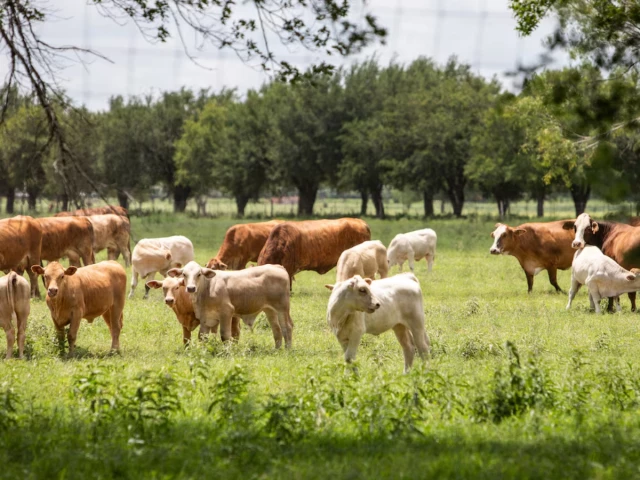
Following the first confirmation of screwworm, a flesh-eating parasite, on a US farm in decades, federal and state officials have fanned out in South Texas, where a calf was found infested this week.
US Agriculture Secretary Brooke Rollins said on Thursday no other infestations of cattle or other animals have been detected around the confirmed case.
The federal agency and Texas officials quickly halted the movement of animals in a 20-km (12.4-mile) area around the case and took other steps to prevent the parasite from spreading.
Now, every major road out of La Pryor, Texas, is marked with a blinking orange road sign urging all vehicles carrying livestock to pull over to a checkpoint staffed with sheriffs and state personnel who inspect the animals for signs of screwworm.
"If we all work together and follow these treatment and movement restriction guidelines, there is no reason to believe that this incursion will result in any sort of establishment of the pest on our side of the border," Rollins told reporters on a call.
Rollins earlier told US lawmakers that USDA believed it could contain the case, the first in Texas since 1966, and has also said screwworm is not a food safety threat. Traders fear wider infestations could further shrink the US cattle herd, which is the smallest in 75 years, and dampen US consumer demand for beef.
Screwworms are parasitic flies whose females lay eggs in open wounds and mucous membranes on any warm-blooded animal. Once the eggs hatch, hundreds of screwworm larvae use their sharp mouths to burrow through living flesh, eventually killing their host if left untreated.
"The New World screwworm sounds like something from a horror movie, but it's real," said Nate Sheets, a Republican nominee for Texas agriculture commissioner. "It is an agricultural emergency."
Volatile cattle prices
Feeder cattle futures initially dropped on the Chicago Mercantile Exchange on Thursday as traders worried the infestation could reduce consumers' appetite for beef. Futures quickly rallied more than 3%.
The detection threatens Texas' livestock industry, which could face up to $1.8 billion in estimated economic losses if screwworm spreads widely, experts said.
Read: US House votes for measure that would end Iran war, in blow to Trump
"We're going to need to see how fast it spreads and how the consumer reacts," said Matt Wiegand, commodity broker for FuturesOne. "Until we see a big demand impact from the consumer side, (cattle) numbers are still tight."
US cattle supplies dwindled after a persistent drought hiked feeding costs and forced ranchers to slash their herds. The decline has left meatpackers, such as JBS, Cargill and Tyson Foods, struggling to find enough animals to process in their beef plants.
The Meat Institute, which represents processors, urged USDA to consider allowing "low-risk" shipments of livestock for slaughter after the agency said it had frozen animal movement in an area around the case. Such shipments could include animals moving directly to slaughter from a farm that is not infested, the institute said.
USDA spent millions of dollars attempting to keep out the pest and has blocked imports of Mexican livestock for more than a year. US ports of entry will remain closed to Mexican livestock until further notice, Rollins said.
The infestation signals screwworm flies arrived in the US anyway and will expand in wildlife populations, said Lee Haines, an associate research professor of biological sciences at the University of Notre Dame in Indiana.
"The burden falls hardest on farmers who must monitor animals scattered across vast open rangeland, often going unobserved for days at a time," Haines said.
Screwworms were eradicated from the United States in the 1960s when researchers began releasing massive numbers of sterilized male screwworm flies that mate with wild female screwworms to produce infertile eggs.
US officials said they were releasing sterile flies on the ground near the case and from the sky.
"We are really flooding the zone in this impacted area," said Dudley Hoskins, a USDA undersecretary.














This material may not be published, broadcast, rewritten, redistributed or derived from. Unless otherwise stated, all content is copyrighted © 2026 The Express Tribune.






COMMENTS
Comments are moderated and generally will be posted if they are on-topic and not abusive.
For more information, please see our Comments FAQ