Parties favour stronger LGs over new provinces
Updated 2 hours ago

Earlier, Naqvi and his Iranian counterpart Momeni discuss de-escalation, security issues on the sidelines
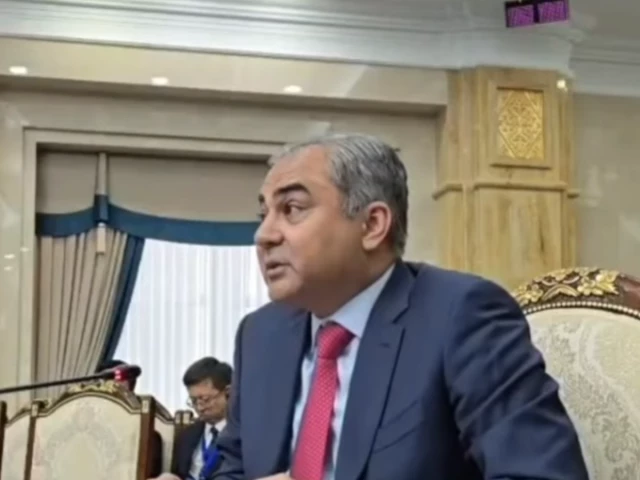
Interior Minister Mohsin Naqvi on Friday urged Shanghai Cooperation Organisation (SCO) member states to strengthen intelligence cooperation and joint efforts against online extremism under the organisation's Regional Anti-Terrorist Structure (RATS) framework.
The interior minister was attending a gathering of interior and public security ministers from SCO member states in Kyrgyzstan's capital, Bishkek, which is being held from June 4 to June 6.
Addressing the special meeting, Naqvi said, "Our region faces serious security threats. Terrorism, organised crime, drug trafficking, cybercrime and terrorist financing require a collective response."
He said criminal networks are increasingly exploiting artificial intelligence and digital platforms, making it essential for institutions to modernise and strengthen cooperation to address evolving threats. The minister said Pakistan remains fully committed to the principles of the “Shanghai Spirit”, including mutual trust, equal partnership and respect for sovereignty.
Speaking at the special meeting of the SCO Interior Ministers and Public Security in Bishkek, Kyrgyzstan, Interior Minister Mohsin Naqvi said that solid measures were vital, as the SCO platform is crucial for border security. He added that Pakistan respects the sovereignty of… pic.twitter.com/s98yBnjO7X
— Pakistan TV (@PakTVGlobal) June 5, 2026
Highlighting Pakistan’s counterterrorism efforts, Naqvi said the country had made unparalleled sacrifices in the fight against terrorism and extremism, while strengthening intelligence coordination, border management and anti-money laundering measures under the National Action Plan.
He stressed the need to enhance intelligence sharing, joint threat assessments and coordinated efforts to counter online extremism under the SCO Regional Anti-Terrorist Structure (RATS) framework.
"Cyber-enabled terrorism includes online recruitment, cyber-financing and attacks on critical infrastructure." He added, "The SCO must strengthen cooperation on cyber intelligence and digital forensics."
Naqvi said Pakistan strongly supports workshops and expert exchange programmes aimed at improving regional security cooperation, adding that collaboration in cyber intelligence and digital forensics has become a pressing necessity.
The interior minister also described drug trafficking as a major source of terrorist financing and called for a joint strategy against narcotics smuggling, online criminal networks and illicit cryptocurrency transactions.
The minister said Pakistan’s Anti-Narcotics Force is actively contributing to SCO-level counter-narcotics initiatives.
Emphasising the importance of border security, Naqvi said it remains vital for regional peace and stability. He also called for greater cooperation against forged documents, improved watchlist coordination and stronger measures to combat human smuggling.
The minister said disrupting terrorist financing networks remains one of Pakistan’s key priorities, noting that the country has introduced significant reforms to strengthen its anti-money laundering framework.
Concluding his address, he said, "Our challenges are shared. Our responses must be connected, coordinated and forward-looking."
"Let us work together for a peaceful and secure SCO region," he added, saying Pakistan looked forward to welcoming participants to Islamabad in 2027.
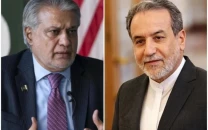
Earlier, Naqvi met with his Iranian counterpart, Eskandar Momeni, on the sidelines, where they discussed efforts to reduce regional tensions and matters related to internal security, the Interior Ministry said on Friday.
In a post on X, the ministry said the two ministers held talks on Pakistan-Iran relations and the latest developments in the region.
وفاقی وزیر داخلہ محسن نقوی اور ایرانی وزیر داخلہ سکندر مومنی کے درمیان اہم ملاقات
— Ministry of Interior GoP (@MOIofficialGoP) June 5, 2026
پاک ایران تعلقات اور خطے کی تازہ ترین صورتحال پر تبادلہ خیال
کشیدگی میں کمی اور داخلی سلامتی کے امور پر تبادلہ خیال pic.twitter.com/9iAXpqvJ6h
“De-escalation efforts and internal security issues were discussed,” the ministry said, adding that both sides exchanged views on regional developments during the meeting.
دونوں وزرائے داخلہ نے خطے کے پائیدار امن کے لئے سفارتی کوششیں تسلسل کے ساتھ جاری رکھنے کی ضرورت پر زور دیا
— Ministry of Interior GoP (@MOIofficialGoP) June 5, 2026
The ministry further said that both interior ministers emphasised the need to continue diplomatic efforts on a sustained basis to ensure lasting peace in the region.
Naqvi last visited Tehran on May 21, which lasted four days, and was his second visit within days, underscoring a growing sense of urgency, with some sources claiming that President Donald Trump had set a timeline for the negotiations to succeed or risk renewed military escalation.
The interior minister met with Ahmad Vahidi, a senior commander of Iran's Islamic Revolutionary Guard Corps and considered among the country's most powerful figures after Supreme Leader Ayatollah Ali Khamenei. Naqvi also met Iranian President Masoud Pezeshkian for the second time in less than a week.
Two days after Naqvi's visit, Chief of Defence Forces and Chief of the Army Staff Field Marshal Asim Munir visited Tehran and held meetings with Iranian President Masoud Pezeshkian, Speaker of the Iranian Parliament Mohammad Bagher Ghalibaf, Foreign Minister Abbas Araghchi, and Interior Minister Eskandar Momeni.
According to the military's media wing, Inter-Services Public Relations (ISPR), “The discussions remained focused upon expediting the consultative process underway to support peace and stability in the region and to reach a conclusive agreement.”
Read: CDF Munir drafting peace deal: Vawda
On February 28, the US and Israel launched a joint offensive against Iran. Tehran retaliated with strikes on Israel and other Gulf countries hosting US assets.
Pakistan subsequently positioned itself as a key mediator for peace, brokering a two-week ceasefire and hosting the highest-level US-Iran talks since the 1979 Islamic Revolution. Although the "Islamabad Talks" ended without agreement, the ceasefire was held and later extended upon Islamabad's request.
Since then, the two sides have been exchanging proposals and counter-proposals in an effort to reach a middle ground and resume a second round of direct talks aimed at ending the conflict, which has already disrupted global energy supplies and daily life across the region.
While Pakistan remains hopeful for the resumption of direct talks, sources said there was no “significant” change in Iran’s earlier stance on the nuclear issue in its response to US proposals.
According to sources, Tehran’s response — delivered to the United States via Islamabad last week — primarily focused on an “immediate” end to hostilities, with “little [in it] in terms of Washington’s core demand about Iran’s nuclear programme”.
Iran, the sources added, has proposed “broader and separate” talks on the nuclear issue, citing its “complexity”.
However, Tehran has “reiterated” its willingness to halt uranium enrichment for a period of five years, while rejecting Washington’s demand for a 20-year moratorium, according to the sources.






This material may not be published, broadcast, rewritten, redistributed or derived from. Unless otherwise stated, all content is copyrighted © 2026 The Express Tribune.




COMMENTS
Comments are moderated and generally will be posted if they are on-topic and not abusive.
For more information, please see our Comments FAQ