Dolly Parton's absence prompts health concerns
Updated 6 hours ago

Superstar reflects on fame, difficult roles, and why meaningful storytelling has always guided her career
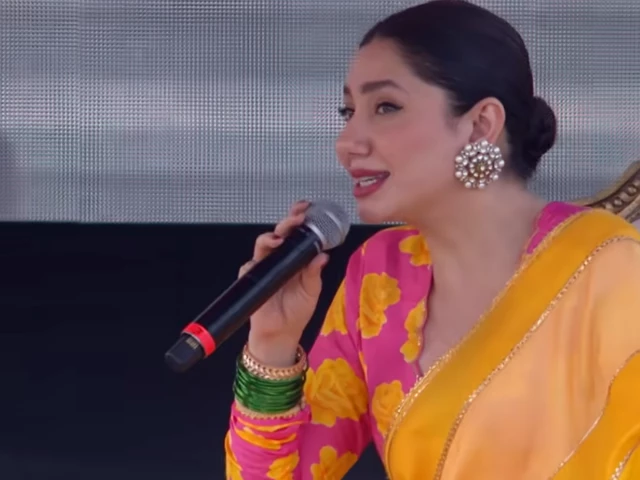
Pakistani superstar Mahira Khan has spent more than a decade in the public eye, navigating fame with a rare blend of poise and self-awareness. In a candid conversation at Jashn-e-Rekhta in Dubai, the actor opened up about storytelling, the emotional toll of performance, the realities of stardom, and why meaningful work has always mattered more to her than screen time.
Reflecting on her career, Mahira revealed that when evaluating a project, she prioritises the strength of the story over the size or prominence of her role. Asked whether she would choose a powerful character in a mediocre script or a weaker character in an exceptional story, her answer was unequivocal: the story comes first.
"For me, the story has to be strong," she said. "Even in the beginning of my career, I would ask for the entire script rather than just my scenes. I wanted to know whether the story itself had strength. Only then would I look at my character and what I could contribute to it."
Mahira recalled that reading Urdu scripts was initially challenging after returning from the United States, but she remained committed to understanding the complete narrative before making a decision.
Over time, she said, experience taught her that an actor's value is not measured by the number of scenes, songs or appearances before the interval. "This understanding comes with age and experience," she explained. "If the story has power, then even if I appear in only two scenes, what matters is what I am doing within that narrative."
The conversation then turned to some of the roles that pushed her beyond her comfort zone. Mahira pointed to the mini-series Razia, where she portrayed a character whose personality, worldview and manner of speaking differed significantly from her own. "Some characters are completely different from you. Their world is different, and the way they speak is entirely different," she said.
To prepare for the role, she closely observed writer-director Mohsin, drawing inspiration from his natural speech patterns and Karachi vernacular to bring authenticity to the character.
She also reflected on her role in Verna, director Shoaib Mansoor's film about a rape survivor seeking justice, describing the lasting emotional impact of portraying traumatic experiences on screen.
While she did not immerse herself in extensive method acting techniques or research survivor testimonies, she said the physical and emotional demands of performance inevitably leave a mark.
"The truth is that when you're playing a character, whether it's tears, pain or your body tensing up completely, you are the one experiencing it," she said. "Whether it's deep method acting or not, it absolutely affects you."
According to Mahira, some roles continue to resonate long after filming ends, leaving an emotional imprint that actors carry with them beyond the set.
Despite her status as one of Pakistan's biggest stars, Mahira said she has never been particularly attached to the idea of fame itself.
Instead, what she cherishes most are the human connections that come with her work. "I think I enjoy people. I really do," she said. "People often ask why I meet everyone and hug everyone. The truth is that I genuinely like human beings."
She acknowledged that celebrity status is temporary and believes staying grounded is essential. Laughing, she credited her family for ensuring she never takes herself too seriously. "Today it's here, tomorrow it's not," she said of stardom, adding that her parents and brother are always quick to bring her back down to earth whenever necessary.
Mahira also spoke about her role as a UNHCR National Goodwill Ambassador, a responsibility she says she takes seriously.
Before formally associating herself with any cause, she prefers to witness conditions firsthand rather than simply lending her name to a campaign. "I am a complete human being with many facets," she said. "One of them is that when I see something wrong happening, my heart genuinely wants to speak about it."
For Mahira, humanitarian work is deeply personal rather than performative. She rejected the idea of using social causes to gain attention or approval online, arguing that authenticity matters more than public validation. "Today, if I wanted millions of likes, I could simply put a dupatta on my head and write 'Alhamdulillah'," she remarked. "But I don't want that."
The actor concluded by reflecting on the impermanence of both fame and life itself, emphasising the importance of sincerity, meaningful work and human connection over popularity.







This material may not be published, broadcast, rewritten, redistributed or derived from. Unless otherwise stated, all content is copyrighted © 2026 The Express Tribune.


1727268465-0/Untitled-design-(42)1727268465-0-208x130.webp "independence 2 0")



COMMENTS (1)
Comments are moderated and generally will be posted if they are on-topic and not abusive.
For more information, please see our Comments FAQ