Afghan Taliban mark five years in power
Updated 1 hour ago

Minister says water authority violates 1991 accord; warns Karachi supply at risk
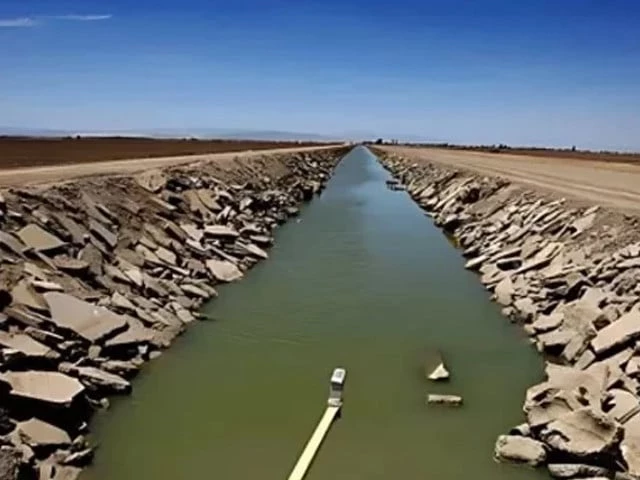
The Sindh government has strongly protested persistent and unjustified water shortages in the province, accusing the Indus River System Authority (IRSA) of discriminatory water distribution and warning that reduced river flows are threatening both agriculture and Karachi's water supply.
Senior Minister for Information, Transport and Mass Transit Sharjeel Inam Memon said IRSA's recent decisions were contrary to the spirit and principles of the 1991 Water Apportionment Accord and amounted to a "blatant injustice" to the people of Sindh.
He warned that the continued reduction in the province's share of water was adversely affecting agriculture and posing serious risks to Karachi, the country's economic hub, which relies heavily on the Indus River system for its bulk water supply.
In a statement, Sharjeel said Sindh had been facing a water shortage of around 22 per cent for several days, while shortages of 42 per cent and 29 per cent had been recorded at Guddu and Kotri barrages, respectively.
He said Karachi was already grappling with a significant gap between water demand and supply, adding that IRSA was further reducing Sindh's share under the pretext of "shortage equalisation", a move he condemned as entirely unacceptable.
Sharjeel further stated that Sindh had repeatedly clarified that additional inflows caused by extraordinary rainfall could not be deducted from the province's allocated share.
Despite this, he said, IRSA continued to make decisions that reinforced perceptions of discriminatory treatment towards Sindh.
The senior minister stressed that Sindh's rights under the 1991 Water Apportionment Accord must be protected in letter and spirit, and that no province should be given preference over another's allocated share.
He pointed out that while Sindh's agricultural regions were facing acute shortages, substantial quantities of water were being diverted through the Chashma-Jhelum and Taunsa-Panjnad link canals.
He questioned why priority was being given to link canals when Sindh's barrages and canal system were themselves suffering from severe shortages.
Sharjeel said the water crisis was no longer confined to agriculture and had become a major urban challenge as well.
The supply of drinking water to Karachi and other cities in Sindh, he noted, was directly linked to the Indus River system, and any reduction in water levels at Kotri Barrage and its associated canals had a direct impact on Karachi's water distribution network.
He warned that the current situation could further disrupt water supplies to citizens and adversely affect Karachi's drinking water availability, industrial operations and overall economic activity, describing the situation as unacceptable.
Calling for immediate intervention, Sharjeel urged the federal government to take notice of IRSA's decisions and implement practical measures to ensure Sindh received its full and rightful share of water in accordance with the 1991 Water Apportionment Accord.
Reaffirming the provincial government's position, he said the Pakistan Peoples Party and the Sindh government would not compromise on the water rights of the people of Sindh and would continue to defend those rights at every constitutional, legal and democratic forum.
He added that any reduction in, or unfair distribution of, Sindh's water share was against the interests of the entire province, and demanded that IRSA review its decisions to ensure fair, equitable and transparent water allocation.















This material may not be published, broadcast, rewritten, redistributed or derived from. Unless otherwise stated, all content is copyrighted © 2026 The Express Tribune.


1727268465-0/Untitled-design-(42)1727268465-0-208x130.webp "independence 2 0")



COMMENTS (1)
Comments are moderated and generally will be posted if they are on-topic and not abusive.
For more information, please see our Comments FAQ