Syria sentences absent Bashar al-Assad to death over killings, torture
Updated 25 minutes ago

Illegally seize strategic castle atop Beaufort Ridge, Netanyahu orders incursions against Hezbollah
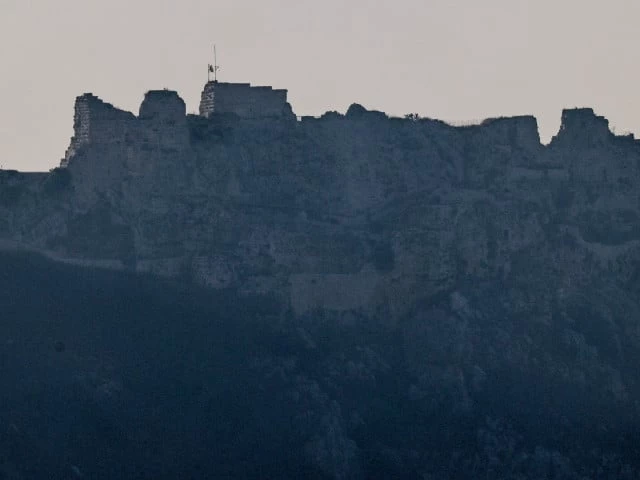
Israeli troops seized the historic Beaufort Castle in southern Lebanon and established control over its strategic ridge, marking a significant escalation in military operations against the country despite an internationally brokered ceasefire that has struggled to hold for more than six weeks.
Israel's Defence Minister Israel Katz said troops would remain deployed at Beaufort as part of a broader "security zone" in southern Lebanon, underscoring what officials described as a long-term military posture rather than a temporary advance.
The Israeli military confirmed that its operations focused on securing the Beaufort Ridge and surrounding areas, including the Wadi al-Saluki region, while targeting what it described as Hezbollah infrastructure built under Iranian direction. One Israeli soldier was killed in the operation, according to the military.
The capture of the 900-year-old castlelast held by Israel until its withdrawal from southern Lebanon in 2000gives Israeli troops a commanding vantage point over large parts of southern Lebanon and northern Israel, areas that have been repeatedly used for cross-border attacks.
Israeli Prime Minister Benjamin Netanyahu ordered troops to expand their ground manoeuvres deeper into Lebanese territory, stating that Israel aims to "deepen and expand our grip on the places that were under Hezbollah's control." Military officials said forces were now operating near Nabatieh, a known Hezbollah stronghold, and pushing towards areas north of the Litani River.
The escalation follows one of the heaviest days of Hezbollah rocket and drone fire into northern Israel since the April ceasefire, which had briefly reduced the intensity of the conflict but never fully halted hostilities. Israel reported school closures and civilian restrictions after renewed attacks from southern Lebanon.
The wider conflict has already caused severe humanitarian consequences. Lebanese officials estimate more than 3,370 deaths since hostilities intensified in March, while over 1.2 million people have been displaced by Israeli strikes and evacuation orders. On the Israeli side, authorities report 24 soldiers and four civilians killed, alongside tens of thousands of residents displaced from northern communities.
Hezbollah has continued to deploy low-cost explosive drones and rockets targeting Israeli positions, with the Israeli military acknowledging ongoing engagements along the frontier despite ceasefire arrangements.
The latest advance has also drawn renewed international concern. French President Emmanuel Macron said "nothing justifies the major escalation under way in south Lebanon," calling for restraint and urgent diplomatic engagement. Macron said he had spoken with regional leaders including Saudi Arabia, Egypt, the United Arab Emirates and Oman in an effort to coordinate responses to the deteriorating situation.
At France's request, the United Nations Security Council is set to hold an emergency meeting on Monday (today) to address the escalation, including Israel's seizure of Beaufort Castle and widening military operations in southern Lebanon.
The Israeli military said the objective of its current campaign is to degrade Hezbollah's operational capabilities and infrastructure across southern Lebanon, particularly those positioned along the strategic ridge areas.
Officials described Beaufort Castle as a key military advantage point that allows oversight of both Lebanese territory and northern Israel. Talal Atrissi, a Lebanese University professor and political analyst, said Israel appeared to be achieving its immediate tactical objectives, though the long-term consequences of the escalation remain uncertain.
Meanwhile, Israel's expanded operations have reignited debate over the durability of the ceasefire framework, which was extended by 45 days in mid-May under US mediation efforts. Despite diplomatic engagement involving US and Lebanese defence representatives in Washington, both sides have continued to accuse each other of violations.
As Israeli forces consolidate their positions in Beaufort and surrounding high ground, regional leaders warn the conflict risks further widening unless a broader political settlement is reached. For now, however, both military operations and diplomatic efforts appear locked in parallel tracks, with little sign of convergence.








This material may not be published, broadcast, rewritten, redistributed or derived from. Unless otherwise stated, all content is copyrighted © 2026 The Express Tribune.






COMMENTS
Comments are moderated and generally will be posted if they are on-topic and not abusive.
For more information, please see our Comments FAQ