Dolly Parton's absence prompts health concerns
Updated 7 hours ago

The series continues its experiment with identity, humour and heritage through carefully placed musical storytelling
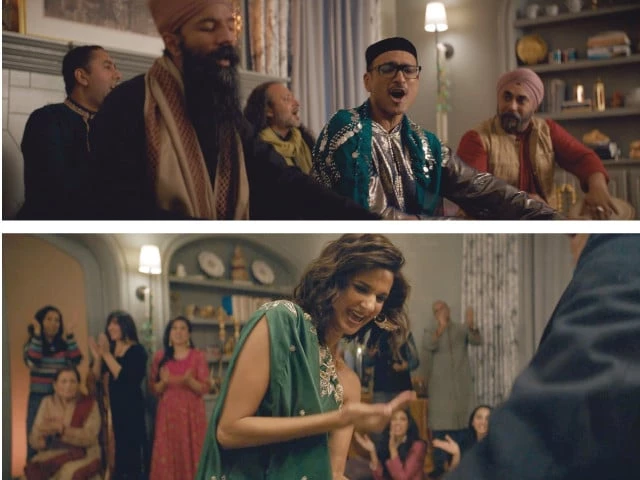
Ali Sethi's brief appearance in the second season of Hulu's 'Deli Boys' has drawn fresh attention to how South Asian music and performance are being woven into mainstream global streaming storytelling without overt explanation or cultural translation for audiences.
The cameo arrives in a season that continues the series' mix of dark comedy, crime satire and diaspora identity, offering viewers a moment where classical qawwali meets contemporary screen storytelling in an unexpectedly seamless way.
'Deli Boys', created by Abdullah Saeed, follows Pakistani-American brothers navigating the fallout of their father's hidden criminal empire, balancing absurd humour with the pressures of inheritance, identity and survival in a chaotic modern world.
Within that setting, Sethi appears in a musical sequence that draws on the devotional tradition of qawwali, presenting a performance of Amir Khusro's 'Chaap Tilak' that sits naturally inside the show's layered and often irreverent tone.
The moment is framed not as an explanation of culture, but as lived expression within the narrative space, allowing the music to function as atmosphere, irony and emotional texture rather than exposition for unfamiliar audiences.
Ali Sethi, already known for reinterpreting classical and folk South Asian music for global audiences, appears in the role of qawwali singer, bringing his distinct vocal style into a scene designed around performance and cultural rhythm.
The sequence also features Anand Venkatkrishnan alongside Mohamed Mehdi as singers, creating a layered vocal arrangement that reinforces the traditional structure of a qawwali ensemble on screen.
Supporting them musically, Maninder Singh performs as tabla player, while Sonny Singh appears as harmonium player, completing the instrumental backbone of the performance with rhythmic and melodic grounding.
Together, the ensemble creates a staged yet immersive representation of a qawwali gathering, where voice, percussion and harmonium interact in a format rooted in centuries-old Sufi devotional practice.
The inclusion of such a sequence in a contemporary dark comedy highlights how global streaming platforms are increasingly comfortable embedding South Asian cultural forms directly into narrative structures without explanatory framing.
'Deli Boys' Season 2, which premiered on Hulu and is also available via Disney+, continues to build on its reputation for blending chaotic humour with character-driven storytelling set within a Pakistani-American context.
The series stars Asif Ali, Saagar Shaikh and Poorna Jagannathan, whose performances anchor a story that moves between crime, family dynamics and satirical commentary on ambition and survival.
This season also expands its ensemble with additions including Fred Armisen, Andrew Rannells, Kumail Nanjiani, Robin Thede and Lilly Singh, reflecting the show's widening creative and comedic scope.
Across its run, the series has maintained a tonal balance that shifts between absurdist humour and moments of emotional weight, often within the same narrative breath, without pausing to signal those transitions to viewers.
The inclusion of Ali Sethi's cameo aligns with this approach, where music and performance are not isolated set pieces but integrated elements of storytelling that exist within the same narrative logic as the plot itself.
Sethi's presence also reflects a broader pattern in which South Asian artists are increasingly appearing in international productions not as cultural symbols, but as active contributors to tone, mood and narrative environment.
On social media, Sethi shared a light-hearted Eid greeting alongside a playful prompt encouraging viewers to identify the "fake qawwal" in the episode, turning the cameo into an interactive moment for audiences online.
That engagement added another layer to the appearance, blurring the boundary between performance, promotion and audience participation in a way increasingly common in streaming-era releases.
The use of qawwali within the series also underscores the continued relevance of Sufi musical traditions in contemporary storytelling, particularly when placed in unexpected narrative environments that contrast devotion with modern chaos.
While the scene remains brief, its impact lies in its placement rather than duration, signalling how cultural expression can be embedded into genre television without being reduced to background decoration or explanatory context.
Ultimately, Sethi's appearance in 'Deli Boys' Season 2 reflects a growing shift in global television, where South Asian music and performance are no longer framed as external additions but are instead treated as internal narrative language shaping the story itself.















This material may not be published, broadcast, rewritten, redistributed or derived from. Unless otherwise stated, all content is copyrighted © 2026 The Express Tribune.


1727268465-0/Untitled-design-(42)1727268465-0-208x130.webp "independence 2 0")



COMMENTS
Comments are moderated and generally will be posted if they are on-topic and not abusive.
For more information, please see our Comments FAQ