Kaia Gerber reveals Brooke Shields inspired her glamorous look in 'The Shards'
Updated 24 minutes ago

O’Farrell’s latest book 'Land' draws heavily on Irish history and her own family background
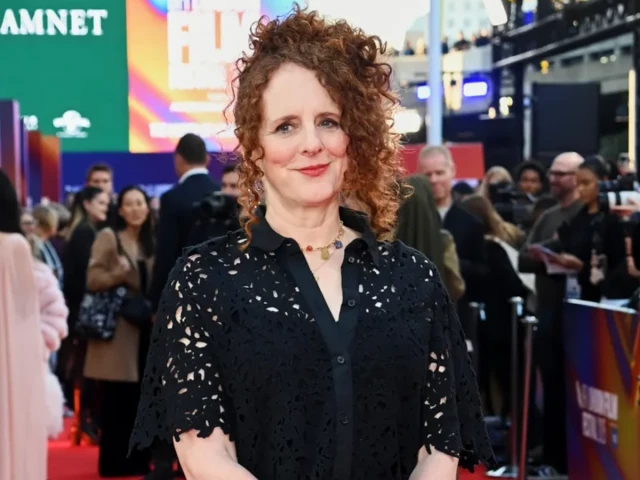
Acclaimed novelist Maggie O'Farrell has revealed that she turned down an OBE because she did not want the words “British Empire” attached to her name.
In an interview with The Irish Times, the Hamnet author explained that she declined the honour after being offered an Officer of the Order of the British Empire title, saying she felt uncomfortable with its historical associations.
“I turned down an OBE because I didn’t want British Empire as part of my name,” O’Farrell said, adding that the phrase carried meanings she could not personally embrace.
The author, who was born in Coleraine and spent part of her childhood in Ireland before later living in Britain, made the comments while discussing identity, history and her new novel Land.
O’Farrell’s latest book draws heavily on Irish history and her own family background. The novel was inspired by the discovery that one of her ancestors worked on the 19th-century Ordnance Survey of Ireland, a mapping project carried out under British rule in the aftermath of the Great Famine.
Speaking about the research process behind Land, O’Farrell described uncovering archival documents connected to her great-great-grandfather and grappling with the realities of colonial-era Ireland. Those discoveries helped shape a story examining family, displacement, power and the legacy of empire.
The writer is best known for novels including Hamnet, which won the 2020 Women’s Prize for Fiction and was later adapted into an award-winning film. She has also written The Marriage Portrait, This Must Be the Place and the memoir I Am, I Am, I Am.
O’Farrell’s comments place her among a number of prominent writers and artists who have declined honours linked to the British Empire over the years. Her decision reflects a broader conversation about the historical legacy of imperial institutions and how those honours are viewed by recipients today.
The revelation comes as O’Farrell prepares to publish Land, a novel she has described as one of her most personal works to date, rooted in both family mythology and Ireland’s complex relationship with British rule.









This material may not be published, broadcast, rewritten, redistributed or derived from. Unless otherwise stated, all content is copyrighted © 2026 The Express Tribune.









COMMENTS
Comments are moderated and generally will be posted if they are on-topic and not abusive.
For more information, please see our Comments FAQ