Reports on budget authority shift termed misleading
Updated 34 minutes ago

Construction, hotels, transportation, storage and ITC see increased investment
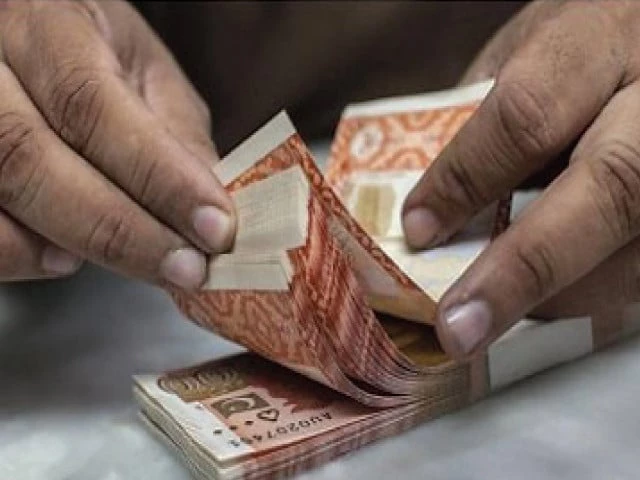
The government has missed two more critical targets of increasing investment and savings as a share of the national economy during this fiscal year. Investment remained stagnant at 14.4%, while savings plunged further to 14%.
According to provisional figures compiled by the planning ministry based on National Accounts results, the investment?to?GDP ratio stayed at 14.4%, the same level as last fiscal year but below the official target of 14.7%. Investment is not picking up despite the government's multi?front efforts to attract non?debt creating foreign inflows. The government is meeting most of its needs by taking more loans, as exports also fell more than 6% during the first ten months of the current fiscal year. Internal deliberations have begun on whether the government should fully implement the second phase of trade liberalisation from July, after the first phase caused a faster increase in imports without helping exports.
The Sovereign Wealth Fund was also launched three years ago to attract foreign investment, but it remained dormant this fiscal year because of objections raised by the International Monetary Fund (IMF) over its law. The government has now presented a bill in the National Assembly to amend the law to the IMF's satisfaction. The Senate Standing Committee on Finance did not vote on the bill on Thursday and deferred it until the next meeting.
The Special Investment Facilitation Council's (SIFC) efforts also proved fruitless in bringing any foreign investment, although it kept easing procedural problems faced mostly by local investors. The fixed investment?to?GDP ratio also remained stagnant at 12.7%, short of the official 13% target set in the previous budget. Private sector investment inched up to 9.6% of GDP, below the targeted 9.8%. These figures will be officially released at the launch of the Economic Survey of Pakistan.
Public sector investment?to?GDP ratio decreased to 3.1% because of a nearly Rs200 billion cut in the federal development budget. For the next fiscal year, the government has proposed a Rs1.126 trillion development budget, but actual releases will depend on revenue collection against the targets.
Failure to meet the investment target limits the government's ability to address deteriorating infrastructure and social sector challenges using its own funds, increasing reliance on loans for development.
Finance Minister Muhammad Aurangzeb is currently in China to raise a $250 million loan by tapping Chinese debt markets on the back of guarantees issued by the Asian Infrastructure Investment Bank (AIIB) and the Asian Development Bank (ADB). Pakistan's own credit rating is not sufficient to raise debt from Chinese markets.
The savings?to?GDP ratio also missed the official target of 14.3% and dipped to 14% because of an anticipated current account deficit this fiscal year. It was also 0.9% of GDP less than last fiscal year.
All these are provisional figures and will be revised once the final external account numbers are available in July. The government has missed all three main economic targets – annual growth, investment and savings. This shows that Pakistan is still not at a stage where it can target higher economic growth. During this fiscal year, the economy grew 3.7%, which was not sufficient to create jobs for youth entering the job market. According to a new report, Pakistan's population may increase by 62% to 389 million by 2050, with 255 million in the working age group.
According to the results approved by the National Accounts Committee, at current market prices, private investment in agriculture grew 8.7% due to imported machinery and livestock. There was a 25% increase in small?scale investment, including slaughtering, while investment in electricity, gas and water supply grew 7.6%. Surprisingly, in the construction sector – which is suffering badly from an overall slump, investment increased by more than 60%. In hotels and restaurants, investment grew 12.8%; in transportation and storage, 6.2%; and in information and communication, it increased 110%.
In the public sector, investment in manufacturing increased 97% because of the National Radio Telecommunication Corporation; in mining, it rose 25.9% because of OGDCL investment; and in electricity, gas and water supply, it increased 5.1% because of WAPDA investment. In transport and storage, public investment grew 51.2% because of the Civil Aviation Authority and Pakistan National Shipping Corporation. In construction, there was a 7.4% increase in public investment due to development authorities, mainly the Lahore Development Authority, Gwadar Development Authority and Federal Government Employees Housing Authority. In the communication sector, public investment rose 31% because of purchases by Ufone and the 5G spectrum auction.




This material may not be published, broadcast, rewritten, redistributed or derived from. Unless otherwise stated, all content is copyrighted © 2026 The Express Tribune.










COMMENTS
Comments are moderated and generally will be posted if they are on-topic and not abusive.
For more information, please see our Comments FAQ