Hajj climaxes with call for unity
Updated 49 minutes ago

Wang Yi urges renewed dialogue, warns of global risks as Araghchi seeks post-war regional framework support
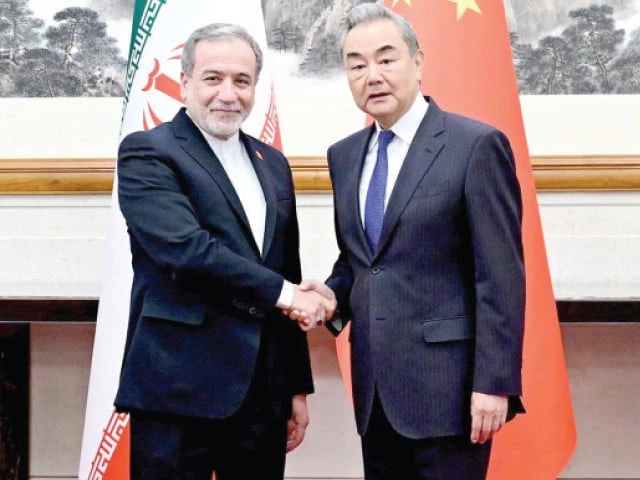
China on Wednesday said it is ready to play a greater role in ending hostilities in the Middle East and helping create conditions for the resumption of peace talks, as tensions in the region remain fragile following the US-Iran conflict.
Chinese Foreign Minister Wang Yi made the remarks during talks in Beijing with Iranian Foreign Minister Seyed Abbas Araghchi, who was visiting China after diplomatic engagements in Pakistan, Oman and Russia. The visit marked his first trip to China since the outbreak of war involving the US and Israel against Iran earlier this year.
Wang said the prolonged fighting had dealt a severe blow to regional and global peace and stability, adding that a complete cessation of hostilities was urgently needed. “A full end to the fighting cannot wait, any resumption of hostilities would be even more inadvisable, and staying committed to negotiations is particularly important,” he said.
Araghchi briefed the Chinese side on Iran-US contacts and Tehran’s future course of action, reiterating that Iran would firmly defend its sovereignty while continuing diplomatic efforts for a comprehensive and lasting settlement. He also said the issue of ensuring uninterrupted access through the Strait of Hormuz should be resolved at the earliest.
Expressing appreciation for China’s diplomatic engagement, Araghchi said Tehran trusted Beijing and hoped it would continue to play an active role in ending hostilities and supporting the establishment of a new post-war regional framework based on development and security coordination.
我在北京同中国外长王毅进行了富有建设性的会谈。双方重申伊朗有权维护国家主权和民族尊严,伊方赞赏中方提出的关于维护和促进地区和平稳定的四点主张。伊方信任中方,期待中方为促和止战继续发挥积极作用,并支持建立能够统筹发展与安全的战后地区新架构。 pic.twitter.com/esQRcapEGx
— Seyed Abbas Araghchi (@araghchi) May 6, 2026
Wang reaffirmed China’s support for Iran’s sovereignty and its right to peaceful nuclear energy use, while opposing nuclear weapons development. He said China believed Gulf and Middle Eastern countries should shape their own future and encouraged dialogue and good-neighbourly relations among regional states.
On the Strait of Hormuz, Wang said the international community shared concern over restoring safe and normal maritime passage and called on all parties to respond to global appeals to ease tensions. He stressed that a sustained ceasefire and return to negotiations were essential for regional stability.
Since the outbreak of the conflict, China has intensified diplomatic efforts, with President Xi Jinping earlier proposing a four-point framework for peace in the Middle East, focusing on respect for sovereignty, peaceful coexistence, rule of law and balanced security and development.
According to Chinese officials, Wang has held nearly 30 phone calls with counterparts from Iran, Israel, Russia, Gulf states and the United States in an effort to prevent further escalation.
Analysts warned that the ceasefire between Iran and the United States remains fragile, with risks of renewed escalation still present. They added that any prolonged disruption in the Strait of Hormuz could significantly impact global energy supplies, shipping costs and the wider economy.
China, which imports more than half of its seaborne crude oil through the Middle East via the Strait of Hormuz, has a direct stake in maintaining stability in the region. Experts said rising energy and material costs could continue to affect global markets in the coming months.
Read More: Iran says no final decision yet on US proposal conveyed through Pakistan
FM Araghchi, in a post on social media platform X, also reiterated Tehran’s hope that China would support the formation of a new post-war regional framework balancing development and security, adding that Iran valued its strategic partnership with Beijing.
Iran FM Araghchi shares a cinematic video diary from his recent visit to Beijing
— RT (@RT_com) May 8, 2026
'Agreed to reach a new level of cooperation' pic.twitter.com/uBs4xvGQSb
Meanwhile, US President Donald Trump said Washington would pause escort operations for commercial shipping through the Strait of Hormuz as part of efforts to pursue a peace deal with Iran, underscoring ongoing uncertainty over maritime security in the strategically vital waterway.
FM Araghchi, after his return from China, spoke to Pakistan’s Deputy Prime Minister and Foreign Minister Ishaq Dar on Thursday, and briefed him on his Beijing trip and consultations held there on regional and international issues of mutual interest.
During the conversation, the two sides exchanged views on recent regional developments and ongoing diplomatic efforts aimed at promoting peace and stability. Araghchi also thanked Pakistan for facilitating the repatriation of Iranian nationals from the seized vessels earlier.







This material may not be published, broadcast, rewritten, redistributed or derived from. Unless otherwise stated, all content is copyrighted © 2026 The Express Tribune.








COMMENTS
Comments are moderated and generally will be posted if they are on-topic and not abusive.
For more information, please see our Comments FAQ