AIIB eyes road, power projects
Updated 8 hours ago

Global oil benchmark Brent crude futures were down $2.05, or 1.7%, to $115.98 a barrel as of 1016 GMT
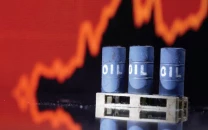
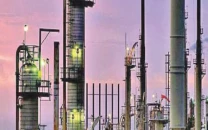
Global oil prices retreated after hitting a four-year high of more than $126 a barrel on Thursday on concerns that the US-Iran war could worsen and lead to a protracted Middle East oil supply disruption that could hurt global economic growth.
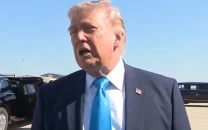
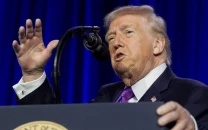
Earlier in the day, the market moved higher after Axios, citing unidentified sources, reported late on Wednesday that US President Donald Trump is slated to receive a briefing on Thursday on plans for a series of military strikes on Iran in hopes it will return to negotiations on its nuclear programme.
Prices later dropped without any obvious catalyst.
Tamas Varga of oil broker PVM said the decline did not look related to a specific development and reflected the heightened volatility in the market since the Iran war started on February 28.
“It just sums up the unpredictable nature of trading in a Trump world,” he said.
Global oil benchmark Brent crude futures were down $2.05, or 1.7%, to $115.98 a barrel as of 1016 GMT, after touching an intraday high of $126.41, the loftiest since March 9, 2022. The prompt contract for June delivery expires on Thursday. The more active July contract was at $109.93, down 51 cents or 0.5%.
Two large sell orders for June Brent traded shortly before 0930 GMT, traders noted and LSEG data showed.
Read: Trump holds talks on prolonged Iran blockade
The US and Israel began air strikes on Iran on February 28 and it retaliated by closing off almost all shipping through the Strait of Hormuz, a chokepoint for energy supplies from Middle Eastern producers. Amid a ceasefire that has paused combat, the US has imposed a blockade on Iranian ports.
Talks to resolve the conflict, which has killed thousands and caused what analysts say is the world's biggest energy disruption ever, have deadlocked, with the US insisting on discussing Iran's alleged nuclear weapons programme and Iran demanding some control over the strait and reparations for damage from the war.
"Prospects for any near-term resolution to the Iran conflict or a reopening of the Strait of Hormuz remain dim," IG market analyst Tony Sycamore said in a note.
In a sign that the conflict and resulting energy supply disruptions are set to continue for longer, Trump spoke on Wednesday with oil companies about how to mitigate the impact of a possible months-long US blockade, a White House official said.
"In the near term, market participants remain focused on the dynamics of the US-Iran conflict and the risk of a prolonged closure of the Strait of Hormuz. This focus currently outweighs the long-term implications of the potential waning influence of OPEC+ following the UAE's exit from the cartel," said OANDA senior market analyst Kelvin Wong.
Read more: UAE leaves OPEC and OPEC+ in huge blow to global oil producers' group
The OPEC+ grouping of members of the Organisation of the Petroleum Exporting Countries and its allies is likely to agree a small increase of around 188,000 barrels per day in oil output quotas on Sunday, sources told Reuters on Wednesday.
The meeting comes just after the United Arab Emirates' withdrawal from OPEC, effective May 1, which is expected to deal a blow to the oil producer group's ability to control prices. Although the Gulf nation's exit would allow it to raise production after exports restart, analysts say that is unlikely to affect market fundamentals this year, especially with the Hormuz closure and other production disruptions from the war.
Analysts are now considering oil demand destruction to be the most likely way to solve the current tight supply situation.
ING analysts see about 1.6 million bpd of demand lost as consumers and end-users simply stop using oil products in some form because of high prices.
Though significant, "it’s clearly not enough to fill the supply gap we are currently facing," the analysts said.








This material may not be published, broadcast, rewritten, redistributed or derived from. Unless otherwise stated, all content is copyrighted © 2026 The Express Tribune.







COMMENTS
Comments are moderated and generally will be posted if they are on-topic and not abusive.
For more information, please see our Comments FAQ