Govt explores AIIB financing
Updated 4 hours ago

Economists warn GDP growth can fall to 1.8%, markedly lower than pre-conflict estimate of 3.2%
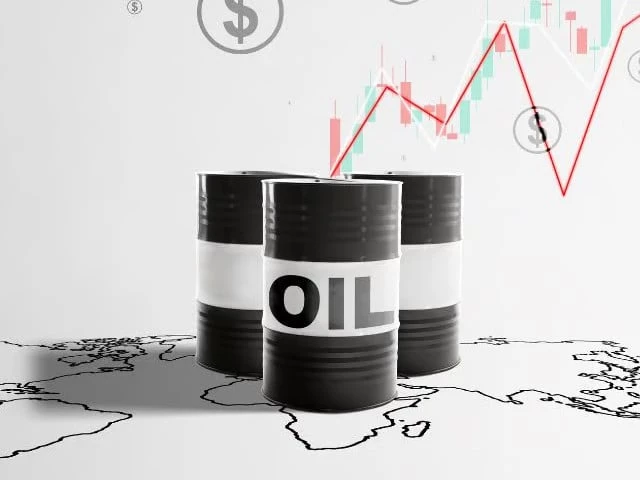
Mounting external vulnerabilities, rising oil prices, and a prolonged decline in investment are pushing Pakistan's economy towards slower growth and higher poverty, economists warned at the 19th Annual Conference on Management of the Pakistan Economy, hosted by the Lahore School of Economics.
Key findings presented at the two-day conference revealed that Pakistan's GDP growth for fiscal year 2025-26 could fall to 1.8%, significantly lower than the pre-conflict estimate of 3.2%, primarily due to surging global oil prices, which recently touched $120 per barrel. Inflation is projected to rise to 9.4%, further squeezing households already under pressure.
Experts noted that Pakistan's heavy reliance on imported energy – nearly 80% of total needs – amplified the economic shock by worsening the current account and increasing domestic costs.
In his opening address, Rector Shahid Amjad Chaudhry highlighted three major vulnerabilities: weak positioning in ongoing IMF negotiations due to accumulated debt, rising import costs driven by oil prices, and the urgent need for long-term structural reforms in taxation, regulation, and investment.
A panel chaired by former State Bank governor Ishrat Husain emphasised that while Pakistan's exchange rate had shown relative stability after sharp depreciations in 2018 and 2022, underlying pressures remained due to persistent external imbalances.
Researchers from the Lahore School of Economics' Modeling Lab warned that the country's sustainable growth rate had declined to 3.7%, limiting its ability to expand without triggering balance of payments crises. At the same time, the trend GDP growth has dropped sharply from 4% (1992-2018) to 2.5% (2018-2023), largely due to falling investment. Adding to concerns, the economists estimated annual capital outflows of $6-9 billion, attributing them to exchange rate depreciation and falling domestic profitability, which have weakened savings and investment.
On the external front, Graduate School of Development Studies Director Rashid Amjad pointed out that while remittances surged to around $40 billion in 2025, their impact on the domestic economy remained limited as a significant proportion was spent on imports. Structural weaknesses in Pakistan's economy also came under scrutiny. Speakers highlighted continued dominance of low-value textile exports, declining manufacturing capabilities, and shrinking global market share. Economists linked the slowdown in industrial growth to high borrowing costs and reduced private-sector investment.
Agriculture, traditionally a backbone of the economy, is also showing signs of stress. Researchers noted declining growth in key crops such as wheat and cotton, possibly due to falling support prices.
On policy, Professor of Economics at Asia-Europe Institute, University of Malaya Rajah Rasiah advocated for a proactive industrial strategy focused on export-led growth, suggesting that Pakistan could build on emerging strengths such as solar technology. The conference also highlighted worrying social indicators. Data showed that caloric poverty, which had declined steadily from 2000 to 2014, has reversed since 2018 and continued rising through 2025. Labour market challenges persist, with low female participation and high unemployment even among graduates, despite improvements in education.
Research on regulatory policy revealed untapped opportunities. A study, led by Theresa Thompson Chaudhry, found that firms significantly underestimated the benefits of solar energy, despite potential electricity savings of 40-60% and payback periods of less than two years. Meanwhile, financial inclusion remains a long-term challenge. According to Jamshed Uppal, Research Professor at Busch School of Business, it could take over five decades for 90% of Pakistan's population to gain access to formal banking services at the current pace.
Experts also stressed the importance of governance, with Matthew McCartney, a development economist, noting that stable political environments are more conducive to growth-oriented reforms and poverty reduction. In a broader assessment, conference participants warned that Pakistan was already facing a structural slowdown before the latest oil shock. Declining investment, exchange rate volatility since 2018, and rising capital outflows have collectively weakened economic fundamentals.
While the recent stabilisation of the exchange rate was acknowledged as a positive development attributed to government policy measures, economists cautioned against renewed calls for further depreciation, warning it could reignite inflationary pressures and deepen economic instability.
The conference concluded with a call for urgent, coordinated reforms to boost investment, enhance productivity, and strengthen export competitiveness.









This material may not be published, broadcast, rewritten, redistributed or derived from. Unless otherwise stated, all content is copyrighted © 2026 The Express Tribune.






COMMENTS
Comments are moderated and generally will be posted if they are on-topic and not abusive.
For more information, please see our Comments FAQ