
Dog culling ban
Updated 7 hours ago

Monetary Policy Committee has effectively acknowledged that the inflation trajectory is no longer benign
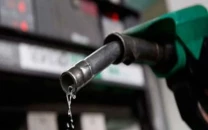
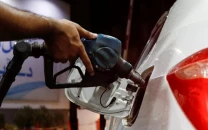
A 100 basis point increase in the policy rate rarely comes as a surprise. Yet when the SBP reverses course after nearly three years of easing and pushes the benchmark to 11.5%, it signals unease. Monday's decision is, at its core, a pre-emptive strike against a storm that has not fully arrived but is clearly forming. The trigger lies beyond Pakistan's borders. The deepening Middle East conflict, particularly the ripple effects of the US-Israel war on Iran, has unsettled global energy markets, driven up freight and insurance costs, and injected volatility into already fragile supply chains. For an import-dependent economy, imported inflation follows swiftly, often brutally.
The Monetary Policy Committee has effectively acknowledged that the inflation trajectory is no longer benign. Headline inflation has already crept up to 7.3% and core inflation to 7.8%, with projections now hinting at a return to double-digit territory in the coming months. In such an environment, inaction would risk un-anchoring expectations, a far more dangerous outcome than the immediate pain of higher borrowing costs. This is why the central bank has chosen to act early, even when growth indicators, including a 3.8% expansion in the first half of FY26, suggest a fragile recovery. Pakistan's economic stability remains hostage to external shocks. A spike in global oil prices translates almost mechanically into domestic inflation. The rate hike, therefore, is signalling discipline to markets. This is the perennial policy dilemma. Tightening too late fuels inflation. Tightening too early chokes recovery. In choosing the former risk, the central bank has made a judgement that inflation, once unleashed, is far harder to tame.
What this decision ultimately signifies is caution shaped by experience, that stability must remain reactive rather than resilient. Let's see whether this trade-off delivers lasting stability or merely postpone the coming threat.



This material may not be published, broadcast, rewritten, redistributed or derived from. Unless otherwise stated, all content is copyrighted © 2026 The Express Tribune.








COMMENTS
Comments are moderated and generally will be posted if they are on-topic and not abusive.
For more information, please see our Comments FAQ