US official Paul Kapur concludes Pakistan visit after high-level meetings
Updated 1 hour ago

Iran FM visits Islamabad again, holds key discussions
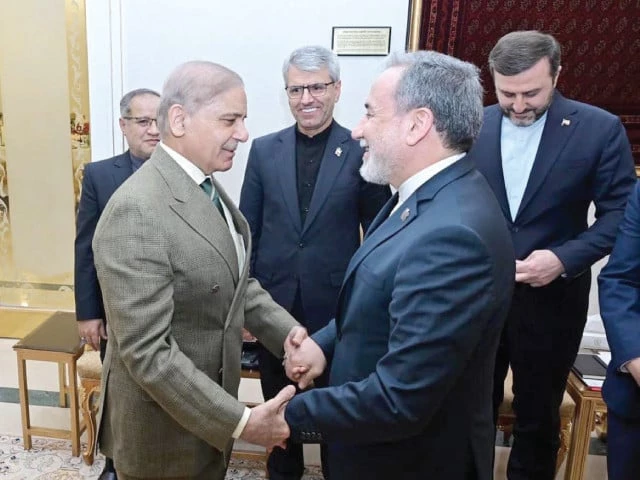
Despite no immediate prospects of direct talks between Iran and the United States, diplomacy remains very much alive, as a flurry of behind-the-scenes activity suggests a serious push to seek a permanent end to the war, it emerged on Sunday.
Iran's Foreign Minister Abbas Araghchi returned to Islamabad after spending several hours in Muscat, Oman, as part of ongoing diplomatic engagements. Araghchi travelled to Muscat on a Pakistani aircraft, while members of his delegation returned to Tehran for consultations with the leadership back home.
Upon his return, his team regrouped in Islamabad for further discussions with Pakistani authorities. Significantly, sources said Araghchi met Pakistan's Chief of Army Staff Field Marshal Syed Asim Munir, soon after arriving from Oman, as part of consultations on efforts to de-escalate regional tensions.
According to Iranian media, Araghchi also carried written messages outlining Tehran's position on key issues, including its "nuclear red lines" and the Strait of Hormuz. The communication, officials said, was not part of formal negotiations but an effort to clearly convey Iran's stance amid ongoing diplomatic efforts.
After a brief stopover in Islamabad, Araghchi is expected to travel to Moscow, where he will meet Russian authorities, including President Vladimir Putin. Russia, a close ally of Iran, has previously offered to help resolve issues surrounding Tehran's enriched uranium stockpiles.
What has emerged so far is that several regional countries are now actively involved in diplomatic efforts. Following his return from Oman, the Iranian foreign minister also held separate contacts with his Qatari and Saudi counterparts in what is being seen as an attempt to develop a broader regional framework ahead of any potential deal between Tehran and Washington.
Gulf countries, which have been directly affected by the Iran-US-Israel conflict, both through attacks and the fallout on energy markets, are keen to ensure their concerns are reflected in any future agreement.
Turkey, too, is playing an active role in de-escalation efforts, with its foreign minister engaging US negotiators as well as Iranian and Omani counterparts to discuss the evolving situation.
Pakistan continues to remain at the centre of these diplomatic manoeuvres. While a week-long security lockdown in Islamabad has now been lifted, the possibility of eventual US-Iran direct talks cannot be ruled out.
There appears to be a deliberate effort to keep discussions under wraps, as excessive media attention is seen as counterproductive. Although the United States has cancelled plans to send its team of negotiators to Islamabad, President Donald Trump's messaging has remained cautiously open.
In an interview with Fox News, Trump said the war with Iran would end soon and signalled that Washington was still open to engagement, stating, "If the Iranians want to talk, they can reach out to us."
Trump again commended Pakistan's efforts for peace talks, stating that he has "great respect" for Pakistan. "Great respect for Pakistan, but I will, because they've been terrific. They've really tried, and they'll stay involved," he said.
Iran's Ambassador to Pakistan, Reza Amiri Moghadam, in a post on X, also praised Pakistan's efforts for peace. He said that Araghchi's regional diplomatic tour aimed at reviewing bilateral relations with Pakistan as well as and consulting on the issue of regional developments.
"I would like to express my sincere and wholehearted gratitude and appreciation to the government, army and people of Pakistan, especially H.E. Prime Minister Muhammad Shahbaz Sharif and Field Marshal Asim Munir, for their tireless efforts and good office initiative to end the war and bring lasting peace to the region," he wrote.
"Here, I express my sincere gratitude to the army staffs, security forces, police, employees of all executive institutions and especially the honorable people of Pakistan and Islamabad residents, for their patience, hospitality and cooperative synergy during this period. Iran-Pakistan Friendship Zindabad."
Despite the absence of direct talks for now, Trump has not indicated any intention to resume hostilities or end the ceasefire, reinforcing the sense that space is being preserved for diplomacy. Diplomatic sources said that given the high stakes, both in terms of global peace and the economy, no party wants a return to conflict.
Iranian President Masoud Pezeshkian, meanwhile, told Prime Minister Shehbaz Sharif by phone that Tehran would not enter "imposed negotiations" under threats or blockade, according to a statement from the Iranian government. He said the US should first remove obstacles, including its maritime blockade, before negotiators could begin laying the groundwork for a settlement.
There is also a growing view that the decision to keep the ceasefire open-ended is part of a broader understanding to give diplomacy sufficient time to address complex issues. It is evident that the next round of talks between Iran and the US may take place once broader issues are addressed through backchannels.
In a related move, Deputy Prime Minister Ishaq Dar conformed traffic restrictions around the Serena Hotel and Islamabad's Red Zone had been lifted. He thanked the people of Pakistan, particularly residents of Islamabad and Rawalpindi, for their patience and cooperation, saying their support had helped ensure the safety of visiting delegations and facilitate ongoing peace efforts.
(WITH INPUT FROM NEWS DESK)







This material may not be published, broadcast, rewritten, redistributed or derived from. Unless otherwise stated, all content is copyrighted © 2026 The Express Tribune.








COMMENTS
Comments are moderated and generally will be posted if they are on-topic and not abusive.
For more information, please see our Comments FAQ