PSX jumps over 3,680 points as oil prices retreat
Updated 7 hours ago

Rising diversification in reserves, payments and energy trade signals slow erosion of dollar centrality

US global dominance has long rested on two key pillars: the petrodollar system and the US Treasury bond market. In exchange for security guarantees to oil-rich Gulf monarchies, Washington ensured that their oil is priced and sold in dollars and the revenue is recycled into US assets, especially Treasury bonds, compelling countries worldwide to channel reserves into US debt. This arrangement worked unchallenged so long as the United States played by the norms of the "rules-based" order it had established after World War II.
Today, however, both pillars are under strain as confidence in American credibility begins to erode. Central banks are increasingly dumping US Treasuries and buying gold as part of a broader reserves diversification strategy, triggering a sustained rally in the precious metal's price. The petrodollar system, meanwhile, faces mounting pressure, with countries such as Saudi Arabia, Iran, India and Russia exploring non-dollar currencies for oil trade.
The United States, analysts argue, has contributed to this shift through its own policy choices. The "weaponisation of the dollar" and erosion of Washington's role as a reliable security guarantor in the Persian Gulf have emerged as key concerns. The increasing use of unilateral financial sanctions against countries deemed defiant, including the freezing of their reserves held in US-linked financial systems, has accelerated efforts to diversify away from the dollar. This trend was further reinforced by the freezing of billions of dollars in Russian assets following the Ukraine conflict – an act Moscow described as "theft." Similarly, the ongoing US/Israel-Iran war exposed the limits of American security guarantees in the region as multiple US military bases in Gulf states became liabilities instead of serving as security shields.
The diversification of global central bank reserves has been endorsed by latest data from the International Monetary Fund (IMF). Interestingly, while overall foreign exchange reserves rose to a record $13.1 trillion in 2025, the dollar's share dropped to 56.77% - its lowest level since 1995. This decline from 72% in 2001 and nearly 60% just a few years ago shows the de-dollarisation of global reserves. The greenback may not be falling off a cliff, but it's surely ceding space – slowly but consistently.
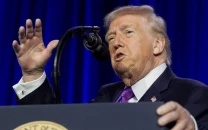
President Donald Trump's unilateral trade practices, particularly his "reciprocal" tariffs widely seen as violation of the "rules-based" global trading system, further accelerated this trend. During Trump's first year in office, US equities, bonds, and the dollar all declined in tandem, signalling weakening confidence in American financial instruments of power. A nearly 10% drop in the dollar index, coupled with a ballooning US debt burden exceeding $38 trillion, strengthened the perception that structural risks are rising.
Nonetheless, the US dollar continues to dominate where it matters most. Data from the Society for Worldwide Interbank Financial Telecommunication (SWIFT) shows that the greenback still accounted for over half of global payments at the end of 2025 – more than twice the euro's share. Around 56% of global trade and roughly 60% of offshore financing remain denominated by the American currency. During geopolitical crises, this dominance becomes even more pronounced: the US-Israel war against Iran triggered a dollar rally in March 2026, pushing the index back above the 100 psychological threshold. Paradoxically, the more the system fragments politically, the more it often consolidates financially – at least in the short term.
Still, the long-term structural shifts are unmistakably clear. The real shifts are not in the dollar's reserve share, but in the system's underlying plumbing. China's Cross-Border Interbank Payment System has registered rapid expansion, minimising reliance on SWIFT for renminbi transactions and positioning itself as an alternative settlement infrastructure. Within BRICS, proposals for blockchain-based payment connectivity and local-currency trade are gaining traction, reflecting a broader push to bypass dollar-centric channels altogether.
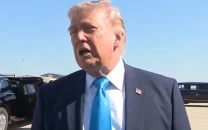
The United States is fully aware of this systemic shift, evident in Trump's public warning to BRICS nations against challenging the dollar's primacy. "We require a commitment from these countries that they will neither create a new BRICS currency, nor back any other currency to replace the mighty US dollar or, they will face 100% tariffs, and should expect to say goodbye to selling into the wonderful US economy," he said in a Truth Social post soon after his return to the White House.
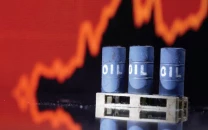
However, Global South countries are fed up with America's dominance of the global financial system – and the shift appears unstoppable. It is also clearly visible in energy markets – the main source of petrodollar's strength. The quiet expiration of the US-Saudi petrodollar arrangement in 2024 was a symbolic turning point. Since then, major oil producers have started shifting away from dollar, experimenting with multi-currency settlement frameworks. The growing use of renminbi in oil trade between Saudi Arabia and China, alongside Russia's pivot to non-dollar invoicing, suggests that the once-monolithic petrodollar system is loosening into something more diffuse.
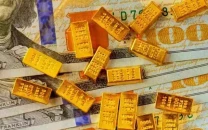
Gold, meanwhile, is staging a strategic comeback. Central banks have been buying it at the fastest pace in decades, pushing its share of global reserves close to 30% and elevating it above the euro as the second-largest reserve asset. In an era defined by sanctions risk and financial volatility, gold offers what fiat currencies cannot: neutrality. It is not just an inflation hedge; it is a geopolitical hedge.
Together, these trends point to a system in transition – not from dollar dominance to displacement, but from singularity to plurality. The dollar is unlikely to be replaced by any single rival. Instead, it is being eroded at the margins by a mix of currencies, commodities and payment systems that collectively dilute its preeminence. The trajectory is neither abrupt nor reversible. The incentives driving diversification, especially geopolitical fragmentation, technological innovation and risk management, are structural. This may not lead to a post-dollar world, but it would most likely result in a post-monopoly world: a less centralised monetary order in which the American currency remains first among equals, but no longer alone at the top.
THE WRITER IS AN INDEPENDENT JOURNALIST WITH SPECIAL INTEREST IN GEO-ECONOMICS










This material may not be published, broadcast, rewritten, redistributed or derived from. Unless otherwise stated, all content is copyrighted © 2026 The Express Tribune.







COMMENTS
Comments are moderated and generally will be posted if they are on-topic and not abusive.
For more information, please see our Comments FAQ