Govt explores AIIB financing
Updated 4 hours ago

Experts push for meaningful allocation in budget as global demand surges
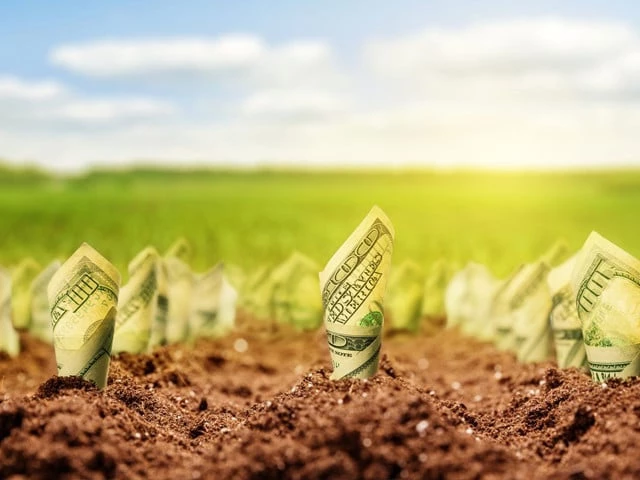
Agricultural stakeholders in Punjab are calling on Chief Minister Maryam Nawaz Sharif to dedicate a meaningful share of the next fiscal year's budget to organic farming, a sector they believe could fundamentally reshape the province's export profile and offer its farmers a more stable and profitable future.
The appeal comes at a time when the global appetite for organic food is on the rise. The worldwide organic food market is expected to reach $300 billion in 2026 and is projected to grow even more steadily in the years ahead. For a province sitting on 12 to 14 million hectares of cultivated land, the timing of this demand could hardly be more relevant.
"The province already has the land, the crops, and the climate needed to compete in global organic markets. What it lacks is a clear and funded policy direction," said Najam Mazari, who heads a research institution focused on organic food and products.
If only 10% of Punjab's cultivated area is brought under organic farming, it translates into 1.2 to 1.4 million hectares. "This alone could generate annual exports worth $1 to $2 billion. With better planning and sustained government support, the sector has the potential to reach $3 to $5 billion within a few years."
The numbers carry weight when placed in the context of global demand. Organic products command prices that are 20% to 40% higher than conventionally grown commodities in international markets. For farmers already struggling with input costs and fluctuating commodity prices, that margin can make a meaningful difference to household income.
Mazari pointed out that several Punjab crops, like Basmati rice, mangoes, kinnow, vegetables, and medicinal herbs, are already well regarded internationally and could serve as natural entry points into the organic export market.
The case for organic farming in Punjab, however, goes beyond export revenue. Conventional agriculture in the province has for decades relied heavily on chemical fertilisers and pesticides, contributing to soil degradation and water contamination.
Organic farming, by contrast, builds soil health over time and reduces the environmental footprint of food production. These benefits, while less immediately visible than export figures, form the foundation of any long-term agricultural strategy.
"The opportunity is real, but the shift from conventional to organic farming cannot happen overnight," said Chaudhry Arshad Ghaffar, a progressive farmer from South Punjab. He added that farmers need at least two to three years to detox their soil and obtain credible international certification. "The government has to invest wisely and transparently in that transition period, otherwise farmers will bear the financial risk alone, and most will simply not make the move."
Ghaffar's concern points directly to the structural barriers that have kept organic farming from scaling up in Punjab. Certification costs have long been a challenge for small and medium landholders, who cannot afford the fees required to access premium export markets.
Beyond certification, farmers also lack access to affordable credit, proper training, and supply chain infrastructure capable of meeting international standards.
These are gaps that Mazari believes targeted government intervention can close. "Organic farming should not be seen as just a farming activity; it should be treated as an export industry. If the government focuses on reducing certification costs, improving market access, and strengthening the supply chain, Pakistan can establish a serious presence in the global organic market."
Stakeholders said that the urgency behind this push is also shaped by the competition Punjab faces internationally. Countries like India, Sri Lanka, and several African nations have already moved ahead with structured organic export programmes, giving their farmers preferential access to high-value markets.
Pakistan, despite having suitable agro-climatic conditions and a long tradition of farming, has so far claimed only a marginal share of this space.
They argue that the upcoming budget presents a practical opportunity to begin closing that gap. The ask is not for a wholesale transformation of Punjab's agricultural sector in a single year, but for a funded starting point, one that provides farmers with subsidies, affordable loans, and hands-on training to ease the transition from conventional to organic methods.










This material may not be published, broadcast, rewritten, redistributed or derived from. Unless otherwise stated, all content is copyrighted © 2026 The Express Tribune.







COMMENTS
Comments are moderated and generally will be posted if they are on-topic and not abusive.
For more information, please see our Comments FAQ