Sins of elites and high energy costs
Updated 21 hours ago

Solving Balochistan’s crisis requires transparent elections over security-led governance
In an earlier reflection on Balochistan, I examined the paradox of competing narratives that define the province today. I also promised to identify what I call the "mother of all ills", the foundational flaw shaping elitist governance, distorted perceptions and persistent alienation in the province.
So what is this "mother of all ills" that officials struggle to contain amid widespread discontent with the governance system in Balochistan?
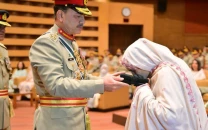
At a recent high-level interaction in Quetta, a senior military official made an important clarification: "No one is a traitor. We must respect differences of opinion within constitutional limits. Disagreement should not be equated with disloyalty."
This statement, made before nearly a hundred journalists and writers from across the country - almost half of them from Balochistan, including conflict-affected districts like Kharan, Awaran, Turbat and Gwadar - reflected an attempt to soften the tone of a deeply polarised discourse.
Yet what followed was a familiar blend of reassurance and contradiction.
Participants were presented with a narrative that oscillated between facts and perceptions: Baloch society was described in parts as lacking gratitude, suffering from excessive entitlement and avoiding hard work. At the same time, officials emphasised the province's vast mineral wealth and untapped economic potential.
The underlying message was clear: nation-building takes time, patience is essential, and dissenting voices are often misinformed or externally influenced.
Balochistan, it is repeatedly reminded, became a full province only in 1973 and is therefore "young" in administrative terms. Those raising critical questions are often framed as being influenced by hostile actors rather than legitimate political grievances.
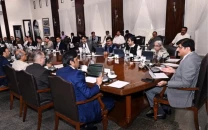
Across multiple engagements, officials outlined a framework of governance built around security-development integration. Central to this are institutions such as the Provincial Apex Committee and the newly introduced District Coordination Committees (DCCs) across 36 districts.
These structures are presented as instruments of stability, coordination and accelerated development, underpinned by what is described as unprecedented civil-military synergy.
On paper, the agenda is ambitious: roads, schools, hospitals and infrastructure projects are showcased as proof of progress. Physical development is positioned as a substitute for political empowerment.
However, this approach reveals a structural limitation. The DCC system, rather than strengthening elected local government institutions, effectively creates a parallel governance architecture that bypasses them. This deepens perceptions of exclusion rather than inclusion.
Public perception, ultimately, is not shaped by PowerPoint presentations in secure halls but by lived realities outside them.
A recurring contradiction emerges in official discourse: while the right to dissent is acknowledged in principle, critical voices are often simultaneously framed as anti-state.
Armed groups such as the Balochistan Liberation Army (BLA) and Balochistan Liberation Front (BLF) are categorised as kinetic security threats. In contrast, civil and political movements such as the Baloch Yakjehti Committee (BYC) and the Voice for Baloch Missing Persons (VBMP) are often described as "sub-kinetic threats" amplified through digital news platforms such as Balochistan Post, Bolan Affairs and others are seen through a securitised lens of narrative influence.
This layered classification of opposition is analytically useful within state security frameworks, but it often collapses under the weight of lived socio-political reality. Outside official corridors, these distinctions blur into a single perception of exclusion, grievance and lack of representation.
Even political actors such as Sardar Akhtar Mengal are increasingly absorbed into this widening spectrum of "anti-state" dissent, illustrating the shrinking space for conventional political mediation.
A fundamental distinction must be drawn between the state and society.
The state is not an abstract monolith; it is composed of institutions, bureaucracies and security structures. But these institutions are only a small subset of society. They exist to serve citizens, not substitute them.
Over time, however, governance in Balochistan rests on a top-down model, where policy is designed, explained and enforced rather than negotiated or socially embedded. Resultantly, perceptions of alienation deepen, and the state narrative - however well-articulated - loses credibility when governance relies on security-centric delivery mechanisms and administrative imposition.
At the core of this entire crisis lies what can be described as the "mother of all sins": a manipulated and non-representative political system.
This refers to an electoral and governance structure in which handpicked or weakly mandated political actors operate without genuine public legitimacy. representation, but as a licence for unchecked authority and abuse of state resources.
In such a system, even well-intentioned development efforts fail to translate into legitimacy. Trust cannot be engineered through infrastructure alone; it must emerge from representation, accountability and consent. It must be built from below - through participation and political ownership.
Without this, a fundamental contradiction persists: how can institutions accused of lacking moral credibility convincingly preach the rule of law, justice or fairness?
Despite the severity of the crisis, an important recognition exists within policy circles: the Balochistan problem cannot be resolved through force alone.
The conclusion is widely acknowledged - neither coercion nor counter-coercion offers a sustainable solution. The only viable path is dialogue via transparent electoral processes that produce genuinely elected political leadership.
The crisis in Balochistan is not merely one of security or development. It is fundamentally a crisis of political legitimacy and representation – a faultline that external forces are exploiting to the hilt. And at the heart of it all remains the unresolved "mother of all sins" - a political order that governs without full consent of the governed.








This material may not be published, broadcast, rewritten, redistributed or derived from. Unless otherwise stated, all content is copyrighted © 2026 The Express Tribune.
COMMENTS (2)
Comments are moderated and generally will be posted if they are on-topic and not abusive.
For more information, please see our Comments FAQ