Pakistan, seven other Muslim states condemn Israeli minister's 'disgraceful' actions against flotilla detainees
Updated 1 hour ago

Initially says Iran would “come to the table,” but later states he didn’t care if a “desperate” Iran returned to talks
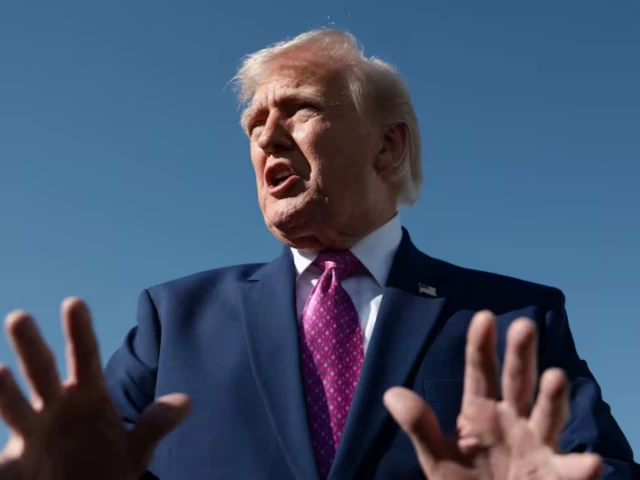
US President Donald Trump told reporters at Joint Base Andrews near Washington DC that he is "fine" if Iran doesn't return to negotiations
"I don't care if they come back or not. If they don't come back, I'm fine," Trump said, a day after the US-Iran peace talks in Pakistan failed to reach a deal. He added that the ceasefire between the US and Iran is "holding well".
.@POTUS on negotiations with Iran: "I don't care if they come back or not. If they don't come back, I'm fine." pic.twitter.com/iQEV428A6F
— Rapid Response 47 (@RapidResponse47) April 13, 2026
Trump said he believed Iran would continue to negotiate and called the Islamabad discussions "very friendly."
"I do believe they're going to come to the table on this, because nobody can be so stupid as to say, ‘We want nuclear weapons,’ and they have no cards," he said.
But several hours later, the US president said he did not care whether a "desperate" Iran returned to the negotiating table.
Also Read: Trump weighs limited Iran strikes alongside Hormuz blockade after Islamabad talks fail: WSJ
Ghalibaf blamed the US for not winning Tehran's trust, despite his team offering "forward-looking initiatives." Iran's President Masoud Pezeshkian, who discussed the talks in a call with Russian President Vladimir Putin, said Tehran wanted "a balanced and fair agreement."
"If the United States returns to the framework of international law, reaching an agreement is not far off," he told Putin, Iranian state media reported.
The US and Israel launched a joint offensive on Iran on February 28, killing thousands of people in Iran, including then-Supreme Leader Ayatollah Ali Khamenei and leaving tens of thousands injured, with civilian areas, including residential buildings and religious sites, among those hit.
The conflict also expanded geographically. Iran retaliated with drone and missile strikes targeting Israel as well as Jordan, Iraq, and Gulf countries hosting US military assets. It also restricted the movement of ships through the Strait of Hormuz.






This material may not be published, broadcast, rewritten, redistributed or derived from. Unless otherwise stated, all content is copyrighted © 2026 The Express Tribune.










COMMENTS
Comments are moderated and generally will be posted if they are on-topic and not abusive.
For more information, please see our Comments FAQ