ROs cannot trump voters will, says SC
Updated 4 hours ago

Bill seeks to raise marriage age to 18
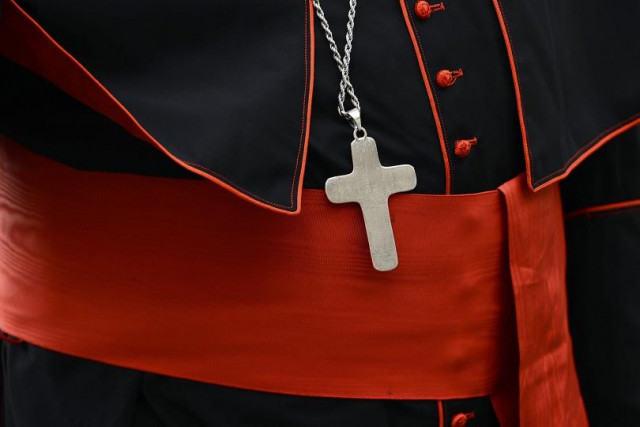
A major relief is expected for millions of Christian families in Punjab as the government moves to reform century-old family laws governing the community.
After 153 years, key amendments have been proposed to the Christian Marriage Act of 1872, addressing long-standing issues faced by the Christian community, particularly difficulties in marriage registration under the outdated colonial-era law.
A proposed Christian Marriage Act Bill 2026 has been prepared and submitted in the Punjab Assembly by Standing Committee on Minority Affairs Chairman Philobus Christopher as a private member bill.
Under the proposed legislation, the minimum age for marriage for both men and women in the Christian community will be set at 18 years. Previously, the law allowed marriage at 16 for boys and 13 for girls.
The bill also proposes that both the bride and groom must be Christian, whereas under the existing law, marriage was permitted if one of the parties was Christian.
A key reform includes mandatory registration of Christian marriages with Union Councils and the National Database and Registration Authority, which was not possible under the current law.
The proposed law further allows marriages to be solemnized in all registered churches across Punjab according to Christian rites, removing earlier restrictions that limited this authority to specific churches such as Catholic and Church of England institutions.
It also permits marriages at any time of the day, abolishing the previous restriction that prohibited ceremonies after 6 pm.
Additionally, the bill clarifies that marriage will be defined strictly as a union between a man and a woman, replacing earlier ambiguous wording referring to "parties".
The proposed 'Christian Marriage Act Bill, 2026' was submitted as a private member bill by Falbus Christopher, the chairman of the Standing Committee on Minority Affairs.
Under the bill, the age of marriage - previously set at 16 years for boys and 13 years for girls - will be standardised to 18 years. Furthermore, the bill mandates that both the bride and groom must be Christian for the marriage to be solemnised under this specific act, shifting from the current law, which only requires one party to be of the Christian faith.
One of the most significant practical changes involved the formal integration of Christian marriage certificates into the official government database. Under the proposed bill, for the first time, union councils and Nadra will be legally bound to record these marriages, a process that was previously impossible under the outdated 1872 regulations.
This will grant Christian couples easier access to legal protections, inheritance rights, and official identification documents that were once mired in bureaucratic limbo.
The bill also removed archaic social restrictions, such as the ban on conducting wedding ceremonies after 6pm, allowing families the freedom to celebrate at any time or day.
In a move toward greater religious inclusivity, the authority to perform marriages has been expanded beyond the Catholic and Church of England denominations. The bill says that any pastor from a government-registered church who graduated from a recognised theological seminary will be authorised to solemnise vows.
Additionally, the bill clarifies the definition of marriage as a union specifically between a man and a woman, replacing the vague "two persons" terminology used in the British-era text.













This material may not be published, broadcast, rewritten, redistributed or derived from. Unless otherwise stated, all content is copyrighted © 2026 The Express Tribune.






COMMENTS
Comments are moderated and generally will be posted if they are on-topic and not abusive.
For more information, please see our Comments FAQ