Fed holds rates steady amid sharp divide
Updated 3 hours ago

Chambers propose lower policy rates, abolition of Section 7E, regional linkages
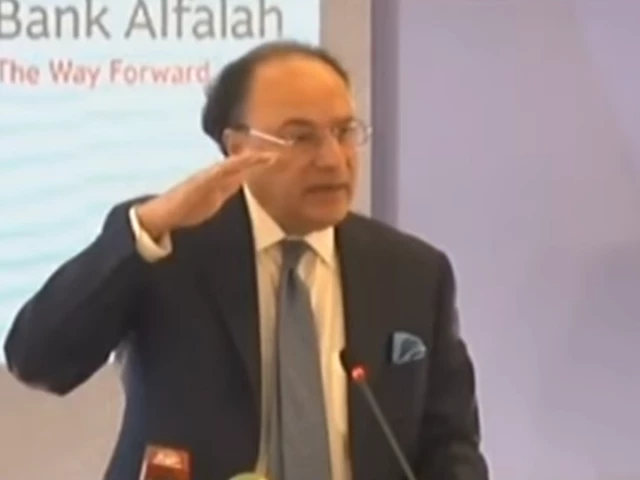
Federal Minister for Finance and Revenue Senator Muhammad Aurangzeb chaired a virtual meeting with presidents and senior office bearers of chambers of commerce and business entities from across the country to discuss the prevailing economic situation, upcoming budget priorities, and avenues for strengthening economic recovery and growth, according to an official statement from the finance ministry on Thursday.
The meeting, which lasted nearly 90 minutes, was also attended by Minister of State for Finance Bilal Azhar Kayani, along with senior officials of the Finance Division, Revenue Division, and Tax Policy Office.
Opening the session, Aurangzeb welcomed the participants and appreciated their continued engagement with the government. He highlighted Pakistan's growing prominence on the global stage amid evolving regional dynamics and underscored the importance of maintaining regular and structured dialogue with the business community.
The minister explained that the purpose of the meeting extended beyond discussions on taxation and the upcoming budget, focusing equally on identifying practical and forward-looking ideas to leverage current opportunities for enhancing trade, attracting investment, and promoting sustainable economic growth. He noted that Pakistan had entered the recent challenging phase from a position of relative macroeconomic stability, supported by fiscal discipline and strengthened external buffers.
Highlighting recent economic developments, the minister pointed to improvements in fiscal management, fulfilment of external obligations, and targeted support measures for vulnerable segments. He noted that the government has made a payment of $1.4 billion for the Eurobond and assured that all financial obligations will be fulfilled in the coming months. He further encouraged participants to share actionable proposals to capitalise on emerging opportunities, particularly in trade facilitation, logistics, and regional connectivity, including the growing potential of Pakistan as a transshipment and investment hub.
Following the minister's remarks, the floor was opened for discussion, with participants presenting a broad range of proposals and recommendations aimed at supporting economic activity and enhancing competitiveness. The discussion focused on improving the overall business environment, facilitating exports, strengthening productivity, and aligning policy frameworks with regional benchmarks.
LCCI President Faheemur Rehman Saigol congratulated the government for raising Pakistan's economic profile. He stressed that the government should address rising shipping charges with shipping companies and noted that remittances from Gulf Cooperation Council (GCC) countries may decline, which requires review. Saigol emphasised the importance of renewable energy, particularly solar and hydel, and suggested improving banking channels in Central Asia to enhance trade. He proposed that banks above a certain profit threshold be obligated to open branches in Central Asian countries, citing the potential of the market.
Jawed Balwani highlighted the need for Pakistan to negotiate with the United States to lower tariffs. He said the increasing cost of doing business is a major challenge and urged that freight rates be decreased.
Atif Ikram from FPCCI called for the abolition of Section 7E to promote the real estate sector, restoring the final tax regime for exporters, promoting small and medium enterprises (SMEs), and increasing the FBR threshold from Rs250 million to Rs350 million.
Usman Shaukat of the Rawalpindi Chamber of Commerce and Industry asked for further relief in the current period, lowering policy rates, enhancing regional connectivity and trade, providing tax incentives to promote exports and import substitution, and introducing a real estate support package.
Zubair Motiwala emphasised reducing the cost of doing business to promote exports and suggested a comparative analysis of Pakistan's business costs with regional countries.
Minister of State for Finance Bilal Azhar Kayani, in his remarks towards the conclusion of the meeting, appreciated the constructive input from the business community and reaffirmed the government's commitment to continued engagement. He noted that many of the proposals were aligned with the government's reform agenda and emphasised that the government is trying to increase the tax net through better policy initiatives.
Senior officials from the Tax Policy Office and Federal Board of Revenue also briefed participants on the ongoing consultative process, assuring that proposals received from chambers were being carefully evaluated to formulate balanced and effective policy measures. They reiterated that continuous stakeholder engagement would remain central to shaping a responsive and growth-oriented budget.
Hamid Ateeq highlighted that the prime minister has asked government departments to submit proposals to promote the real estate sector.
Concluding the meeting, the finance minister thanked the participants for their valuable contributions and reaffirmed the government's resolve to work closely with the business community to steer the economy towards stability, resilience, and sustainable growth. He emphasised that sustained collaboration between the public and private sectors will be essential in achieving these objectives.












This material may not be published, broadcast, rewritten, redistributed or derived from. Unless otherwise stated, all content is copyrighted © 2026 The Express Tribune.





COMMENTS
Comments are moderated and generally will be posted if they are on-topic and not abusive.
For more information, please see our Comments FAQ