UAE’s new pipeline bypassing Strait of Hormuz nearly 50% complete, oil chief says
Updated 1 hour ago

Islamabad locked down for US–Iran talks as Hormuz blockade stays and Iran ties deal to Israel actions
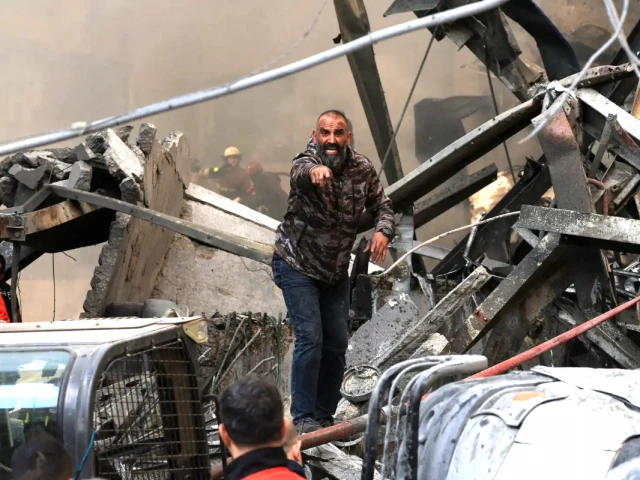
Israel bombed more targets in Lebanon on Thursday, putting the United States-Iran ceasefire into further jeopardy after the biggest Israeli attacks on its neighbour of the war killed more than 250 people and threatened to torpedo President Donald Trump's truce.
In Pakistan, authorities locked down Islamabad in anticipation of the war's first peace talks.
But there was no sign Iran was lifting its near-total blockade of the Strait of Hormuz, which has caused the worst disruption to global energy supplies in history. Tehran said there would be no deal as long as Israel was striking Lebanon.
In the first 24 hours of the ceasefire, just a single oil products tanker and five dry bulk carriers sailed through a strait that accommodated 140 ships a day before the war.
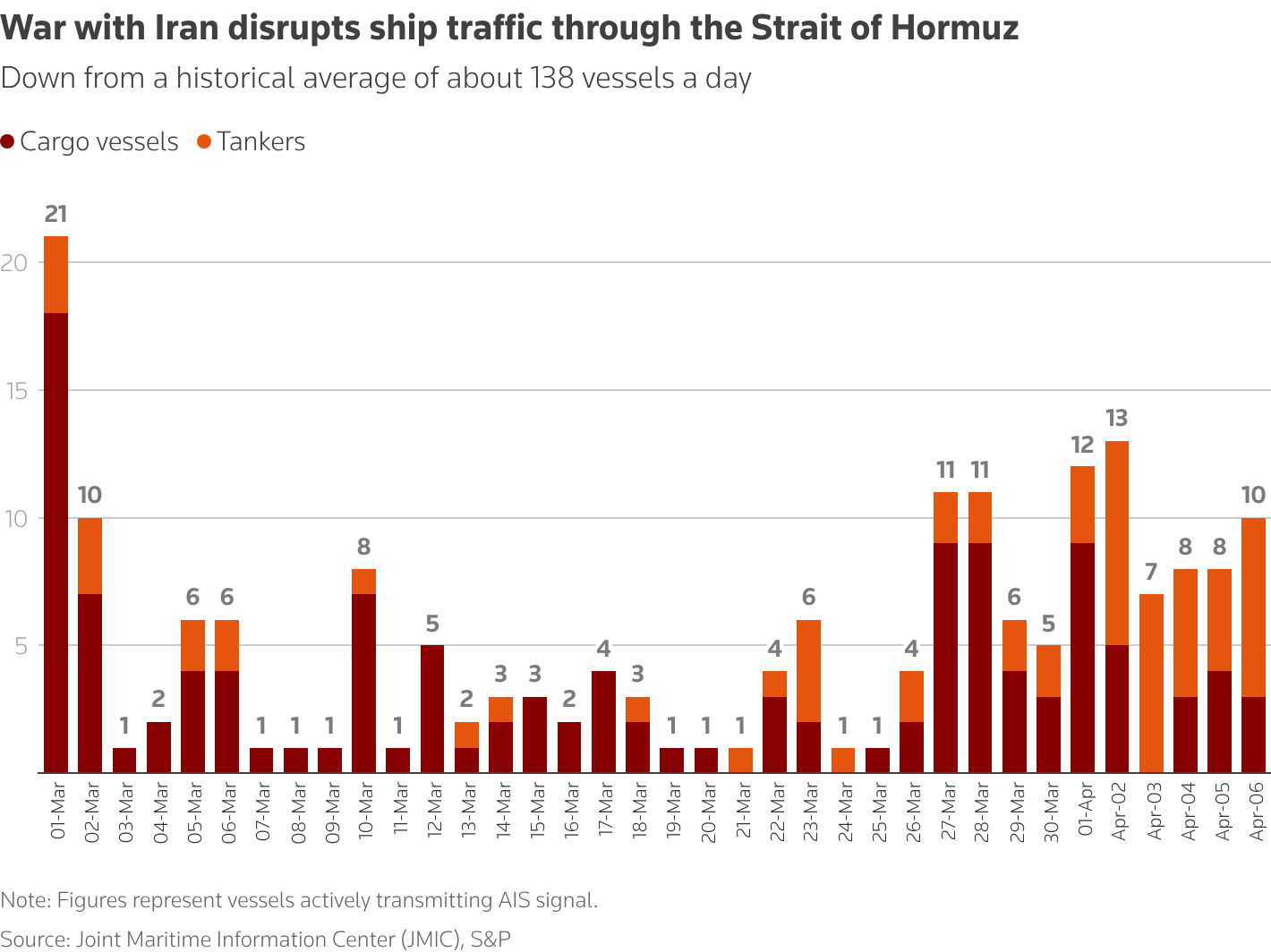
Daily shipping traffic through the Strait of Hormuz fell to less than 10% of its historical average after the start of the US-Israel war.
Israel says ceasefire does not cover Lebanon
Israel, which invaded Lebanon last month in parallel with the war on Iran to root out Hezbollah, says its actions there are not covered by the ceasefire announced late on Tuesday by Trump.
Washington has also said Lebanon is not covered by the truce, but Iran and Pakistan, which acted as mediator, say it was explicitly part of the deal. A host of countries, including Britain and France, said the truce should extend to Lebanon.
Iran's Parliament Speaker Mohammad-Bagher Ghalibaf, expected to head the Iranian delegation opposite US Vice President JD Vance, posted on social media that Lebanon and the rest of Iran's "axis" of regional allies were inseparable parts of any ceasefire.
Mourning for Khamenei
After six weeks of war, Trump has sought an off-ramp before the economic consequences derail his presidency.
The ceasefire has curbed a surge in benchmark oil prices, which are based on contracts to deliver oil a month in the future. But present-day spot prices are still rising, with some refineries in Europe and Asia paying record levels near $150 a barrel. The US retail price for diesel rose to $5.69 a gallon on Thursday, just 13 cents below the all-time high.
Inside Iran, where the halt to six weeks of US and Iranian airstrikes has been portrayed as a total victory for the clerical rulers, huge crowds turned out to commemorate 40 days of mourning for former supreme leader Ayatollah Ali Khamenei, killed on the war's first day.
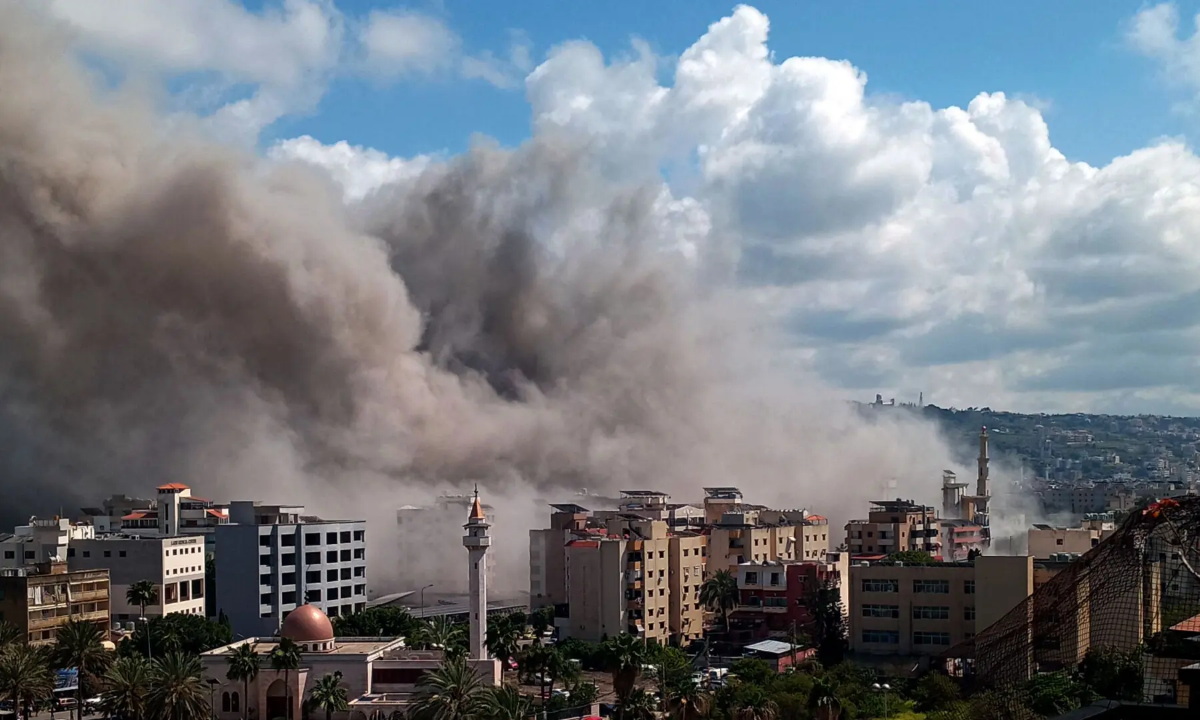
Smoke rises from the site of an Israeli airstrike that targeted an area in the southern Lebanese city of Sidon on April 8, 2026. PHOTO: AFP
State TV showed crowds in Tehran and other cities, with mourners in black carrying Iranian flags and portraits of Khamenei and his son and successor Mojtaba. Commemorative billboards were displayed and a huge Hezbollah flag hung from one building.
Trump, who announced the truce just before a deadline he had set to destroy Iran's "whole civilisation" unless it unblocked the strait, said on Wednesday he would resume attacks unless Iran complies: "the 'shootin’ starts,' bigger and better, and stronger than anyone has ever seen before".
Though Trump has declared victory, Washington has not achieved the aims he announced at the war's outset: to eliminate Iran's ability to attack its neighbours, destroy its nuclear programme or make it easier for Iranians to topple their government.
Also Read: US-Iran talks: PM Shehbaz, CDF Munir affirm 'all out support' to both sides for peaceful agreement
Iran still possesses missiles and drones that can hit its neighbours and a stockpile of more than 400 kilogrammes of uranium enriched to near weapons-grade. Its rulers, who put down a mass uprising just months ago, survived the superpower onslaught with no sign of organised opposition.
And they demonstrated their ability to exert control of the strait despite a massive US military presence in the region.
Iran is pressing for even more US concessions in a final deal, including the total lifting of sanctions that have crippled its economy and acknowledgement of its control over the strait, previously freely open to trade.
Washington, for its part, wants Iran to yield up the enriched uranium, forego further enrichment, give up its missiles and stop backing regional allies, all demands it had already made in talks it abandoned two days before the war.
Iranian officials say they plan to impose rules on passage through the strait, including a potential fee. Iran's Revolutionary Guards published a map with the strait's main shipping channels marked as unsafe, telling ships instead to sail around islands nearer the Iranian shore.




This material may not be published, broadcast, rewritten, redistributed or derived from. Unless otherwise stated, all content is copyrighted © 2026 The Express Tribune.





COMMENTS
Comments are moderated and generally will be posted if they are on-topic and not abusive.
For more information, please see our Comments FAQ