Couple gunned down over property dispute
Updated 5 hours ago

Limited reservoirs, failing systems, delayed projects leave desert communities struggling
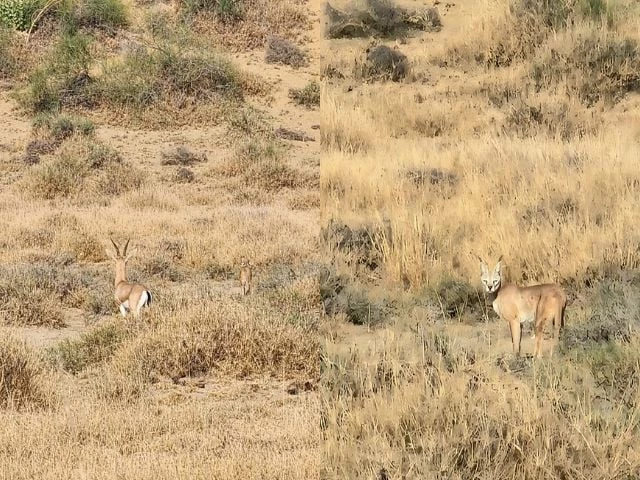
Fears of drought are once again intensifying in the vast desert of Cholistan, where rising temperatures, erratic rainfall and climate change are increasing risks for the fragile region.
Spanning nearly 6.6 million acres and stretching across the districts of Bahawalpur, Bahawalnagar and Rahim Yar Khan, Cholistan is known for its centuries-old pastoral culture and nomadic lifestyle.
However, water scarcity remains a persistent threat to both residents and their livestock.
According to climate experts, Pakistan is among the countries most vulnerable to climate change.
Weather forecasts for 2026-27 suggest the country may face extreme heat, prolonged heatwaves, unpredictable rainfall, and the simultaneous risk of droughts and floods.
The meteorological department has warned that temperatures in South Punjab, Sindh and Balochistan are likely to remain above normal, with increased intensity of heatwaves expected between March and July.
These conditions could further aggravate water shortages in desert regions like Cholistan.
At the same time, above-average monsoon rains could trigger flooding, reflecting growing uncertainty in weather patterns.
Cholistan has experienced severe droughts in the past.
The 19992002 drought is considered one of the worst in recent history, when lack of rainfall dried up water ponds, destroyed grazing lands and led to the death of thousands of livestock.
Similar conditions were witnessed in 2014 and 2017, while in 2022, unofficial estimates suggested that around 3,000 animals died due to extreme heat and thirst, though no official data is available.
Traditionally, rainwater in Cholistan has been stored in "tobas" and "kunds," indigenous water reservoirs.
Official figures indicate there are around 1,150 tobas in the region, but only about 180 currently hold partial water. Additionally, nearly 90 government-built and 50 locally constructed kunds contribute to water supply, though extreme heat and evaporation limit their effectiveness.
While some water supply systems exist in areas adjoining Bahawalpur, large parts of Cholistan in Rahim Yar Khan district lack basic facilities, forcing many communities to rely on water tankers.
In view of potential drought conditions, the government of Punjab has directed district administrations to take precautionary measures.














This material may not be published, broadcast, rewritten, redistributed or derived from. Unless otherwise stated, all content is copyrighted © 2026 The Express Tribune.







COMMENTS
Comments are moderated and generally will be posted if they are on-topic and not abusive.
For more information, please see our Comments FAQ