Tola budget proposes rupee at 250 per dollar
Updated May 24, 2026

Industry experts warn CKD imports fuel trade deficit as localisation fails to keep pace
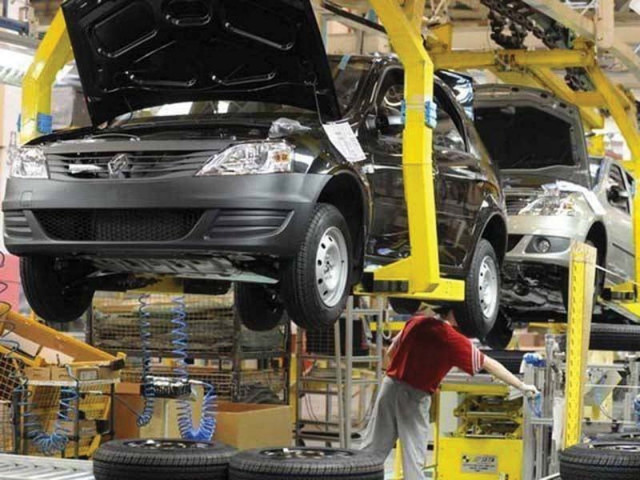
In the last two auto policies, the government aimed to increase competition in the auto sector by lowering entry barriers through tax incentives, an objective the country has largely achieved.
The sector now stands at a point where it is necessary to push new entrants to begin localising parts of their vehicles so that it becomes productive, creates jobs and adds value, rather than remaining consumption-driven and placing a burden on already strained foreign exchange reserves.
"Pakistan cannot achieve sustainable economic growth while expanding its auto sector on imports instead of localisation," said Mashood Khan, Director of the Small and Medium Enterprises Development Authority (SMEDA).
Khan said Pakistan's auto industry is facing a growing structural challenge as the import of completely knocked down (CKD) and semi knocked down (SKD) kits continues to rise, leading towards an import-driven assembly of vehicles. What was intended to promote localisation and technology transfer ultimately led to increased reliance on imported components, which was not the original goal.
This trend is particularly concerning given Pakistan's limited foreign exchange reserves and narrow export base, where rising imports directly contribute to a widening trade deficit and increased dependence on external financing, he stressed.
Historically, CKD and SKD imports were intended as temporary mechanisms to support the development of domestic manufacturing capacity. However, instead of declining with industrial maturity, imports have steadily increased from 2021-22 to 2025-26.
"This reflects that localisation has not kept pace with industry growth," said Khan.
Rather than evolving into a value-added manufacturing sector, the industry is increasingly operating as a sub-assembly ecosystem with minimal local content.
A key factor behind this imbalance is the policy framework that allows new entrant OEMs to import CKD and SKD kits at concessional tariff rates with relatively relaxed localisation requirements. These incentives were initially aimed at attracting investment, increasing competition and promoting technology transfer. However, the ground reality suggests otherwise. Many new entrants have established assembly-based operations, importing major components from countries such as China and Korea while contributing limited localisation within Pakistan.
Speaking on the issue, Ali Asghar Jamali, CEO of Indus Motors, said Pakistan remains an attractive and growing auto market with strong future potential, but emphasised that increasing localisation requires a shift in strategy. He noted that the country must develop core upstream industries such as steel, aluminium, plastics and chemicals to support a complete domestic value chain.
He also stressed that a stable long-term policy framework of 15 to 20 years is essential to build investor confidence and encourage global players to bring in capital and technology, which would ultimately support localisation.
Jamali further highlighted that consistency in policies is key to attracting meaningful foreign investment. "When investors see stability and growth potential, they are more willing to invest, and that naturally leads to higher localisation," he said, adding that localisation and investment must go hand in hand.
Offering a critical perspective, Abdul Rehman Aizaz said previous auto policies introduced in 2016 and 2021 succeeded in attracting new entrants but failed to enforce localisation requirements effectively. As a result, many companies relied on what he described as "screwdriver assembly" - importing semi-assembled units rather than developing local manufacturing capabilities.
He explained that in several cases, vehicles were imported as SKD kits, where major components arrived pre-assembled and were simply fitted together in Pakistan. This limited the role of local vendors and reduced opportunities for domestic value addition. "Even components that could have been assembled locally were brought in as complete sub-assemblies," he said.
Aizaz noted that these practices continued for more than half a decade, allowing companies to benefit from policy concessions without investing in localisation. He pointed out that cars introduced under such policies often contained as much as 90% to 100% imported components, compared with about 50% in more localised vehicles produced by established players. This imbalance significantly increased the import bill and contributed to foreign exchange outflows.
He further added: "The policy did not deliver meaningful benefits to consumers either." Despite increased competition, affordable vehicles for middle-income groups remained limited, while small cars continued to be dominated by older models. Some new entrants introduced vehicles that failed to gain traction due to pricing and market mismatch.
At the same time, local auto parts manufacturers faced declining business volumes as imported components replaced domestically produced parts. This, Aizaz said, hindered technological progress and reduced opportunities for SMEs, weakening the overall industrial ecosystem.
Experts also expressed concern over the broader economic implications of rising CKD and SKD imports, noting that the trend has contributed to Pakistan's widening trade deficit and increased reliance on external financing.
Looking ahead, Aizaz raised concerns about the government's upcoming electric vehicle (EV) policy, warning that it risks repeating past mistakes. While the policy includes significant incentives and subsidies to promote EV adoption, he argued that it does not adequately address localisation. "If parts continue to be imported at this scale, it will put further pressure on foreign exchange reserves," he cautioned.
He also highlighted inconsistencies in tax structures, noting that imported components are often taxed at lower rates than locally produced parts, discouraging domestic manufacturing. Additionally, he questioned the classification of certain vehicles, such as plug-in hybrids and range-extended electric vehicles, as EVs despite their continued reliance on internal combustion engines.




This material may not be published, broadcast, rewritten, redistributed or derived from. Unless otherwise stated, all content is copyrighted © 2026 The Express Tribune.








COMMENTS (1)
Comments are moderated and generally will be posted if they are on-topic and not abusive.
For more information, please see our Comments FAQ