Court rejects bail in doctor shooting
Updated 17 hours ago

Leaders warn conflict will hurt both, call for urgent talks to ensure stability
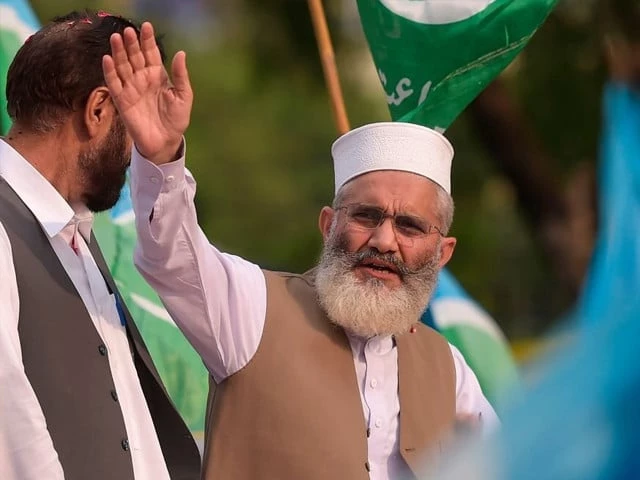
Former Jamaat-e-Islami chief Sirajul Haq has called on Muslim countries to place lasting peace above conflict, warning that even the apparent winner in any war between two Islamic nations ultimately suffers defeat.
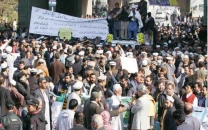
Speaking at a policy dialogue titled "Pakistan-Afghanistan Conflict and Its Regional Impacts," organised by the Institute of Islamic Studies (IRS) here on Friday, Sirajul Haq cautioned that rising tensions between Pakistan and Afghanistan would hit the Pashtun population on both sides of the border hardest while further damaging their already fragile economies.
He hinted at external interference, claiming that certain global powers do not want to see stability between the two neighbouring Muslim states.
"Dialogue is the only way forward," he stressed. "All disputes must be resolved through negotiations. Sustainable peace in the region can only be achieved through diplomatic engagement, not confrontation."
Barrister Mohammad Ali Saif, a senior Pakistan Tehreek-e-Insaf (PTI) leader and former adviser on information, criticised Islamabad's handling of relations with Kabul. He said Pakistan should have established timely and effective diplomatic channels with Afghanistan, but political point-scoring on both sides had derailed meaningful talks and deepened mistrust.
"The people of both countries have no desire for war," Saif said, urging leaders on both sides to immediately de-escalate tensions. He warned that excluding Khyber-Pakhtunkhwa from the negotiation process would make durable peace almost impossible, given the province's direct stake in cross-border issues.
Saif also took aim at the federal government's diplomatic approach, saying issues with Afghanistan were never addressed with seriousness or through sustained high-level engagement. The lack of direct high-level exchanges, he added, had only widened the gulf between the two nations.
Criticising the Afghan Taliban, Saif said the group had failed to honour its commitments and appeared to be acting under external pressures, which had contributed to the rising tensions. However, he expressed cautious optimism that sincere dialogue could still resolve the differences if both sides showed genuine commitment.
Earlier, Dr Mohammad Iqbal Khalil, Chairman of the IRS, and senior journalist Tahir Khan also addressed the gathering. All speakers unanimously called for immediate negotiations, emphasising that regional peace is inseparably linked to mutual stability and cooperation between Pakistan and Afghanistan.
The speakers highlighted Pakistan's decades-long hosting of millions of Afghan refugees as a remarkable example of generosity rarely seen in the world. They concluded that the time had come for both nations to move beyond conflict and embrace dialogue, cooperation, and peace as the only path to long-term prosperity.





This material may not be published, broadcast, rewritten, redistributed or derived from. Unless otherwise stated, all content is copyrighted © 2026 The Express Tribune.







COMMENTS
Comments are moderated and generally will be posted if they are on-topic and not abusive.
For more information, please see our Comments FAQ