PTI cries foul after leaders detained in G-B
Updated 4 hours ago

Pakistan told to collect Rs322 billion from court cases
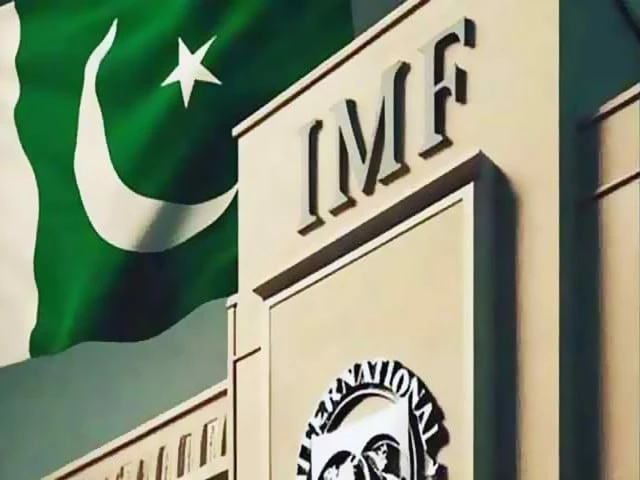
The International Monetary Fund (IMF) on Saturday announced a staff-level agreement with Pakistan for the release of a $1.2 billion loan but linked the executive board meeting to approve the tranche with Islamabad's ability to collect Rs322 billion revenues from the court cases.
After finding the performance of the Federal Board of Revenue below par, the Washington-based global lender has imposed a "prior action" whose successful implementation will pave the way for the executive board meeting, said the Pakistani authorities.
The IMF reached the staff level agreement only after seeking assurances that the government would strictly adhere to pre-war fiscal targets, while the central bank would raise interest rates if inflation exceeds the target range and allow exchange rate flexibility to absorb external shocks arising from the conflict.
According to the prior action, the FBR would collect additional tax revenue stemming from the recent court judgments in the previously disputed cases and where the courts have given rulings as of end of February, according to the government officials.
They said that both IMF and Pakistan have agreed that an amount of Rs322 billion would be collected from the court rulings, mainly in the super tax cases. The FBR is not only collecting the principal amount but also claiming late payment surcharges of up to 25%.
The government has already collected the majority of the disputed taxes and was confident that the required amount would be generated before Pakistan's case is circulated to the board for approval. Pakistan is hopeful that after meeting the prior action, the board can meet in early May to approve the next loan tranche.
Upon approval, Pakistan will gain access to about $1 billion under the EFF and $210 million under the RSF, bringing total disbursements under the two arrangements to approximately $4.5 billion.
The FBR has missed its first eight months of this fiscal year's original tax target by a margin of Rs640 billion. It has attributed the shortfall to declining collection in the power, oil and gas sectors.
The FBR stated in these meetings that during the first half of the fiscal year, around half of the shortfall was offset by higher collection of the petroleum levy and provincial cash surpluses, lower than expected cost of flood responses and loan repayments from the SOEs stemming from the power sector circular debt settlement.
Amid growing tax disputes and the FBR's struggle to deal with the matters, Prime Minister Shehbaz Sharif has constituted a task force to improve the legal affairs of the FBR, according to a notification.
The task force will revamp and strengthen the FBR's revenue litigation framework at all levels including initial adjudication by tax department, commissioner, collector appeals, appellate tribunals Inland Revenue and Customs, High Courts, Supreme Court and the Federal Constitutional Court.
The Task Force will be chaired by Mr. Shad Mohammad and includes senior and the eminent constitutional and tax lawyer Hafiz Ahsaan Ahmad Khokhar, Advocate Supreme Court, highlighting the seriousness of the government initiative.
Members are required to conduct a comprehensive assessment of the existing legal wings, covering workload management, human and logistical resources, and overall operational capacity. The review will focus on identifying structural weaknesses, procedural bottlenecks, and systemic inefficiencies that contribute to prolonged litigation and delayed resolution of tax and customs disputes.
A key component of the review will be the Litigation Management System (LMS), which has faced challenges in integration with appellate tribunals and superior courts.
The Task Force is expected to recommend reforms that ensure a more effective, data-driven, and institutionally coordinated approach to litigation.
The IMF is now also focusing on weaknesses in the FBR's internal governance, signalling concerns that government efforts to strengthen the tax machinery have yet to produce fully effective results.
Middle East war to impact Pakistan
"The conflict in the Middle East, however, casts a cloud over the outlook as volatile energy prices and tighter global financial conditions risk putting upward pressure on inflation and weigh on growth and the current account," the IMF said.
In contrast, Pakistan's Finance Ministry has projected inflation would rise only marginally by 0.3%, remain within the target, economic growth would stay around 4%, and the current account deficit would remain within $2 billion despite global oil price shocks.
Iva Petrova, the IMF Mission Chief said Pakistan authorities "remain committed to pursuing sound and prudent macroeconomic policies to preserve the recent gains in macro-financial stabilization, while deepening structural reforms to accelerate growth and strengthening social protection to mitigate the impact of volatile energy prices".
The Fund's assessment contrasts with projections by Pakistan, which has said the war would have no major economic implications.
No relaxation in targets
The IMF did not ease the pre-war primary budget surplus target of 1.6% of GDP despite the State Bank of Pakistan previously indicating the goal might be difficult to achieve due to weak tax collection performance by the FBR. The Fund also maintained stringent fiscal targets for the next financial year.
Petrova said authorities remained committed to ensuring a sustainable fiscal position and reducing the still high public debt burden over the medium term.
"Efforts are ongoing to meet the FY26 budget primary surplus of 1.6% of GDP and to target an underlying primary balance of 2% of GDP in FY27, supported by measures to broaden the tax base and strengthen expenditure discipline," she said.
She also pointed to efforts to enhance expenditure sharing between the federal and provincial governments, as Islamabad has requested provinces to share the burden of fuel subsidies, which had already risen to Rs125 billion by April 3.
"Efforts are underway to enhance fiscal burden sharing between federal and provincial governments and to strengthen public financial management," Petrova said.
The IMF stressed that steadfast implementation of fiscal reforms remains critical to achieving programme objectives.
Petrova said the State Bank of Pakistan remains committed to maintaining inflation within its target range and stands ready to raise interest rates if price pressures intensify, including due to pass-through effects from global food and fuel price volatility. Pakistan has set an inflation target of 7.5%, which the Finance Ministry believes remains achievable despite fuel price shocks.
The IMF said exchange rate flexibility should continue to serve as the primary shock absorber against spillovers from the Middle East conflict, while ensuring banks can finance imports and external payments amid potential balance-of-payments pressures. The Fund reiterated that Pakistan must achieve energy sector viability and prevent a recurrence of circular debt.
"It is critical that sustainability is maintained through timely tariff adjustments that ensure cost recovery," Petrova said, adding that energy price subsidies should be avoided due to their high fiscal cost and distortionary effects.
The IMF also highlighted structural reforms, saying progress on state-owned enterprise reforms and the privatisation agenda remains central to reducing the state's economic footprint and improving service delivery.
Authorities are also strengthening institutional capacity and intensifying anti-corruption efforts to promote inclusive growth and ensure a level playing field for businesses and investors.













This material may not be published, broadcast, rewritten, redistributed or derived from. Unless otherwise stated, all content is copyrighted © 2026 The Express Tribune.






COMMENTS
Comments are moderated and generally will be posted if they are on-topic and not abusive.
For more information, please see our Comments FAQ