Retailers propose 10pm business closure time
Updated 11 hours ago

Think tank warns quotas may worsen inflation, shortages and black market activity
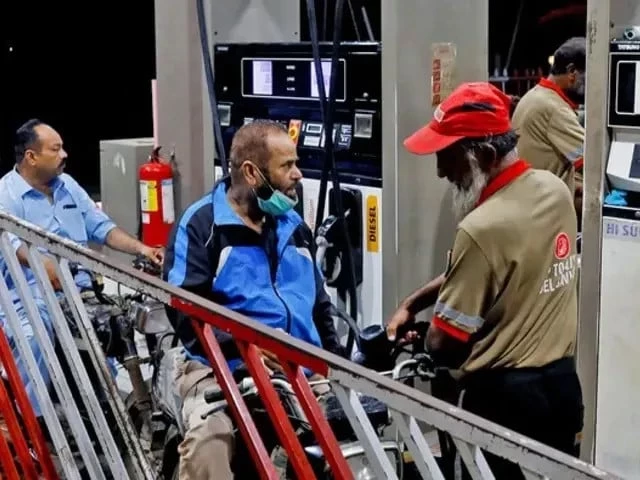
Proposed fuel rationing and subsidies are likely to exacerbate inflationary and macroeconomic pressures in the country, including Price Differential Claims (PDC), which are feared to hit Rs100 billion in just three weeks.
This assessment comes against the backdrop of the government considering a plan to introduce fuel rationing and subsidies by allocating quotas to low-income segments of auto users, including motorcycles, rickshaws and possibly small vehicles, while keeping prices higher for others.
"While intended to control consumption and manage scarcity, this proposal risks allocation inefficiencies, governance challenges, supply shortages and illicit markets. This is a double jeopardy," said a report prepared by the PRIME think tank, which examined the possible repercussions of oil rationing in the face of the Middle East conflict. Though subsidised consumers benefit from lower fuel prices within their quotas, the majority, including transporters, will face higher effective fuel costs, which are passed on to goods and services, raising the cost of production across the economy.
The think tank projected that persistently high energy prices ($150 per barrel and above) could increase Pakistan's current account deficit by $4.5 billion, putting strain on the balance of payments. In just two weeks, the PDC has risen from Rs23 billion to Rs48 billion. "Unchecked subsidies could worsen the PDC to Rs100 billion in the third week. This is a painful reminder of the oil price freeze, in 2022, which set in motion a potential economic default," it said. According to the report, economic theory suggests that rationing and subsidies override the price mechanism, allocating fuel based on fixed quotas rather than economic value. This would result in misallocation; for instance, commercial riders and low-frequency commuters may receive the same fuel allocation despite different marginal productivity, generating deadweight loss and reducing overall efficiency.
Additionally, the proposed system is administratively complex, relying on mobile applications, CNIC-linked authentication and specialised distribution infrastructure. "Such a framework introduces significant management and compliance costs and creates opportunities for manipulation, leakage and wastage," it said.
Echoing similar sentiments, an oil industry official pointed to the absence of accurate data on motorcycle owners as a major hurdle, while adding that three-wheeler operators would pass on the additional cost to customers.
In demand-supply terms, the report noted that rationing acts as a binding quantity cap, creating excess demand at subsidised prices. This excess demand leads to shortages, long queues, informal payments and black market premiums.
It added that the price differential between subsidised and market fuels incentivises rent-seeking and arbitrage, proxy usage and retail collusion. Over time, a parallel market emerges, eroding efficiency and regulatory credibility.
Experts emphasised that the government must look beyond short-term gains and adopt a prudent approach to manage fuel supplies.
Speaking to The Express Tribune, PRIME CEO, Dr Ali Salman said, "The government did the right thing by passing on the fuel price hike to consumers in the first go but, by absorbing subsequent price increases, it is now falling prey to populism."
"Populist policy can yield short-term political gains; however, it will bring an economic disaster, followed by a political one. We witnessed it in 2022. Bad economics is also bad politics," he said.
A more efficient approach would be to maintain market-based fuel prices, using higher sales tax rates as the primary mechanism to raise prices and reduce consumption. Salman argued that the government should leverage its contacts with Iran and the United States and formalise oil supply through the western borders in Balochistan to address possible shortages and manage supply. "It will also put downward pressure on prices. When even the US itself has lifted some sanctions on Iranian oil, what is stopping Pakistan from doing it?"
Additionally, there is a critical need to reduce the government's fuel expenditure. In the long term, the state should focus on supply-side solutions, including diversifying the energy mix and boosting strategic fuel reserves, to enhance energy security and reduce vulnerability to external shocks.






This material may not be published, broadcast, rewritten, redistributed or derived from. Unless otherwise stated, all content is copyrighted © 2026 The Express Tribune.





COMMENTS
Comments are moderated and generally will be posted if they are on-topic and not abusive.
For more information, please see our Comments FAQ