Turkiye calls Netanyahu 'Hitler of our times'
Updated 2 hours ago

Urges importance of continued diplomatic engagement to ensure peace, stability in the region
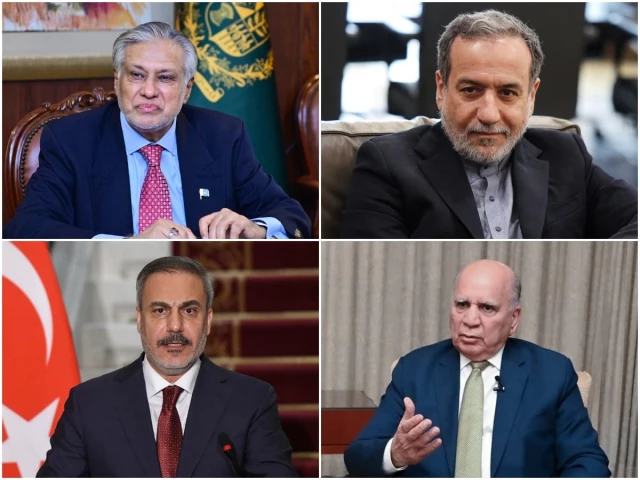
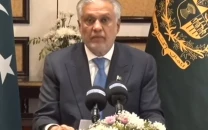
Deputy Prime Minister and Foreign Minister Ishaq Dar on Monday stressed the importance of sustained diplomatic engagement and collective efforts to de-escalate tensions and ensure peace and stability in the Middle East during separate calls with his counterparts from Iran, Turkey and Iraq.
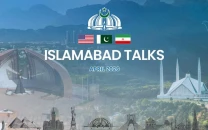
The recent talks came amid reports of Pakistan’s active mediation to defuse tensions between the United States, Israel and Iran and to further de‑escalate the crisis in the Gulf region. Since the outbreak of hostilities, Islamabad has intensified diplomatic engagement with Gulf and other regional countries to prevent a wider conflict.
According to a statement issued by the Ministry of Foreign Affairs (MOFA) on X, Dar held a telephone conversation with the Iranian FM Abbas Araghchi to discuss recent regional developments and the evolving security situation following recent US and Israeli strikes on Tehran.
“Dar emphasised the importance of dialogue and diplomacy to promote peace, security, and stability in the region and beyond,” the MOFA statement read.
The ministry added that both sides agreed to remain in close contact regarding the evolving situation.
Deputy Prime Minister/Foreign Minister Senator Mohammad Ishaq Dar @MIshaqDar50 held a telephone conversation this evening with the Foreign Minister of Iran, Abbas Araghchi @Araghchi.
— Ministry of Foreign Affairs - Pakistan (@ForeignOfficePk) March 23, 2026
They discussed recent regional developments. DPM/FM emphasized the importance of dialogue &… pic.twitter.com/iFQPLO58Fn
Dar also spoke with Türkiye’s FM Hakan Fidan on the evolving regional situation.
“Both leaders reviewed the latest developments in the region, including the recent announcement by the US president regarding a temporary halt in hostilities,” the statement said.
It added that Dar emphasised the importance of continued diplomatic engagement to ensure peace and stability in the region and beyond.
Deputy Prime Minister/Foreign Minister Senator Mohammad Ishaq Dar @MIshaqDar50 today spoke with Foreign Minister of Türkiye, Hakan Fidan @HakanFidan, on the evolving regional situation.
— Ministry of Foreign Affairs - Pakistan (@ForeignOfficePk) March 23, 2026
Both leaders reviewed the latest developments in the region, including the recent… pic.twitter.com/0CfHuelrvE
Earlier, FM Dar also held a telephone conversation with Iraqi counterpart Fuad Hussein to discuss the prevailing situation.
“Both leaders expressed deep concern over the ongoing regional escalation and its wider implications,” the statement said.
The Foreign Office said Dar underscored the need for collective efforts to de-escalate tensions and prevent further instability, stressing that dialogue and adherence to international law remain essential for ensuring peace, security and stability.
The two leaders also exchanged Eid greetings, the ministry added.
Deputy Prime Minister/Foreign Minister Senator Mohammad Ishaq Dar @MIshaqDar50 today held a telephonic conversation with Deputy Prime Minister/Foreign Minister of Iraq, Fuad Hussein @Fuad_Husseein, on the prevailing regional situation.
— Ministry of Foreign Affairs - Pakistan (@ForeignOfficePk) March 23, 2026
Both leaders expressed deep concern over… pic.twitter.com/jb5P5jCB61
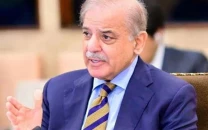
Prime Minister Shehbaz Sharif also held a telephone conversation with Iranian President Masoud Pezeshkian, stressing the need to work collectively for de-escalation and highlighting a return to dialogue and diplomacy.
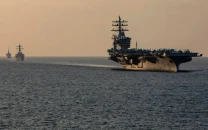
The conflict between the United States, Israel, and Iran erupted on February 28, 2026, when US and Israeli forces launched coordinated strikes on Iranian military sites, citing threats to regional security. The attacks quickly escalated into a broader confrontation, with Iran retaliating through drone and missile strikes targeting US assets and allied interests across the Gulf.
Read More: China's FM Wang Yi appreciates Pakistan's efforts for de-escalation
The situation worsened when Iran's former supreme leader Ayatollah Ali Khamenei was killed in US and Israeli strikes. The killing spurred protests across Pakistan in major cities, including Karachi and Lahore.
Pakistan has maintained a cautious but supportive stance, calling for restraint and dialogue while avoiding direct involvement. Islamabad has expressed solidarity with Iran, highlighting historical, cultural, and economic ties. Officials have engaged in diplomatic efforts, with PM Shehbaz and Deputy Prime Minister Ishaq Dar, who also serves as foreign minister, holding regular calls with relevant regional leaders to urge de-escalation.




This material may not be published, broadcast, rewritten, redistributed or derived from. Unless otherwise stated, all content is copyrighted © 2026 The Express Tribune.



COMMENTS
Comments are moderated and generally will be posted if they are on-topic and not abusive.
For more information, please see our Comments FAQ