Rs107b price differential claims remain unpaid
Updated 3 hours ago

Tax systems designed primarily for extraction eventually undermine revenue due to weak economic growth

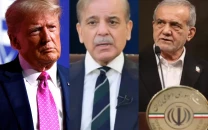
The federal budget for next fiscal year (2026-27) will be under preparation after Eid holiday. Our policymakers would face an uphill task to balance the budget amidst the 37-month $7 billion Extended Fund Facility (EFF) of the International Monetary Fund (IMF) and shockwaves of the war imposed on Iran by the US and Israel in circumstances.
Regional war has intensified geopolitical risk, commodity markets remain volatile and global financial conditions continue to tighten. For a country already navigating fiscal consolidation under an IMF programme, the margin for policy error has become extremely narrow.
In such moments, governments often resort to familiar instruments: higher tax rates, new levies and additional withholding measures designed to secure immediate revenue. Pakistan's experience over several decades suggests that this approach rarely produces durable fiscal stability. Slower investment, weaker economic activity and a shrinking tax base often follow temporary revenue gains.
A more sustainable framework for fiscal policy is outlined in the PIDE-PRIME Tax Reforms Commission report titled "Revenue with Growth". The report argues that Pakistan's tax system must move away from narrow revenue extraction towards a structure that supports economic expansion. Simplification of taxes, encouragement of investment, protection of exports and modernisation of tax administration form the central pillars of this approach. In the difficult environment facing the country today, this framework offers a practical guide for budget strategy.
Escaping high-tax, low-growth trap
Pakistan's fiscal dilemma has long been structural. Revenues remain modest relative to the size of the economy while expenditures – particularly debt servicing and defence – continue to rise. Periods of geopolitical tension naturally intensify these pressures.
Historically, the response has been to increase taxes on existing taxpayers rather than expand the underlying economic base. This pattern has created a cycle in which weak growth leads to revenue shortfalls, tax rates are increased to meet fiscal targets, higher taxes suppress investment and economic activity, and slow growth again produces fiscal stress.
The PIDE-PRIME report challenges this cycle by emphasising a basic principle of public finance: tax systems designed primarily for extraction eventually undermine the revenue they seek to maximise. Breaking this pattern requires a shift towards policies that expand the productive economic activity.
Simplifying complex tax system
Pakistan's tax structure has gradually evolved into a complicated web of withholding taxes, presumptive regimes and special levies such as super tax and turnover taxes. Such complexity raises compliance costs, increases litigation and discourages documentation of economic activity. Simplification therefore becomes the logical starting point for reform.
A tax structure with moderate rates applied to a broader base is more likely to encourage compliance while reducing administrative disputes. Predictability is particularly important in the present environment where businesses already face uncertainty from global geopolitical developments.
Encouraging investment and industrial expansion
Economic growth ultimately depends on investment. Yet Pakistan's tax policy often raises the cost of investment through high duties on machinery and industrial inputs.
The PIDE-PRIME report recommends removing regulatory duties and additional customs duties and allowing zero-rating of plant, machinery and key intermediate goods. Such measures would reduce the cost of capital investment and support technological upgrading within industry.
For the upcoming budget, this principle carries special significance. Periods of regional instability often lead businesses to delay expansion plans. Clear policy signals encouraging industrial investment can counter that hesitation and strengthen confidence in the economy.
Protecting export competitiveness
Exports remain central to Pakistan's economic resilience. Yet exporters frequently face liquidity constraints arising from withholding taxes, delayed refunds and administrative bottlenecks.
Budget policy should therefore focus on removing distortions affecting export sectors and ensuring efficient refund mechanisms. Strengthening export competitiveness improves foreign exchange earnings and reduces pressure on the balance of payments – an objective that becomes even more critical during periods of global economic turbulence.
Modernising tax administration
Tax reform cannot succeed without administrative reform. The PIDE-PRIME report emphasises the importance of digitisation, automation and reduced discretionary authority in tax administration.
Modern data-driven systems can minimise direct interaction between taxpayers and officials, reduce opportunities for rent seeking and improve voluntary compliance. Administrative credibility becomes especially important in times of economic stress when taxpayers already face higher costs and uncertainty.
Fiscal discipline and credibility
Credible fiscal management must accompany a growth-oriented tax system. Citizens are more willing to comply with taxation when public expenditures demonstrate discipline and transparency.
The upcoming budget should therefore combine tax reform with efforts to rationalise non-development spending and improve efficiency in public sector operations. Fiscal credibility strengthens the relationship between the state and taxpayers and supports long-term revenue mobilisation.
Turning crisis into reform
Pakistan's economic history shows that periods of crisis often create the political space for structural reform. The present geopolitical and economic pressures therefore offer an opportunity to rethink fiscal strategy.
Instead of repeating the familiar pattern of incremental tax increases, policymakers could use the upcoming budget to initiate transition towards a growth-oriented tax system. Simplifying taxes, encouraging investment, strengthening exports and modernising administration would gradually expand the economic base and improve long-term fiscal stability.
In uncertain times, the most effective fiscal policy is not the one that extracts the largest revenue in the short term. It is the one that strengthens the productive capacity of the economy and ensures sustainable revenue in the years ahead.
The writer is the Advocate Supreme Court, Adjunct Faculty at LUMS, member Advisory Board, visiting Senior Fellow of Pakistan Institute of Development Economics and holds LLD in tax laws











This material may not be published, broadcast, rewritten, redistributed or derived from. Unless otherwise stated, all content is copyrighted © 2026 The Express Tribune.






COMMENTS
Comments are moderated and generally will be posted if they are on-topic and not abusive.
For more information, please see our Comments FAQ