China sends astronaut on year-long space mission as it eyes 2030 moon landing
Updated May 24, 2026

Accused Western media outlets, without evidence, of “close coordination” with Iran to spread AI-generated “fake news”
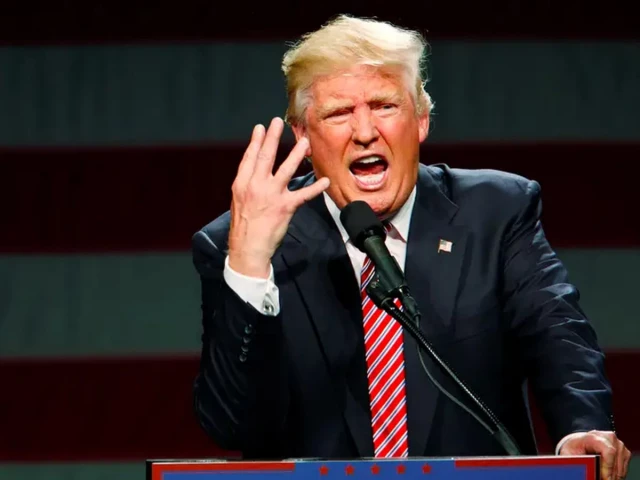
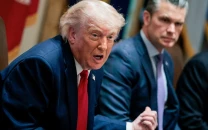
US President Donald Trump on Sunday accused Iran of using artificial intelligence as a “disinformation weapon” to misrepresent its wartime successes and support.
“AI can be very dangerous, we have to be very careful with it,” Trump said to reporters on Air Force One shortly after he made a post on his Truth Social platform where he accused Western media outlets, without evidence, of “close coordination” with Iran to spread AI-generated “fake news.”
The comments come amid renewed tensions between the Federal Communications Commission and broadcasters after Trump took aim at media coverage of the US and Israel’s war with Iran. FCC Chairman Brendan Carr on Saturday threatened to pull the licenses of broadcasters who did not “correct course” on their coverage.
Trump has frequently accused news media outlets of lying when they run stories that he sees as critical of him, and he has previously called for removing the licenses of broadcast outlets he views as unfair.
Between the social media post and his comments to journalists, Trump on Sunday cited three instances where he claimed Iran used AI to mislead the public.
On Truth Social, he said that Iran had shown “kamikaze boats” that do not exist. He further stated that Iran used AI to falsely depict a successful attack on the USS Abraham Lincoln aircraft carrier, adding that publications that propagated the news should be charged with treason.
🚨 BREAKING: Trump Accuses Iran of AI-Driven Disinformation Campaign
— Global News Intel (@Pol_ScientistNG) March 16, 2026
Former U.S. President Donald Trump has issued a lengthy statement accusing Iran of running what he describes as a massive propaganda and disinformation operation during the ongoing geopolitical tensions in the… pic.twitter.com/UuRJiB6k4f
Reuters has verified images filmed from the Iraqi port of Basra, which showed explosive-laden Iranian boats appearing to attack two fuel tankers, killing at least one crew member. Iranian state media did claim that Iran’s military struck the USS Abraham Lincoln, though the claim was not widely picked up by Western outlets.
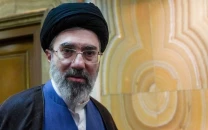
Trump also claimed that images showing "250,000" Iranians at a rally to support new Supreme Leader Mojtaba Khamenei were "totally AI-generated" and that the event "never took place."
🚨 BREAKING: Massive crowds gather in Tehran’s Enghelab Square waving Iranian flags in support of Ayatollah Mojtaba Khamenei. pic.twitter.com/lACPYI6wTi
— Adi Baz (@AdiBazi16) March 9, 2026
Crowds Rally in Tehran’s Revolution Square to Pledge Allegiance to New Supreme Leader
— Washington Eye (@washington_EY) March 10, 2026
Supporters gathered in large numbers backing Ayatollah Seyyed Mojtaba Hosseini Khamenei, highlighting the deep internal divide in Iran and the challenges facing any external push for regime… pic.twitter.com/Bs60P6X8sk
Several pro-government demonstrations have occurred in Iran since the war began, but a brief search by Reuters did not find any Western reports that cite a figure of 250,000. Many media organisations, including Reuters, have run news photos showing crowds in Tehran after Khamenei was named leader.
Trump did not clarify the specific news reports from Iran he was referencing.
On the other hand, the Trump administration's posting of live footage of attacking Iranian targets adds to the ongoing unprecedented gamification of war that distorts the truth of those attacks.
Since the first 24 hours of Operation Epic Fury, Iranian ballistic missile and drone attacks have dropped drastically. pic.twitter.com/4Bpl5lZKD8
— U.S. Central Command (@CENTCOM) March 11, 2026
Footage like this, capturing the act of destruction from the vantage point of the attacker, places the viewer in the attacker's position, like in first-person shooter games, distorting the actual horror stemming from it.
According to Axios, with two weeks into Operation Epic Fury, much of the White House's online messaging resembles online trolling — a stream of videos splicing real missile strikes with footage from Call of Duty, Wii Sports and Hollywood blockbusters.
One video wove clips from "Top Gun," "Iron Man", and "Braveheart" between images of Iranian targets being destroyed, ending with the "Mortal Kombat" audio: "Flawless victory."
Another opened with a Grand Theft Auto meme — "Ah sh*t, here we go again" — before cutting to live strike footage from Iran.
The White House account on TikTok posted a video mixing SpongeBob clips with an Iranian drone being destroyed.
This is the first time that a generation is passively consuming war content in the same feed as memes, pop culture and other AI-generated material, misrepresenting the nature of the devastation caused.
With input from Web Desk









This material may not be published, broadcast, rewritten, redistributed or derived from. Unless otherwise stated, all content is copyrighted © 2026 The Express Tribune.






COMMENTS
Comments are moderated and generally will be posted if they are on-topic and not abusive.
For more information, please see our Comments FAQ