Australians returning from Gaza flotilla recount torture, sexual abuse during Israeli detention
Updated 1 hour ago

US officials predict quick end to Iran war, while Tehran says it can outlast foes
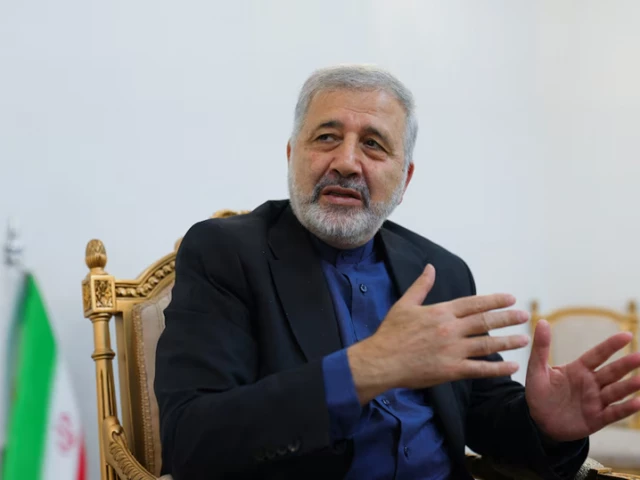
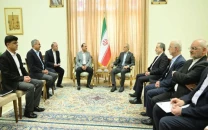
Iran's relations with Gulf states will require a "serious review" in light of the US-Israeli war on Iran, limiting the power of external actors so the region can become prosperous, Tehran's ambassador to Saudi Arabia told Reuters on Sunday.
Asked if he was concerned that relations would be harmed by the war, Ambassador Alireza Enayati said: "It's a valid question, and the answer may be simple. We are neighbors and we cannot do without each other; we will need a serious review."
"What the region has witnessed over the past five decades is the result of an exclusionary approach [within the region] and an excessive reliance on external powers," he said in a written response to questions, calling for deeper ties between the Gulf Cooperation Council's six members, along with Iraq and Iran.
Gulf Arab states have faced more than 2,000 missile and drone attacks since the outbreak of the war on February 28, with targets including US diplomatic missions and military bases but also critical Gulf oil infrastructure, ports, airports, hotels and residential and office buildings.
The United Arab Emirates, which normalised relations with Iran's arch-foe Israel in 2020, has faced the brunt of the attacks. But all Gulf Arab states have been impacted, and all have condemned Iran.
Behind the scenes, analysts and regional sources say there is also growing frustration at the US, long their security guarantor, at dragging them into a war they did not endorse but for which they are paying a hefty price.
In Saudi Arabia, attacks have been concentrated on the eastern region where most of the kingdom's oil is produced, as well as the Prince Sultan Airbase hosting US forces east of Riyadh, and the Diplomatic Quarter on the Saudi capital's western edge, according to Saudi defence ministry statements.
Saudi Arabia and Iran re-established full diplomatic relations in 2023 after years of enmity that saw them back rival political and military factions across the region.
Iran 'not responsible' for attacks on Saudi oil sector
Enayati denied that Iran was responsible for the attacks on Saudi Arabia's oil infrastructure, including the Ras Tanura refinery on the east coast and dozens of attempted drone attacks on the Shaybah oil field in the desert near the UAE border.
"Iran is not the party responsible for these attacks, and if Iran had carried them out, it would have announced it," he said. He did not say who had carried out the attacks.
Saudi Defence Ministry statements have not assigned blame for individual incidents. Enayati said Iran was only attacking US and Israeli targets and interests.
Enayati said he personally was in ongoing contact with Saudi officials, with relations "progressing naturally" in many areas. He highlighted Saudi cooperation regarding the departure of Iranians who were in the kingdom for religious pilgrimage and the provision of medical assistance to others.
He said Tehran was in contact with Riyadh regarding Saudi Arabia's publicly stated position that its land, sea and air would not be used to attack Iran, without elaborating on the discussions.
His message to Gulf states was that the war "has been imposed on us and the region."
To resolve the conflict, the US and Israel must halt their attacks and regional countries should not be involved, while international guarantees must be secured to prevent their recurrence, he said.
"Only then can we focus on building a prosperous region," he added.
US officials predict quick end to Iran war, while Tehran says it can outlast foes
US officials responding to economic uncertainty over high oil prices predicted on Sunday that the US-Israeli war on Iran would end within weeks and that a drop in energy costs would follow, despite Iran's assertion that it remains "stable and strong" and ready to defend itself.
US President Donald Trump threatened more strikes on Iran's main oil export hub Kharg Island over the weekend and said he was not ready to reach a deal to end the war which has shut off the vital Strait of Hormuz and shaken up global energy markets.
Trump has said Iran wants to negotiate, but Iranian Foreign Minister Abbas Araghchi on Sunday disputed that claim.
“We have never asked for a ceasefire, and we have never asked even for negotiations," Araghchi told CBS' "Face the Nation" programme. "We are ready to defend ourselves for as long as it takes,” he said.
With crude oil prices hovering around $100 a barrel, Trump administration officials insisted that all signs point to a relatively quick end to the conflict.
"This conflict will certainly come to the end in the next few weeks — could be sooner than that ... and we'll see a rebound in supplies and a pushing down of prices after that," US Energy Secretary Chris Wright told ABC's "This Week" programme.
Meanwhile, Araghchi sought to project an image of strength.
"It's not a war of survival. We are stable and strong enough," Araqchi told CBS. "We don't see any reason why we should talk with Americans, because we were talking with them when they decided to attack us, and that was for the second time."
With the war entering its third week, Trump said on Saturday that US strikes had "totally demolished" much of Kharg Island and warned of more, telling NBC News on Saturday, "We may hit it a few more times just for fun."
The comments marked a sharp escalation from Trump, who had previously said the US was targeting only military sites on Kharg, and dealt a blow to diplomatic efforts to end a war that has spread across the Middle East and killed more than 2,000 people, most in Iran and Lebanon.
The World Health Organization said on Sunday that it had released $2 million in emergency funds to countries in the region, which has experienced large-scale population movements with more than 100,000 people in Iran relocating and up to 700,000 in Lebanon internally displaced.
Washington has brushed aside attempts by Middle Eastern allies to open talks, three sources told Reuters, and Iran's Revolutionary Guards said on Sunday they had fired more missiles at Israel and three US bases in the region.
Netanyahu posts video in response to rumours that he is dead
Israeli Prime Minister Benjamin Netanyahu posted a video of himself getting a cup of coffee and chatting with his aide on Sunday, after rumours that he was dead or injured were aired by Iranian state media and spread online in Iran.
In the video, taken at a cafe in Jerusalem's outskirts and posted on Netanyahu's Telegram account, his aide asks him about the rumours.
Netanyahu responds with a pun on the word dead -- which in Hebrew slang can be used to describe "being crazy about" someone or something -- as he reaches for a cup of coffee.
"I'm crazy about coffee. You know what? I’m crazy about my people," Netanyahu tells the aide.

Reuters verified the video's location from file imagery of the cafe, which matched the interiors seen in the video. The date was verified from multiple videos and photos of Netanyahu's visit posted by the cafe on Sunday.
Since the US and Israel launched attacks on Iran on February 28, Netanyahu has visited at least two towns hit by Iranian missiles, a hospital, port and military bases, but there was little to no media access, and videos were distributed by his office.
Netanyahu, who rarely gives interviews to Israeli press or holds news conferences, convened his first press conference since the start of the war via a video link on Thursday, a similar format to the one he used in June during Israel's 12-day war with Iran.
Emergency safety restrictions in Israel since the start of the war ban public gatherings and have kept most people at home or close to shelters and safe rooms, with schools shut across most of the country.
IRGC targets three US bases in region
Iran's Revolutionary Guards said on Sunday they had carried out missile and drone strikes on targets in Israel and three US bases in the region, calling the attacks the first round of retaliation for workers killed in Iran's industrial areas. The Israeli military said it was intercepting incoming launches.
Saudi Arabia intercepted and destroyed 10 drones in Riyadh and the east, the defence ministry said. Iran's Revolutionary Guards said they had no connection to the attack, semi-official Fars News Agency reported.
⚡️BREAKING
— Warfare Analysis (@warfareanalysis) March 15, 2026
IRGC says the attack on Saudi Arabia was carried out by the UAE, not Iran.
Fars, quoting an informed source:
The origin of the drone attacks on Riyadh and the Eastern Province of Saudi Arabia is the UAE.
The IRGC’s public relations had announced minutes earlier… https://t.co/GlWw2yMh62 pic.twitter.com/nT5LFf0WOR
A drone attack disrupted a major United Arab Emirates energy hub on Saturday, and Washington warned US citizens to leave Iraq after a missile attack on the US embassy in Baghdad overnight on Friday.
Oil-loading operations have resumed at the global ship-refueling hub of Fujairah in the United Arab Emirates, after a drone attack and fire on Saturday, a Fujairah-based industry source said.
War, energy crisis look to persist
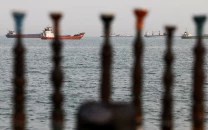
With global air transport heavily disrupted and no clear end in sight, Iran's ability to choke off traffic through the Strait of Hormuz, the conduit for a fifth of global oil and liquefied natural gas, has emerged as a decisive threat to the global economy.
Although some Iranian vessels have continued to pass, the passage has been effectively closed for most of the world's shipping since the US and Israel attacked Iran on February 28 at the start of an intensive bombing campaign that has hit thousands of targets across the country.
The International Energy Agency on Sunday said oil from its emergency reserves will begin flowing to global markets soon, with member countries pledging to make available 411.9 million barrels.
Underlining the impact the war has had on energy infrastructure in the region, the global ship-refueling hub of Fujairah in the UAE was closed after barrages on Saturday but resumed oil-loading operations on Sunday, a Fujairah-based industry source said.
Trump on Saturday called on China, France, Japan, South Korea, Britain and other countries impacted by the choking off of oil supplies through the Strait of Hormuz to join efforts to reopen shipping lanes.
British Prime Minister Keir Starmer spoke to Trump on Sunday about the need to reopen the Strait, a Downing Street spokeswoman said.
The Financial Times reported that European Union foreign ministers would discuss expanding the EU's regional Aspides naval mission, which protects shipping against Houthi attacks in the Red Sea, to include the Strait of Hormuz. German Foreign Minister Johann Wadephul said he was skeptical about such a move.
France has been seeking to assemble a coalition to secure the strait once the security situation stabilises, while Britain is discussing a range of options with allies to ensure the security of shipping, officials have said.
Araqchi told his French counterpart that countries must refrain from anything that could escalate the conflict. He also said Iran would respond to any attack on its energy facilities.
Israel running low on ballistic missiles
Daily Mail reported that Isreal is running low on ballistic missiles amid war with Iran.
Israel entered the ongoing conflict with limited interceptor missile stocks after expending significant resources during last June’s 12 Days War with Iran, according to US officials.
Israel 'running critically low on ballistic missile interceptors' amid Iranian bombardment, report claims https://t.co/YTg0J5lSBg
— Daily Mail (@DailyMail) March 15, 2026
Officials say the country’s long-range air defence system is under mounting strain, a situation that could worsen if Iran introduces cluster-type missiles into its arsenal, as reported by CNN.
US authorities had been aware of the capacity concerns for months. One American official told Semafor that the shortfall was anticipated, saying, “It’s something we expected and anticipated.”
The official added that US interceptor stockpiles remain sufficient, seeking to ease concerns that a prolonged confrontation with Iran could significantly deplete American reserves.
It remains unclear whether US authorities will sell or transfer additional interceptor missiles to Israel, a move that could place pressure on domestic inventories. Washington has previously supplied interceptor missiles to Israel as part of military assistance.
The US official said Israel was “coming up with solutions” to address the shortage.
While interceptor missiles remain among the most reliable tools against long-range attacks, other defensive measures — including the deployment of fighter aircraft — may also be used to counter incoming missiles.
Israeli foreign minister denies country facing interceptor shortages
Israeli Foreign Minister Gideon Saar on Sunday denied a report that Israel was facing a shortage of ballistic missile interceptors after more than two weeks of war that has seen repeated attacks from Iran and Iran-backed Hezbollah in Lebanon.
American news website Semafor on Saturday cited an unnamed US official as saying that Israel had told Washington it was running critically low on ballistic missile interceptors.
Asked whether the report was accurate, along with an Israeli media report that Israel was set to hold direct talks with Lebanon, Saar responded: "For both questions, the answer is no."
An Israeli military source also denied any shortage, saying that the armed forces were prepared for a prolonged campaign.
Iran denies targeting civilian areas
Araghchi denied Iran was targeting civilian or residential areas in the Middle East and said it was ready to form a committee with its neighbours to investigate the responsibility for such strikes.
"Israel may be behind attacks on ‘civilian targets in Arab countries,’ denies targeting civilian areas in region," Araghchi said.
#BREAKING Israel may be behind attacks on ‘civilian targets in Arab countries,’ says Iranian foreign minister, denies targeting civilian areas in region pic.twitter.com/mUwTozUuWR
— Anadolu English (@anadoluagency) March 15, 2026
But as the standoff continued, Iran's Revolutionary Guards said it had fired more missile and drone barrages at targets in Israel and at US military bases in the region, where Saudi Arabia said it had intercepted 10 attacks.
Iran has not yet used its newest missiles, IRGC spokesperson Ali Mohammad Naini said in comments carried by state media. "Isn't Trump saying that he has destroyed the Iranian navy? If he dares, let him send his ships to the Persian Gulf region," Naini added.
Israel said its jets hit more targets in western Iran, including headquarters of the Revolutionary Guards and Basij militia forces in the city of Hamadan.
A source briefed on Israel’s military strategy told Reuters that Israel had begun targeting roadblocks and bridges it believed Revolutionary Guards commanders were using. Iranian security forces detained dozens of people accused of sharing information with Israel, Iranian media reported.
Iran fires missile waves at Israel
Iran launched at least three successive waves of missile attacks on Israel on Sunday, striking central areas and triggering air raid sirens across several regions, according to reports circulating on social media and statements cited by Drop Site News.
The reported barrage targeted multiple locations, with missiles impacting sites in central Israel while another wave was directed toward the southern part of the country. Initial accounts indicated damage in some areas, though the full extent of casualties or destruction was not immediately clear.
Videos and eyewitness reports shared online showed explosions and interception attempts as Israeli air defence systems responded to incoming projectiles. Authorities issued alerts urging residents in affected regions to seek shelter while emergency services assessed potential impact sites.
More here: https://t.co/MW7gl5FXIr
— Drop Site (@DropSiteNews) March 15, 2026
Images circulating on social media showed damage to buildings and infrastructure in Holon, south of Tel Aviv, following the reported Iranian missile strikes, though the extent of destruction and any casualties could not be independently verified.
The attacks come amid escalating regional tensions between Iran, Israel and the United States, with both sides exchanging strikes during a widening conflict that has drawn in multiple actors across the Middle East.
Previous missile barrages have targeted major population centres and infrastructure across Israel, sometimes causing injuries and significant property damage despite interception efforts by air defence systems.
🔴 Images from Holon, south of Tel Aviv show damage following Iranian strikes pic.twitter.com/k2ABFjoEvl
— Middle East Eye (@MiddleEastEye) March 15, 2026
There was no immediate official statement from Israeli authorities detailing the scale of damage from the latest strikes. Iranian officials have previously framed missile launches as retaliation for Israeli and US military actions in the region.
Meanwhile, Trump said Iran appeared willing to make a deal to end the war, but the terms were “not good enough yet,” while warning that Washington could carry out further strikes on the Iranian oil export hub of Kharg Island.
In a telephone interview with NBC News on Saturday, Trump said Tehran wanted negotiations but insisted any agreement would require Iran to abandon nuclear ambitions.
“Iran wanted to make a deal, but I’m unwilling to do so now because the terms are not good enough yet,” Trump said. He declined to specify the terms but said an Iranian commitment to abandon nuclear ambitions would be part of any potential agreement.
Trump also said several countries had committed to helping secure the Strait of Hormuz, though he refused to name them.
The president said US strikes had “totally demolished” most of Kharg Island, a critical hub for Iranian oil exports, and warned more attacks could follow.
“We may hit it a few more times just for fun,” Trump said, while dismissing concerns about rising oil prices. “There’s so much oil, gas – there’s so much out there, but you know, it’s being clogged up a little bit. It’ll be unclogged very soon.”
Read: Five killed in Russian air attacks on Ukraine
Trump also raised questions about the fate of Iran’s new supreme leader, Mojtaba Khamenei, the son of slain former leader Ali Khamenei.
“I don’t know if he’s even alive. So far, nobody’s been able to show him,” Trump said, noting that Khamenei’s first message was issued in writing rather than on camera.
“I’m hearing he’s not alive, and if he is, he should do something very smart for his country, and that’s surrender,” he added, before describing reports of his death as a “rumour”.
Read More: US now begging others, even China, to help it make Hormuz safe, says Iran’s FM
As the conflict entered its third week, both sides appeared to be preparing for a prolonged fight. Tehran rejected the possibility of any ceasefire until US and Israeli airstrikes stop, while Iranian forces continued strikes across the region.
Since Israel and the United States began air attacks on Iran on February 28, more than 2,000 people — mostly in Iran — have been killed, according to reports from governments and state media. At least 15 people were killed when an airstrike hit a refrigerator and heater factory in the central Iranian city of Isfahan, the semi-official Fars News Agency reported.
Iran warned civilians in the United Arab Emirates to evacuate ports, docks and what it called “American hideouts,” saying US forces had targeted Iran from those areas. The UAE denied that strikes on Kharg Island overnight Friday had been launched from its territory.
Calling any facility associated with the United States a “legitimate target,” Iran’s Islamic Revolutionary Guard Corps urged US industries to leave the region.
Russia is supplying Iran with Shahed drones to use against the US and Israel, Ukrainian President Volodymyr Zelenskiy told CNN. Shahed drones have been linked to other attacks on countries in the region, although their manufacturers are not always clear.
Oil market disruptions also appeared set to continue. Some oil-loading operations were suspended in the emirate of Fujairah after a drone attack, according to industry sources.
The emirate’s media office said the drone was intercepted, but civil defence crews were still trying late Saturday to extinguish a fire caused by falling debris.
Meanwhile, Iran downplayed the extent of damage on Kharg Island. The US military’s US Central Command said it had struck more than 90 targets there, including naval mine storage facilities, missile bunkers and other military sites.
Araghchi dismissed speculation by US Defence Secretary Pete Hegseth that Mojtaba Khamenei had been wounded. “There is no problem with the new supreme leader. He sent his message yesterday, and he will perform his duties,” Araqchi said.
Iran’s defence ministry said nine ballistic missiles and 33 drones had been launched toward the UAE, while warning residents to leave areas near Dubai’s Jebel Ali Port, Abu Dhabi’s Khalifa Port and Fujairah port.
Fujairah, located outside the Strait of Hormuz, is a major outlet for about one million barrels per day of the UAE’s Murban crude oil, equivalent to about 1% of global demand.
Takayuki Kobayashi, Japan's ruling party policy chief, declined to rule out the possibility, but told public broadcaster NHK that "the (legal) threshold is very high."
Japan interprets its pacifist postwar constitution to mean it can deploy its military if the nation's survival is threatened, but the government would have to invoke a 2015 security law that has not been used.
South Korea's presidential office said it would decide on Trump's request after a "careful review."
Iran's Supreme Leader Ayatollah Mojtaba Khamenei, who replaced his slain father, has said the Strait of Hormuz should remain closed.
Israeli spies held
Twenty people were arrested in northwestern Iran for attempting to cooperate with Israel, Tasnim news agency reported on Sunday, citing a statement by the West Azerbaijan province's prosecutor's office.
They are accused of sending location details on Iran's military and security assets to Israel.
Israel has launched a new phase of its assault on Iran, targeting security checkpoints based on tip-offs from informants on the ground, a source briefed on Israel's military strategy told Reuters last week.
‘Money, technology for help’
Ukraine wants money and technology in return for helping Middle Eastern nations defend against Iranian kamikaze drones, President Volodymyr Zelenskiy said, after Kyiv sent specialists to four countries in the region.
Zelenskiy told reporters in comments cleared for release on Sunday that each team sent to the Middle East consisted of dozens of people, who will be able to conduct expert assessments and demonstrate how drone defences should operate.
‘Ready for probe’
Iran's foreign minister denied that Iran has targeted civilian or residential areas in the Middle East and said Tehran is ready to form a committee with its neighbours to investigate the responsibility for such strikes.
Gulf countries have called upon Iran to cease its attacks on their territories, which have not only sustained strikes on US military bases but also damage to energy facilities and residential areas.
Araghchi's Telegram channel quoted him as saying in an interview with Al-Araby al-Jadeed that Tehran was in communication with various Gulf capitals and would welcome any initiative that could guarantee a complete end to the US-Israeli war on Iran.








This material may not be published, broadcast, rewritten, redistributed or derived from. Unless otherwise stated, all content is copyrighted © 2026 The Express Tribune.








COMMENTS (1)
Comments are moderated and generally will be posted if they are on-topic and not abusive.
For more information, please see our Comments FAQ