Russia's Lavrov lauds Pakistan’s role in US-Iran dialogue in phone call with FM Dar
Updated 3 hours ago

Permanent Representative to UN says diplomacy and dialogue must guide the process, urging sustained negotiations
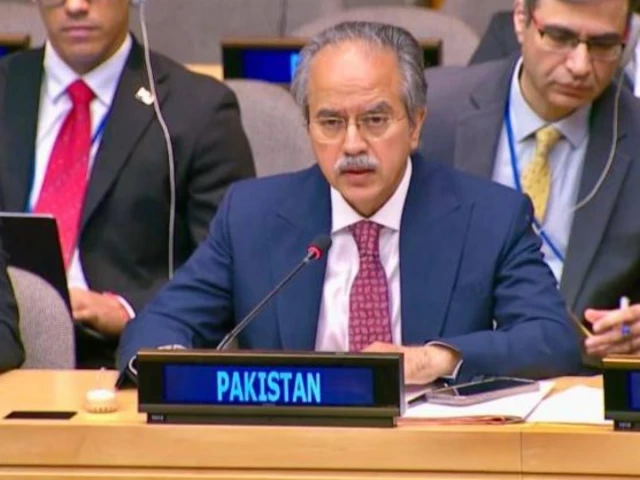
Pakistan has reaffirmed its support for resolving the Iran nuclear issue through peaceful means, emphasising diplomacy and dialogue as the only viable path, Radio Pakistan reported.
Speaking at a UN Security Council briefing on the 1737 Committee established to monitor Iran’s nuclear activities and oversee sanctions compliance, Pakistan’s Permanent Representative Asim Iftikhar Ahmad said all disputes should be addressed through negotiations in line with the rights, obligations, and responsibilities of all parties.
“The JCPOA was a unique instrument, a manifestation of an approach based on dialogue, diplomacy, and pragmatism. It was the outcome of painstaking and constructive negotiations, charting a roadmap to comprehensively address the concerns of all parties,” he noted in a post on X.
The JCPOA was a unique instrument – manifestation of an approach based on dialogue, diplomacy and pragmatism. It was the outcome of painstaking and arduous, yet constructive negotiations. It charted a roadmap to comprehensively address the concerns of the parties based on… pic.twitter.com/m9Bgs3OdPf
— Permanent Mission of Pakistan to the UN (@PakistanUN_NY) March 12, 2026
The committee was originally set up after Iran failed to curb its nuclear enrichment activities, though its reporting role has evolved alongside broader diplomatic developments.
Ahmad highlighted that diplomatic engagement remains crucial amid heightened regional tensions. “Diplomacy and dialogue must guide the process,” he told Council members, urging sustained talks under international law and non-proliferation norms.
He stressed that adherence to IAEA safeguards and negotiated agreements, including the 2015 Joint Comprehensive Plan of Action (JCPOA), is key to reducing mistrust and avoiding escalation.
Read: At UNSC, Pakistan walks a diplomatic tightrope
Addressing broader instability in the region, Ahmad called for an immediate cessation of hostilities in the Middle East, urging all parties to exercise maximum restraint. He pressed for a permanent ceasefire and the resumption of dialogue, warning that unresolved conflict threatens regional peace and global non-proliferation efforts.
“The return to the negotiating table is essential,” he said, underlining that a peaceful settlement serves the interests of all parties and prevents further destabilisation in the region.
The Middle East remains in a volatile state as a major conflict between Iran, Israel, and the United States continues to unfold following coordinated US‑Israeli airstrikes on Iranian military and strategic targets that began on February 28.











This material may not be published, broadcast, rewritten, redistributed or derived from. Unless otherwise stated, all content is copyrighted © 2026 The Express Tribune.




COMMENTS
Comments are moderated and generally will be posted if they are on-topic and not abusive.
For more information, please see our Comments FAQ