Financial structure bolstering US power faces serious test
Updated 6 hours ago

The conflict between Iran, US-Israel is increasingly producing consequences that go far beyond military calculations
The conflict between Iran and the US-Israel is increasingly producing consequences that go far beyond military calculations. While governments debate strategy and security, ordinary people across the region are confronting a far more immediate reality: fear, uncertainty and displacement. Recent developments at the borders of Pakistan and Turkey illustrate how geopolitical confrontation is translating into a growing humanitarian challenge.
In Pakistan's southwestern province of Balochistan, authorities confirmed that more than 2,000 Pakistanis have crossed back into the country from Iran through the Taftan and Gabad border crossings. Among them are students, traders and even the families of diplomats who had been residing in Iran before the escalation of hostilities.
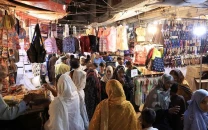
A similar pattern has emerged along Iran's western frontier with Turkiye. Witnesses reported hundreds of Iranians crossing the Kapikoy border gate into Turkish territory as fears of prolonged conflict mounted. Travelers arriving from Tehran described long queues at petrol stations, crowded shops, and a growing sense of anxiety among residents.
Some individuals said that while daily life had not completely collapsed, the psychological impact of the conflict was deeply felt. Bombings in military areas and the possibility of further escalation have pushed many families to consider temporary relocation abroad.
Military confrontation rarely remains confined to strategic targets or battlefield calculations. Instead, it tends to reshape the social and economic fabric of entire societies. Even when civilian areas are not directly attacked, the anticipation of violence, shortages and instability can compel people to seek safety elsewhere.
The ongoing conflict also raises important questions about the strategic objectives behind external pressure on Iran. Critics of Washington's Middle East policy have long argued that sustained economic sanctions, diplomatic isolation and military pressure are designed not only to constrain Iran's regional influence but also to weaken its internal stability.
Some analysts contend that prolonged confrontation could encourage internal fragmentation or social unrest within Iran. The theory is that economic hardship, combined with security crises, may gradually erode public confidence in the government and potentially generate internal divisions.
Officials in Washington typically frame their actions as efforts to deter Iran's military capabilities and regional activities. However, critics argue that the cumulative effect of sanctions, covert operations and military pressure risks pushing the country towards deeper instability.
For ordinary Iranians, these debates in global policy circles offer little comfort. What they experience instead is a climate of uncertainty. Bombing sounds in nearby military zones, crowded petrol stations and the constant stream of alarming news reports create an atmosphere where many feel compelled to prepare for the worst.
The situation is particularly challenging for students, workers and migrants who live far from their families. Pakistani students studying in Iran, for instance, suddenly found themselves caught between geopolitical rivalries that have nothing to do with their academic lives. Their return through the Taftan crossing represents not only a logistical operation but also a reminder of how quickly international crises can disrupt individual futures.
Regional governments now face the complex task of managing humanitarian needs while preventing panic. Pakistan has emphasised that assistance will continue for those returning from Iran, while Turkish authorities are carefully regulating border crossings to maintain order.
The deeper question remains unresolved. If the conflict continues to escalate, the number of people seeking temporary refuge or evacuation could grow significantly. In that scenario, the humanitarian dimension of the crisis may become as significant as the military one.
For now, the lines of people arriving at border checkpoints tell a simple but powerful story. Behind every suitcase is a life temporarily uprooted by forces far beyond individual control. And as the geopolitical struggle continues, it is these ordinary lives that bear the heaviest burden of uncertainty.







This material may not be published, broadcast, rewritten, redistributed or derived from. Unless otherwise stated, all content is copyrighted © 2026 The Express Tribune.

COMMENTS
Comments are moderated and generally will be posted if they are on-topic and not abusive.
For more information, please see our Comments FAQ