US sues Harvard over treatment of Jewish and Israeli students, seeks billions of dollars
Updated 33 minutes ago

Says the region and the world 'desperately need an off-ramp'
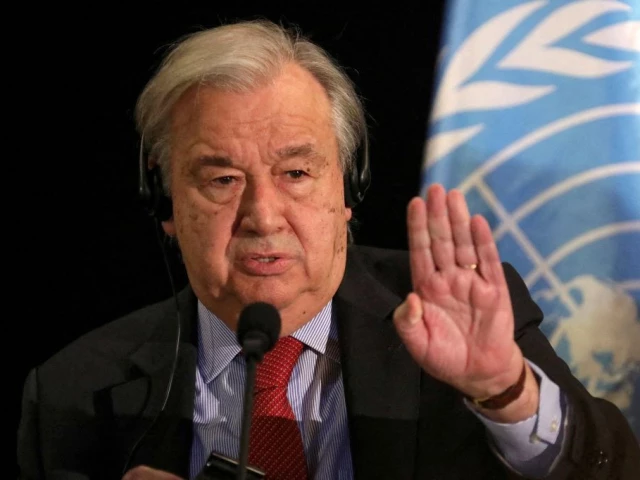
United Nations Secretary General Antonio Guterres warned on Thursday that military escalation in the Middle East as the war between Iran, Israel and the United States drags on was pushing the region to the "breaking point" and demanded an immediate return to the negotiating table.
In a post on X, the UN said: "Warning that the military escalation in the Middle East is pushing the region to the breaking point, Antonio Guterres calls for end to the hostilities and immediate return to the negotiating table. 'The region and the world desperately need an off-ramp.'"
Warning that the military escalation in the Middle East is pushing the region to the breaking point, @antonioguterres calls for end to the hostilities & immediate return to the negotiating table.
— United Nations (@UN) March 12, 2026
“The region and the world desperately need an off-ramp.”https://t.co/mWVHAKPma4 pic.twitter.com/RPpJh6YlXp
He said the massive military strikes launched by the United States and Israel, and the subsequent attacks by Iran on so many countries, constituted a grave threat to international peace and security and had caused "immense suffering" for civilians.
Two sailors injured in fire on US aircraft carrier which CENTCOM says 'wasn’t combat-related’
Meanwhile, the United States Central Command (CENTCOM) stated in a post on X that the USS Gerald R Ford (CVN 78) experienced a fire that originated in the ship’s main laundry spaces.
CENTCOM confirmed that the fire was not combat-related and has been fully contained.
According to CENTCOM, there is no damage to the aircraft carrier’s propulsion system, and the vessel remains fully operational.
“Two sailors sustained non-life-threatening injuries and are currently receiving medical treatment.” CENTCOM stated that both are in stable condition.
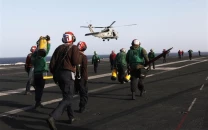
The Gerald R Ford Carrier Strike Group is operating in the Red Sea as part of Operation Epic Fury, CENTCOM added. Additional information will be provided as it becomes available.
On March 12, USS Gerald R. Ford (CVN 78) experienced a fire that originated in the ship’s main laundry spaces. The cause of the fire was not combat-related and is contained.
— U.S. Naval Forces Central Command/U.S. 5th Fleet (@US5thFleet) March 12, 2026
There is no damage to the ship’s propulsion plant, and the aircraft carrier remains fully operational.…
Iran’s new supreme leader affirms importance of Hormuz closure
Earlier, Iranian Supreme Leader Mojtaba Khamenei said that all United States bases in the region should be immediately closed and warned they would be attacked if they remained open.
In his first official message as Iran's new supreme leader, he added that the “closure of the Strait of Hormuz should be continued as a tool to pressure the enemy.”
He said the "will of the popular masses" was the continuation of "effective and deterrent defence".
The supreme leader said that studies were conducted regarding opening other fronts where "the enemy lacks experience and will be extremely weak, and this will be activated if the state of war continues and as interest dictates".
Watch Iran's new supreme leader, Mojtaba Khamenei's first media address, where he called for national unity and said the Strait of Hormuz would continue to be closed to pressure Iran’s enemies. pic.twitter.com/nIF8aN21iU
— Al Jazeera English (@AJEnglish) March 12, 2026
Thanking Iran's allies in the form of regional groups that have taken to attacking Israel, he said: "We consider the countries of the Resistance Front our best friends, and the cause of resistance is an integral part of the values of the Islamic revolution. There is no doubt that the cooperation of this front's components together shortens the path to salvation from the Zionist sedition. We have seen how brave, faithful Yemen did not abandon the defense of the oppressed people of Gaza, and how the self-sacrificing Hezbollah supported the Islamic republic despite all obstacles, and likewise, the resistance of Iraq marched bravely on this path."
Khamenei vowed “revenge for the blood of the martyrs”, specifically referencing the attack on the school in Minab, and condemned attempts by foreign powers to dominate Iran’s territory.
"This revenge is not limited to the martyrdom of the leader of the revolution alone; rather, every individual of our people martyred at the hands of the enemy constitutes an independent case in the retribution file. A limited part of this revenge has been achieved so far, but it will remain open until it is fully realised, especially regarding the blood of our children."
He further stressed that, despite attacks originating from neighbouring countries, “war against Iran must not affect our relationship with our neighbours.”
Mojtaba said that Iran shared land or sea borders with 15 countries and had always desired "warm and constructive relations with everyone".
However, he added that "the enemy established military and financial bases in some of these countries years ago to ensure his hegemony over the region. In the recent attack, some of these bases were used; therefore — as we warned previously — we targeted those bases only without aggressing against those countries. We will be forced to continue this matter if the use of those bases continues, while always emphasising our desire for friendly relations with our neighbors. We advise these countries to close those bases quickly, as it has become clear to them that the United States' claim of achieving security and peace was nothing but a lie."
Coming to compensation for those injured so far, he said the wounded must receive appropriate treatment free of charge and benefit from other privileges. Further, he said that sufficient measures should be taken to compensate for the financial damages inflicted on private property.
"These two matters are a mandatory duty for officials, and they must submit a report on this to me. I emphasise that we will demand compensation from the enemy; if he refuses, we will take from his funds as much as we deem appropriate, and if that is not feasible, we will destroy his property by the same amount."
Thanking the Iranian military in particular, Mojtaba said: "A sincere thank you to our brave fighters who, in circumstances where our dear homeland was subjected to an unjust attack by the leaders of the arrogance front, blocked the way for the enemy with their powerful strikes and stripped him of the illusion of controlling this homeland or even partitioning it."
Iran's Revolutionary Guards vowed to keep the Strait of Hormuz closed after the call to do so by Mojtaba.
"In response to the order of the commander-in-chief, we will deliver the harshest blows to the aggressor enemy while maintaining the strategy of closing the Strait of Hormuz," said Guards navy commander Alireza Tangsiri in a post on X.
در لبیک به فرماندهی کل قوا
— علیرضا تنگسیری (@alirezatangsiri) March 12, 2026
با حفظ راهبرد بسته ماندن #تنگه_هرمز
شدیدترین ضربات را به دشمن متجاوز وارد خواهیم کرد. https://t.co/102UVlQ77Y
The IRGC later said that at dawn today, in two waves of attack, the IRGC Navy placed the headquarters of the "terrorist American Fifth Fleet at Mina Salman Port under crushing blows from missiles and drones".
It further asserted that the Strait of Hormuz would remain closed.
The Islamic Revolutionary Guard Corps (IRGC):
— True Promise - الوعد الصادق ✪🇮🇷 (@IRTruePromise) March 12, 2026
- At dawn today, in two waves of attack, the IRGC Navy placed the headquarters of the terrorist American Fifth Fleet at Mina Salman Port under crushing blows from missiles and drones.
- In this base, the anti-drone Leeds system,… pic.twitter.com/TTNYzVnk5v
Separately, Secretary of Iran’s Supreme National Security Council, Ali Larijani, has warned that any move to cripple Iran’s power infrastructure would trigger sweeping retaliation across the region.
Responding to remarks by US President Donald Trump about Iran’s electricity network, he said on Thursday that if such an action were carried out, the consequences would not remain limited to Iran.
Trump has said "we can take apart Iran's electric capacity within one hour, but we have not done it."
— Ali Larijani | علی لاریجانی (@alilarijani_ir) March 12, 2026
Well, if they do that, the whole region will go dark in less than half an hour and darkness provides ample opportunity to hunt down US servicemen running for safety.
“If they take apart Iran’s electric capacity, the entire region will go dark in less than half an hour,” he wrote on X, adding that widespread blackouts would create conditions in which US servicemen in the region would be vulnerable while seeking safety.
Earlier, Iran's Parliament Speaker Mohammad Bagher Ghalibaf issued a stern warning, declaring that any attempt to attack Iran’s islands would provoke a decisive and uncompromising response.
“Any aggression against the territory of our islands will break all limits of restraint. We will respond fully, turning the Persian Gulf into a grave for invaders,” he said in a post on X.
Homeland or Death!
— محمدباقر قالیباف | MB Ghalibaf (@mb_ghalibaf) March 12, 2026
Any aggression against soil of Iranian islands will shatter all restraint.
We will abandon all restraint and make the Persian Gulf run with the blood of invaders.
The blood of American soldiers is Trump's personal responsibility.
A spokesperson for the Islamic Revolutionary Guard Corps (IRGC)’s Khatam al‑Anbiya Central Headquarters said Iran had not attacked Oman and described the incident at Salalah port as suspicious and under investigation.
“The incident at the Port of Salalah in the friendly and neighbouring Sultanate of Oman appears highly suspicious and is currently under investigation,” the spokesperson said.
The spokesperson added that Iran’s armed forces fully respect the security and national sovereignty of Oman and emphasised that the Islamic Republic holds the country in high regard as a friendly neighbour.
Spokesperson of IRGC's Khatam al-Anbiya HQ:
— True Promise - الوعد الصادق ✪🇮🇷 (@IRTruePromise) March 11, 2026
Iran DID NOT attack Oman. The Salalah port incident is suspicious and under investigation
The incident at Salalah port in our friendly, neighboring, brotherly Oman looks very suspicious.
The security and national sovereignty of Oman…
Meanwhile, the spokesperson for the Iranian army, Brigadier General Mohammad Akrami Nia, stated in an interview with Iranian state television that the disruption of the enemy's radars facilitates access to sensitive points inside Israel.
He added that the Iranian army was able today to target the Palmachim and Ovda air bases, as well as the headquarters of the General Security Service (Shin Bet) near Tel Aviv, and that the operations are becoming more precise day by day.
Trump administration says first six days of Iran war cost $11.3b
Officials from the US President Donald Trump's administration have told lawmakers that the first six days of the war against Iran have cost the United States at least $11.3 billion, Al Jazeera reported.
The estimate was shared in a closed congressional briefing this week and, administration officials say, covers the immediate campaign expenses but not the full scope of costs associated with military buildup and ongoing operations. Lawmakers pressing for more detailed figures have been told that the total is expected to rise as further assessments are completed.
Some congressional aides have indicated the White House may seek as much as $50 billion in supplemental funding for the conflict. Public details about the administration’s overall cost projections and the projected duration of the war remain limited.
Trump has publicly characterised the conflict as effectively won, even as defence officials warn that continued operations will require significant resources, according to Al Jazeera.
Gulf emphasise restraint and diplomacy to avoid wider conflict
Gulf Arab governments have expressed deep anger over Iranian attacks on their territories but are pushing strongly for diplomacy as the preferred path forward, Al Jazeera reported.
Officials from several Gulf states reject Tehran’s justification that strikes on their soil are legitimate because of their alliances with the United States. They argue that Iran’s interpretation is both exaggerated and strategically flawed, and they have accused Tehran of miscalculating the regional impact of its actions.
Despite public outrage and repeated condemnations, Gulf leaders have reiterated that military escalation is not a solution. They see robust defence measures — including missile‑intercept systems — as necessary, but stress that a broader conflict would be damaging for all parties involved.
Senior Gulf officials have underscored the necessity of diplomacy, saying that even after the current hostilities end, their countries will remain neighbours to Iran and must find a way to coexist. They have sought to reassure their domestic audiences that avoiding deeper involvement in the war remains a top priority, and that restraint and negotiations offer the best chance of long‑term stability.
Meanwhile, the Bahrain Defence Force said its air‑defence systems have shot down and destroyed a total of 105 missiles and 176 drones launched at the kingdom since the start of the conflict. The force described the interceptions as part of its continued response to Iranian attacks on countries in the Gulf, according to Al Jazeera.
Iran tanker attacks ignite Gulf oil fears, challenge Trump’s claim war is won
Iran have set ablaze two tankers in Iraqi waters as it stepped up attacks on oil and transport facilities across the Middle East, warning the world should be ready for oil at $200 a barrel in defiance of President Donald Trump's claim that the US had already won the war.
Unleashed with joint US and Israeli air strikes on Iran almost two weeks ago, the war has so far killed around 2,000 people and thrown global energy markets and transport into chaos. The conflict has spread across the Middle East and prompted plans for a record release of strategic oil reserves to dampen one of the worst fuel shocks since the 1970s.
The United Nations Children's Fund (UNICEF) said more than 1,100 children had been killed or injured.
At a campaign-style rally in Kentucky ahead of November midterm elections in which his Republican party is trailing badly, Trump said the United States had won the war but didn't want to have to go back every two years.
"We don't want to leave early do we?" he said on Wednesday. "We got to finish the job."
Also read: Iran’s president sets conditions for ‘ending war ignited by Israel/US’
Oil prices, which shot up earlier in the week to nearly $120 a barrel before retreating, jumped almost 10% back above $100 a barrel in Asian trade on Thursday amid renewed fears about supply disruption. Wall Street's main share indexes fell and stocks in Asia followed suit.
Iran has made clear it intends to impose a prolonged economic shock, with the spokesperson for Iran's military command saying in remarks directed at the US on Wednesday: "Get ready for oil to be $200 a barrel, because the oil price depends on regional security, which you have destabilised."
Iranian explosive-laden boats appear to have attacked two fuel tankers in Iraqi waters setting them ablaze and killing one crew member after projectiles struck three merchant vessels in Gulf waters, port officials, maritime security and risk firms said.
This is huge. A US-owned oil tanker SafeSea Vishnu has been attacked by Iran off the coast coast of Iraq overnight. Unclear what was used for the attack, a drone, missile or even a drone boat/semi-submersible drone. pic.twitter.com/5dlprPJmpM
— Shiv Aroor (@ShivAroor) March 12, 2026
"This appears to mark a direct and forceful Iranian response to the IEA’s overnight announcement of a massive strategic reserve release aimed at cooling runaway prices," said Tony Sycamore, analyst at IG.
The International Energy Agency, made up of major oil consuming nations, on Wednesday recommended releasing 400 million barrels from global strategic reserves to dampen one of the worst oil shocks since the 1970s, the biggest such intervention in history.
Read: Pete Hegseth says Tuesday 'most intense day' of US attacks on Iran
Trump said the IEA decision "will substantially reduce oil prices as we end this threat to America and the world."
US Energy Secretary Chris Wright said Trump had authorized the release of 172 million barrels from the US Strategic Petroleum Reserve from next week.
Crucial oil route blocked
Iran also targeted fuel tanks at a facility in Bahrain's Muharraq, the interior ministry said, while drones struck oil storage facilities at Salalah port on Wednesday, Oman's state news agency reported.
And another container vessel reported being struck by an unknown projectile near the United Arab Emirates on Thursday, a maritime security authority said.
So far there has been no sign that ships can safely sail through the Strait of Hormuz, the now-blockaded channel along the Iranian coast that serves as a conduit for around a fifth of the world's oil.
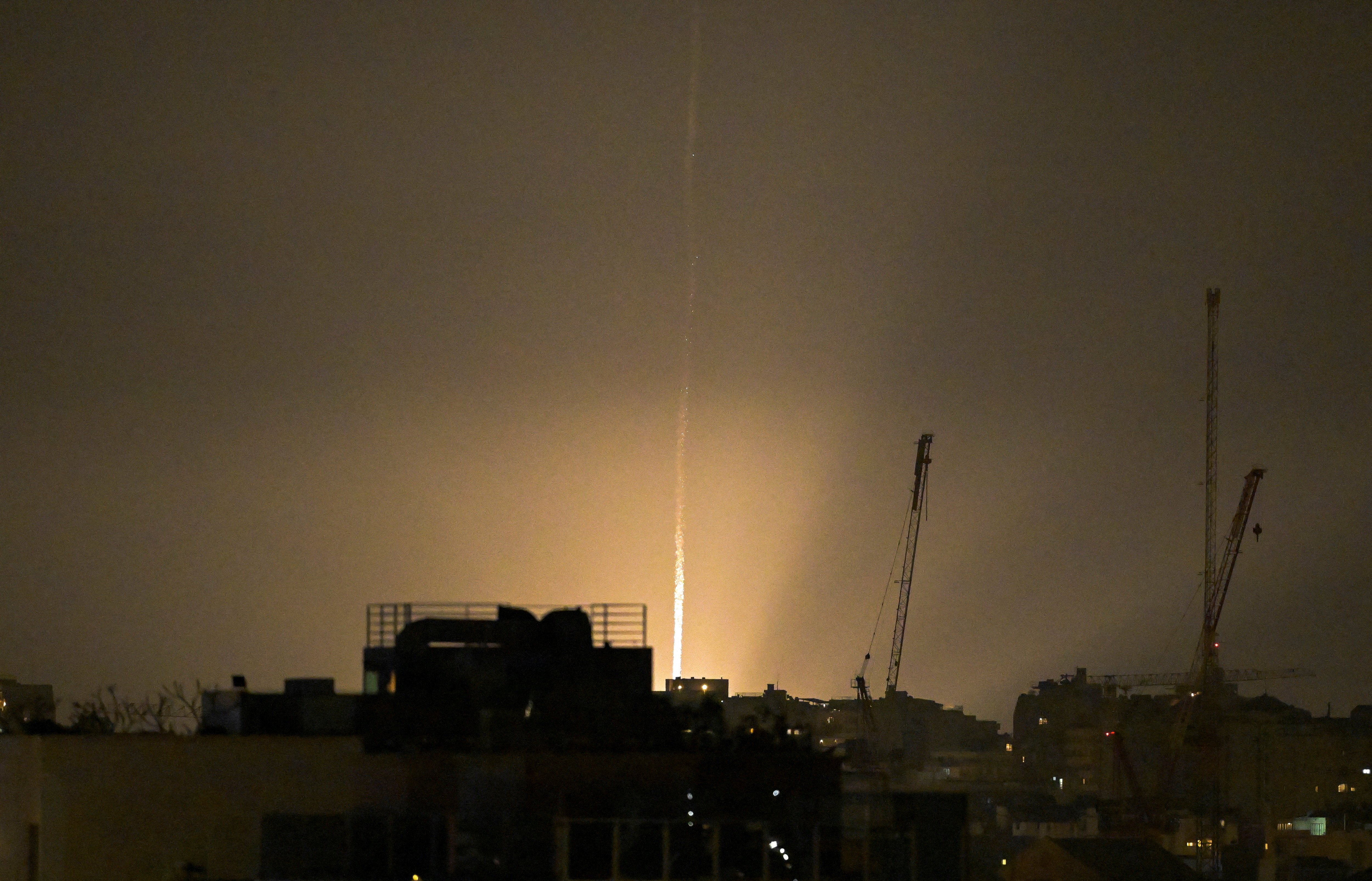 The sky is illuminated as an Iranian missile lands in Israel, amid the U.S.-Israeli conflict with Iran, as seen from Tel Aviv, Israel, March 12, 2026. PHOTO: REUTERS
On Wednesday, an Iranian military spokesperson said the Strait was "undoubtedly" under Iran's control and the G7 group of nations - the United States, Canada, Japan, Italy, Britain, Germany and France - agreed to examine the option of providing escort for ships so they can navigate freely in the Gulf.
Trump said US forces had knocked out 58 Iranian naval ships and that Iran was "pretty much at the end of the line."
He said the US would now "look very strongly" at the Strait of Hormuz, adding: "The straits are in great shape. We've knocked out all of their boats. They have some missiles, but not very many."
Read More: Erdogan tells Iran violation of Turkey's airspace ‘cannot be excused for any reason’
Trump said earlier ships "should" transit through the strait but sources said Iran had deployed about a dozen mines in the channel, further complicating the blockade.
Iranian weapons also struck elsewhere in the Gulf, with Kuwait reporting a drone hit a building in the south injuring two, while Dubai authorities responded to a drone that fell on a building near the vicinity of Dubai Creek Harbour.
US and Israeli officials have said their aim is to end Iran's ability to project force beyond its borders and destroy its nuclear programme.
Trump and other officials have sent mixed messages about whether regime change was another goal after Supreme Leader Ayatollah Ali Khamenei was killed in initial strikes and replaced by his son Mojtaba Khamenei, who was lightly wounded.
🚨 BREAKING: Large oil storage facilities in Muharraq, 🇧🇭 Bahrain are still burning after being hit by attack drones. pic.twitter.com/66AU7VqZ0G
— Adi Baz (@AdiBazi16) March 12, 2026
US intelligence indicates that Iran's leadership is still largely intact and is not at risk of collapse any time soon, according to three sources familiar with the matter.
ABC News said the Federal Bureau of Investigation had warned of Iranian drones potentially striking the US West Coast, although Trump said he was not worried that Iran might launch strikes on US soil.
The US State Department also warned that Iran and aligned militias may be planning to target US-owned oil and energy infrastructure in Iraq and warned that militias had in the past targeted hotels frequented by Americans.
The US military told Iranians to stay clear of ports with Iranian navy facilities, drawing a warning from Iran's military that if the ports were threatened, economic and trade centres in the region would be "legitimate targets".
Saudi intercepts drone
Saudi Arabia's defence ministry has said it intercepted a drone heading toward the Shaybah oilfield, marking the third such incident reported on the same day. Drones have been targeting the area regularly this week.
Italian base hit
An Italian military base in Iraqi Kurdistan was hit overnight by an airstrike though no injuries were reported, the Italian defence officials said.
The defence ministry initially spoke of a missile attack on the Italian base in Erbil, but ministry sources later said it was a drone that had destroyed a military vehicle, possibly by accident.
"There are no casualties or injuries among the Italian personnel. They are all fine," the ministry said on X, shortly after midnight.
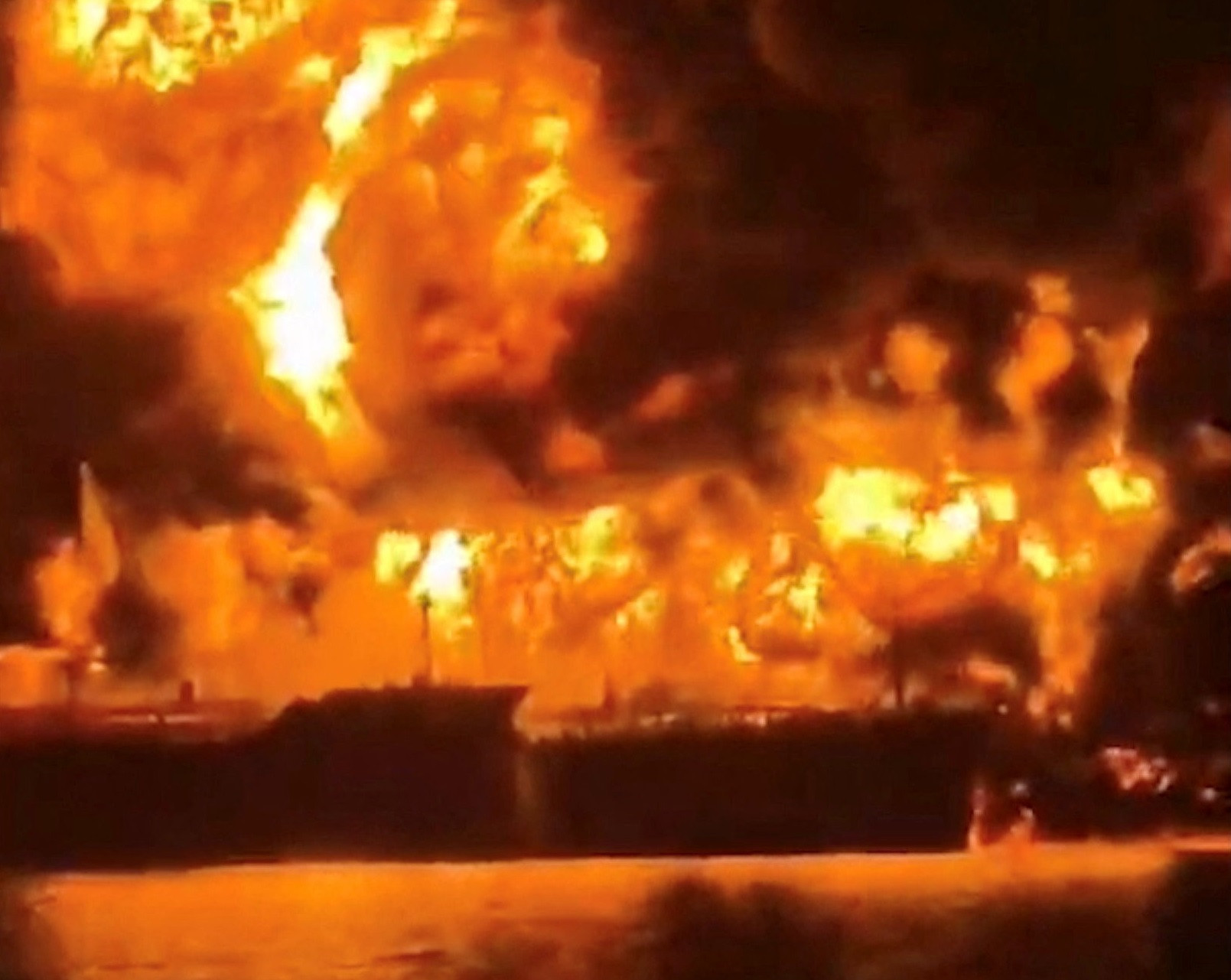 A ship burns, after Iranian explosive-laden boats appear to have attacked two fuel tankers in Iraqi waters setting them ablaze, according to port, maritime security and risk firms, amid the U.S.-Israeli conflict with Iran, in this screengrab taken from a handout video released March 12, 2026. PHOTO: REUTERS
Ministry sources added that the drone may not have been fired at the Italian base intentionally, but rather hit it accidentally after losing altitude.
The commander of the base, Colonel Stefano Pizzotti, told the Sky TG24 broadcaster that military staff had been warned of aerial threats and had taken shelter in bunkers hours before the strike.
It was not known where the strike had come from, he said, adding that the air raid alert had finished but experts were still checking and securing the area.
Italy has around 300 troops stationed in Erbil training Kurdish security forces, the ministry said on its website.
However, Pizzotti said numbers had recently been reduced because of the danger from the US-Israeli war on Iran.





This material may not be published, broadcast, rewritten, redistributed or derived from. Unless otherwise stated, all content is copyrighted © 2026 The Express Tribune.






COMMENTS (3)
Comments are moderated and generally will be posted if they are on-topic and not abusive.
For more information, please see our Comments FAQ