First step towards school autonomy in Sindh
Updated May 26, 2026

Attacks have triggered regional crisis whose shockwaves are being felt from Gulf to South Asia
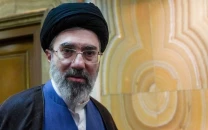
The US-Israel attacks on Iran, including the killing of Ayatollah Khamenei, has triggered a regional crisis whose shockwaves are already being felt from the Gulf to South Asia. For Pakistan, the timing could hardly be worse. Islamabad is simultaneously engaged in a growing conflict with Afghanistan which has been described as "open war", while already struggling with persistent militancy and economic fragility.
The Iran crisis multiplies Pakistan's security and economic stresses. Iranian retaliation across the region, including missile and drone strikes targeting Israel and US military facilities, has heightened fears of a prolonged confrontation that will destabilise energy markets. Pakistan remains heavily dependent on imported oil and liquefied natural gas, leaving its fragile economy particularly vulnerable to price shocks and supply disruptions. A sustained regional conflict would therefore translate quickly into fiscal strain and increased economic strain.
The sectarian dimension of instability in Iran presents an equally serious concern. If the Iranian political system enters a prolonged period of turmoil, militant networks and ideological mobilisation are unlikely to remain confined within Iran's borders. Pakistan has historically been vulnerable to sectarian polarisation, and external crises involving Iran have often resonated domestically. Recruitment networks linked to Iranian-aligned Shia militias have existed in Pakistan in the past, while Sunni extremist organisations continue to operate despite state pressure. A drawn-out confrontation in Iran could therefore sharpen sectarian tensions at a time when the Pakistani state is already stretched by insurgent violence.
Unrest in Iran would also have direct implications for Pakistan's western frontier, particularly in Balochistan. Militant ecosystems already straddle the Pak-Iran border, and insurgent movements have long exploited the region's difficult terrain and weak state presence. A distracted or destabilised Iran could become a more permissive sanctuary for Baloch militants, especially factions that frame their struggle in terms of creating a Greater Balochistan. Such developments would increase pressure on districts surrounding Gwadar and on Chinese-funded infrastructure projects that are already frequent targets of violence.
India's strategic calculus is also shifting. New Delhi has cut budgetary allocations for Iran's Chabahar port this year, bowing to sanctions pressure and stepping back from a project once central to its Afghanistan strategy. Besides pivoting away from Tehran, India is deepening ties with Israel. The Iran conflict has sparked protests among Muslim communities in several cities and even the opposition in India has criticised Modi's government for its cautious stance on Israel's actions in Gaza and the broader Middle East.
Pakistan itself cannot afford instability along yet another frontier. However, managing the consequences of the Iran crisis will require careful coordination with Tehran to prevent friction and misperceptions. Islamabad will also need to move proactively to prevent sectarian mobilisation at home. Equally important is a reassessment of the policy toward Balochistan. Stabilisation cannot rely solely on protecting infrastructure and energy corridors, nor on attributing local grievances primarily to the interference of neighbouring rivals. Renewed engagement on issues such as missing persons, equitable revenue sharing and local participation would help undercut insurgent narratives and reduce the risk that regional instability further fuels local grievances.
Pakistan should also reconsider its participation in the Board of Peace initiative. After the Iran crisis, a forum that includes states aligned on opposite sides of the Palestinian conflict risks becoming a venue for geopolitical contestation rather than a vehicle for the rehabilitation Gaza urgently requires.








This material may not be published, broadcast, rewritten, redistributed or derived from. Unless otherwise stated, all content is copyrighted © 2026 The Express Tribune.

COMMENTS
Comments are moderated and generally will be posted if they are on-topic and not abusive.
For more information, please see our Comments FAQ