Aga Khan wraps up Pakistan visit after high-level engagements with political leaders
Updated 2 hours ago

Cash transfers have even been issued to people with salaries above Rs100,000
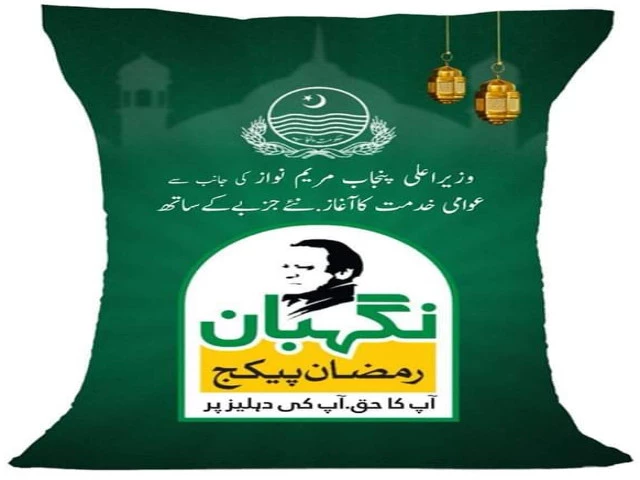
The process of distributing cash assistance to deserving families during the holy month of Ramazan has begun by both the Punjab and federal governments. However, questions have been raised regarding the eligibility criteria and method of distribution. Despite official claims, some low-income households have been left out, while reports suggest that certain ineligible individuals have received payments.
Under the Punjab government’s Ramazan Nigehban Program, approximately Rs47 billion is being distributed to 4.2 million families, with each family receiving Rs10,000. In addition, the federal government will distribute Rs38 billion to 12.1 million families, providing Rs13,000 per family. According to officials, the funds are being disbursed through bank accounts, branchless banking agents, and ATM networks.
However, discrepancies are emerging on the ground. Muhammad Tahir, a resident of Lahore, who works as a labourer and supports four children, claimed that he did not receive assistance last year and no survey team visited his home this year either. Similarly, Muhammad Ansar from South Punjab, who works as a waiter in Lahore also shared that he did not receive aid this year despite bearing medical expenses for his disabled daughter.
Read More: Ramazan relief strategy sparks debate
“When I contacted the helpline, I was told that payments were made based on survey reports and my house would be surveyed again, but no timeframe was provided,” said Ansar. On the other hand, a resident of Lahore, Asif stated that last year he received a call from the Union Council asking him to collect a Rs10,000 cheque, even though his monthly income exceeded Rs100,000 and he had never applied for assistance. This example raises questions about the targeting mechanism.
According to Punjab Social Protection Authority Vice Chairperson Jahan Ara Wattoo, eligibility was determined using data from the National Socio-Economic Registry and the Benazir Income Support Programme. Low-income families were prioritized based on poverty scores, and district-level lists were verified by assistant commissioners and relevant officials. Authorities asserted that the general eligibility criteria include not holding a government job, not owning substantial property, and having valid NADRA registration.
Benazir Income Support Programme Secretary Amer Ali Ahmad stated that third-party validation will also be conducted to ensure transparent payments, and that the assistance amount had been increased compared to last year. However, economists expressed cautious reservations about the current mechanism. While reliance on social registries speeds up the process, outdated data can result in exclusion and inclusion of errors. In such cases, genuinely deserving families may be left out, while some ineligible individuals may be included.
Economic expert and audit specialist Kaukab Zuberi opined that verification based solely on identity cards or registry data was insufficient. “It is critical to cross-check land ownership, income, and employment status, along with strengthening field verification to reduce errors. The Punjab Socio-Economic Registry data should be updated immediately, different data sources should be cross-matched, and an effective grievance redressal system should be activated,” suggested Zuberi.
Experts further noted that alongside cash assistance, measures such as price stabilization in markets and targeted subsidies were also necessary to ensure that the real benefits reach deserving families and that overall relief proves effective.








This material may not be published, broadcast, rewritten, redistributed or derived from. Unless otherwise stated, all content is copyrighted © 2026 The Express Tribune.








COMMENTS (2)
Comments are moderated and generally will be posted if they are on-topic and not abusive.
For more information, please see our Comments FAQ