SC defines 'doctrine of complete justice'
Updated 5 hours ago

Widens taxman's powers; halts IHC proceedings in missing persons case
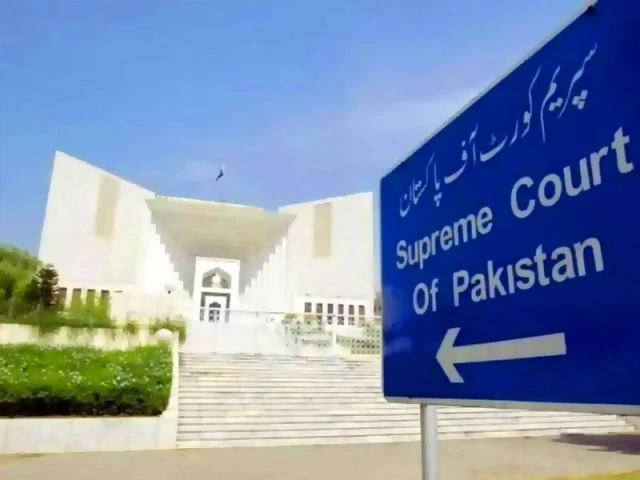
In another legal reprieve for the government, the Federal Constitutional Court (FCC) has ruled that tax authorities may conduct raids without prior notice and without the existence of a pending case against a taxpayer, a decision that significantly reinforces enforcement powers under tax law.
The judgment, authored by Justice Aamer Farooq, observed that Parliament has vested wide-ranging authority in tax officials to ensure compliance with revenue laws.
The court stated that it cannot read into a statute any condition that the legislature has not expressly provided.
Rejecting the argument that a raid conducted in the absence of a formally pending case should be considered unlawful, the court declared that "the existence of a pending case against a taxpayer is not a precondition for such action" and that "tax authorities are competent to proceed in accordance with the law".
However, the court introduced a procedural safeguard, directing that the commissioner must record in writing the specific legal provision invoked and the suspected violation forming the basis of the raid.
"This requirement," the judgment noted, "ensures procedural transparency and accountability."
The court further held that tax officials are empowered to take into custody computers, documents and accounts during such operations, provided the action remains within the confines of the law.
The ruling is being regarded as an important precedent concerning the scope of powers vested in tax authorities and the enforcement architecture of revenue laws.
Relief in contempt proceedings
In another development, the FCC halted contempt proceedings initiated by the Islamabad High Court (IHC) against the defence and interior secretaries in a missing persons case.
A division bench of the FCC, led by Justice Aminuddin Khan, while hearing appeals against the IHC order, issued notices to the respondents.
This is not the first instance of relief granted by the FCC to the federal government. Earlier this month, a bench headed by Chief Justice Aminuddin Khan restrained the IHC from proceeding further in a contempt case against Prime Minister Shehbaz Sharif and federal ministers.
The case concerned alleged failure to support Dr Fowzia Siddiqui's legal efforts in the United States regarding the release of Aafia Siddiqui.
Additional Attorney General Munawar Iqbal Duggal represented the federal government in both matters.
A senior law officer believes the government's contentions in both cases are strong and that the relief granted by the FCC was justified.
Last month, the FCC also upheld Sections 4(b) and 4(c) of the Income Tax Ordinance, 2001 — a decision estimated to add Rs310 billion to public revenue. However, that ruling has drawn sharp criticism from sections of the legal community.
Legal fraternity divided
A former attorney general remarked that the FCC's decision on Section 4© was difficult to justify and appeared unduly supportive of the Federal Board of Revenue (FBR) and the government.
"The court's function is to interpret law on settled principles and not act as the recovery wing of the government, which appears to have happened here," he said.
He further argued that with respect to the alleged discrimination against 15 industries subjected to a higher rate of supertax, the FCC should have struck down the relevant provision in the schedule.
According to him, single and division benches of three high courts, comprising experts in tax law, were unanimous in declaring the discrimination ultra vires.
"The only relief given by the FCC is to the extraction companies, which had foreign arbitration clauses in the agreements with the government, which would have resulted in international awards against the government," he added.
The former law officer also stated that the bench deciding the case admittedly lacked experience and expertise in tax matters as well as constitutional law.
Debate over the FCC's three-month performance has intensified within legal circles. It is being noted that the current FCC judges were appointed by the executive. Critics argue that the court appears more focused on disposing of pending cases than on enforcing fundamental rights under Article 175 E (1) of the Constitution.
Renowned lawyer Faisal Siddiqi remarked, "In the language of criminal jurisprudence: For the FCC, government is the favourite litigant, opposition is the neglected litigant and the common citizen is the forgotten litigant".
Another senior lawyer described the court's performance as disappointing in light of the objectives cited by its proponents.
"Massive backlog continues to accumulate with little promise for the future. All the high principles invoked for its creation, including its representative federal character, have been compromised and betrayed," he said.
He noted that, save for the few orders relating to the interpretation of the Constitution, there is not one detailed judgment worth citing as jurisprudence of the apex court.
The focus, he observed, has been on reiteration of their technical superiority over the Supreme Court as a matter of precedence. "Even in respect of the few orders passed by FCC, I have serious reservations about the soundness of the principles on which the orders are based. The detailed judgment on supertax is awaited."
Another former law officer was even more pointed in his assessment.
"No court or institution is inherently good or bad. It is the quality and character of the people who run the institution that determines its stature and acceptability in the public mind, he said, adding that the genesis of FCC was highly dubious."
"Its credibility was severely compromised when the Executive was allowed to pick and choose the first court."
He said that the PM acted in haste and in a highly partisan manner in filling the seats, adding that the worst part is that it is not even making any effort to command confidence and respect of the people by asserting its authority.
"More executive-minded than the executive itself. If it continues on its present trajectory, it is doomed. Just a matter of time, as there can't be two apex courts in a country."
Observers note that the FCC has yet to take up dozens of cases relating to the PTI, which continues to face pressure from the executive. It is also being observed that the PTI legal team appears to place greater reliance on the Supreme Court rather than the FCC for the enforcement of fundamental rights.
Despite lacking jurisdiction to enforce fundamental rights in certain contexts, the Supreme Court has continued to take up cases relating to Imran Khan and, through its judgments, is evolving jurisprudence in matters of public interest.
Conversely, critics argue that although the FCC possesses jurisdiction in such matters, it has not taken up cases that might dispel the perception that it is dominated by executive-minded judges.
One section of the legal community has demanded that the government disclose details of salaries and perks granted to FCC judges.
Former additional advocate general Punjab Chaudhry Faisal Hussain stated that the judiciary in Pakistan has lost the trust of the common citizen.
"In our country, parliament and bureaucracy always act like a monarch, and courts used to be proactively protectors of fundamental rights."
He added that the FCC is increasingly viewed as an extension of the executive branch and must deliver strong judgments on larger public interest issues to regain credibility.
"The appointments in the judiciary also need to be more transparent and on merit."
However, some lawyers argue that the FCC is grappling with significant logistical challenges and requires time to become fully functional. The debate over its role, independence and direction, it appears, is far from settled.








This material may not be published, broadcast, rewritten, redistributed or derived from. Unless otherwise stated, all content is copyrighted © 2026 The Express Tribune.







COMMENTS
Comments are moderated and generally will be posted if they are on-topic and not abusive.
For more information, please see our Comments FAQ