Despite US–Iran deadlock, Trump again praises ‘great’ PM Shehbaz and ‘fantastic’ CDF Munir
Updated 4 hours ago

Technology and social change replace centuries old subcontinental tradition
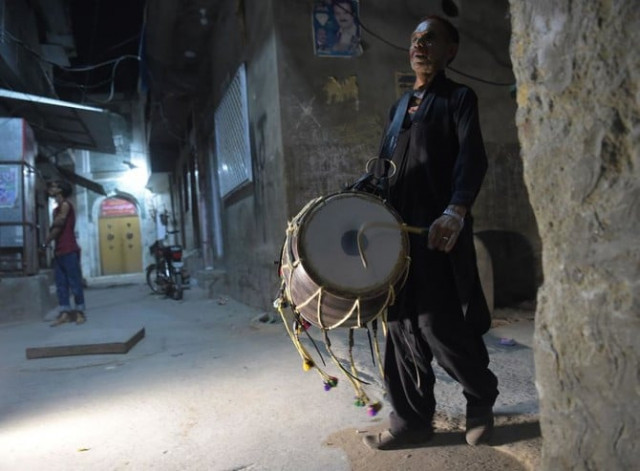
A century-old tradition in the subcontinent of waking residents for sehri during the holy month of Ramazan is now breathing its last in Rawalpindi, as technological advancement and changing social habits render the practice increasingly obsolete.
For generations, men would walk through Muslim neighbourhoods in the pre-dawn hours, first beating empty tin canisters and later drums, calling out to the faithful to rise for their pre-fast meal.
However, with the rise of modern technology and social media, many urban residents no longer sleep until sehri. Instead, they remain awake past midnight, engaged in worship or browsing online platforms.
Historically, the practice dates back some 500 years, when lamps were lit at elevated points to signal the time for sehri. As soon as the lights appeared, residents would understand it was time to wake.
In later years, groups of men replaced the lamps with empty ghee and cooking oil tins tied around their necks with rope, striking them with small sticks while calling out: "Rise, those who fast - it is time for sehri." The practice was regarded both as a virtuous act and a seasonal livelihood.
Subsequently, loudspeakers and sirens became popular means of alerting residents. Sirens are still sounded in many places — typically an hour before sehri and again at the time of iftar. Throughout Ramazan, these groups would perform their rounds, returning on Eid to collect flour, sugar, tea, rice or cash as eidi from grateful households.
Tin canisters gradually gave way to drums, and until the early 2000s, numerous groups continued the tradition. Over time, however, their numbers dwindled.
What were once two or three competing groups has now been reduced to a mere handful. Today, some residents object to the early-morning drumming, arguing that children are asleep, students are studying and elderly or unwell family members are disturbed. In earlier decades, families welcomed the callers and generously rewarded them on Eid.
In Punjab, waking residents for sehri remained a seasonal occupation for 70 to 80 years. Now, even the few who continue often receive little or no eidi.
Sehri caller Fareeduddin, who recently completed his Ramazan rounds in Rawalpindi, said the tradition runs in his family. "My grandfather and father both carried out this duty every Ramazan. There are three brothers; two have left the work, and now my own son no longer continues it. I am keeping my forefathers' mission alive, though it grows increasingly difficult. It is a great virtue. Until 2000, we were appreciated. Now people quarrel with us. On several occasions, my drum has been snatched away and only returned after much pleading, along with warnings not to enter certain streets again."
Where Rawalpindi once had between 15 and 20 such groups, only three now remain - and even they may disappear within the next few years. Residents argue that with scientific progress and mobile phone alarms, there is no longer any need for traditional callers.
The practice of signalling sehri and iftar through cannon fire is also longstanding in the Arab world. In Egypt, the tradition of firing a cannon to mark the time for sehri reportedly began in 1439 and gradually spread across the Arab region and into the subcontinent. Over the centuries, various methods have evolved, each reflecting the customs of its era.
What was once a cherished communal ritual and a source of seasonal income now stands on the brink of extinction, overtaken by modern life and changing social rhythms.
















This material may not be published, broadcast, rewritten, redistributed or derived from. Unless otherwise stated, all content is copyrighted © 2026 The Express Tribune.






COMMENTS
Comments are moderated and generally will be posted if they are on-topic and not abusive.
For more information, please see our Comments FAQ