Pakistan, Egypt successfully conclude Thunder-II counterterrorism exercise at Cherat
Updated 39 minutes ago

Number of planned bazaars reduced from 26 to seven; hundreds of thousands of aid requests rejected
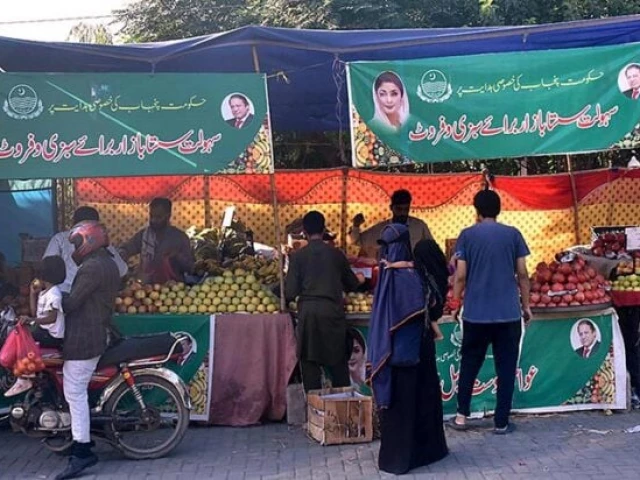
The district administration has significantly scaled back subsidised Ramazan bazaars this year, reducing their number in Rawalpindi city from 11 to just two.
Across Rawalpindi district, only seven Ramazan facilitation bazaars have been established instead of the previously planned 26. Meanwhile, in the Rawalpindi Division — comprising six districts with a combined population of 18.5 million — approval has been granted for financial assistance under the Ramazan Nigehban Package to only 117,185 individuals. Applications for Ramazan financial aid submitted by hundreds of thousands of families have reportedly been rejected.
A meeting chaired by Rawalpindi Division Commissioner Aamir Khattak was held on Thursday, during which the price control task force was instructed to suspend all other activities and focus solely on curbing inflation until Eid. The task force has since begun arresting profiteers and sealing shops found guilty of overcharging.
Officials briefing the meeting said that seven Ramazan facilitation bazaars have been set up across Rawalpindi district. These include sites at Chohar Chowk and Haidri Chowk in Rawalpindi; Committee Chowk in Attock tehsil; near the bus stand in Murree; on Pinwal Road in Chakwal and near the Municipal Committee office in Talagang; and at Jada to Shandar Chowk in Jhelum.
Across the division, 50 Ramazan Nigehban Dastarkhwans (free meal centres) are being established: 16 in Rawalpindi, 12 in Attock, eight in Jhelum, nine in Chakwal/Talagang, and five in Murree, where deserving individuals will be hosted as guests of the Chief Minister of Punjab.
Providing an update on the distribution of Ramazan Nigehban Cards, officials said the division had been assigned a target of 117,185 cards. Of these, 52,359 have been received, and 40,271 distributed so far.
The Commissioner directed that merit and transparency must be strictly ensured in the distribution of the cards, instructing deputy commissioners to personally supervise the process.
He also ordered that traders' associations be taken on board and that updated price notifications be issued.
Additional deputy commissioners have been instructed to conduct daily visits to fruit and vegetable markets, while deputy commissioners are required to inspect markets personally at least two to three times a week.
The Commissioner further directed that, following Rawalpindi's model, other districts should also collaborate with the trading community to make essential goods available at wholesale prices at designated stalls, in order to provide direct relief to the public.









This material may not be published, broadcast, rewritten, redistributed or derived from. Unless otherwise stated, all content is copyrighted © 2026 The Express Tribune.






COMMENTS
Comments are moderated and generally will be posted if they are on-topic and not abusive.
For more information, please see our Comments FAQ