Kanye West offers to meet UK Jewish leaders amid Wireless Festival backlash
Updated 39 minutes ago

Stars like Sean Connery, Michelle Pfeiffer and Meg Ryan passed on the script citing it as too disturbing
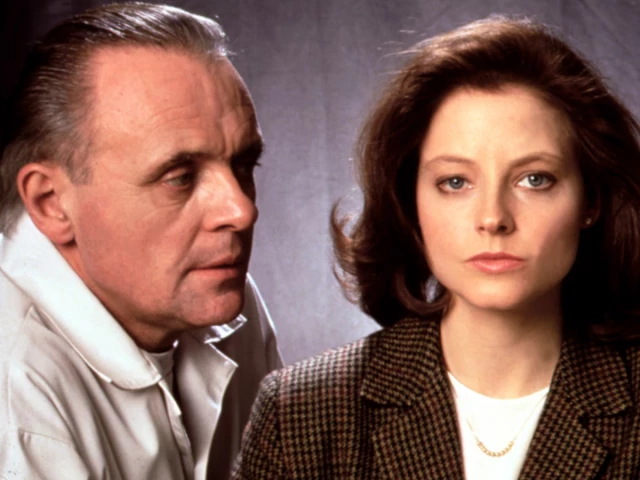
Before Jodie Foster and Anthony Hopkins delivered their Oscar-winning performances in The Silence of the Lambs, the now-iconic roles of Clarice Starling and Hannibal Lecter were nearly played by a very different lineup of Hollywood stars.
Several A-list actors were approached to play the brilliant and terrifying Dr. Hannibal Lecter before Hopkins ultimately secured the role. Sean Connery famously passed on the part, reportedly finding the script too disturbing, while other major names including Al Pacino, Dustin Hoffman, Jeremy Irons and Robert De Niro were also considered at various stages but did not take on the role.
The journey to cast Clarice Starling followed a similar path. Several high-profile actresses were approached before Foster, with Michelle Pfeiffer and Meg Ryan among those who ultimately turned it down, reportedly due to the film’s dark and unsettling subject matter.
Those decisions opened the door for Foster, who brought emotional depth and resilience to Clarice, and for Hopkins, whose chilling portrayal of Lecter became one of the most memorable villains in cinema history. Under the direction of Jonathan Demme, the film went on to become a cultural phenomenon.
Upon its release in 1991, The Silence of the Lambs swept the Academy Awards’ top five categories, Best Picture, Best Director, Best Actor, Best Actress and Best Adapted Screenplay, cementing its place as one of the most acclaimed films of all time.
Decades later, the film’s casting “what ifs” remain a fascinating piece of Hollywood lore, underscoring how a series of rejections ultimately led to one of the most perfect on-screen pairings ever and two career-defining performances that continue to shape the legacies of Foster and Hopkins.




This material may not be published, broadcast, rewritten, redistributed or derived from. Unless otherwise stated, all content is copyrighted © 2026 The Express Tribune.



COMMENTS
Comments are moderated and generally will be posted if they are on-topic and not abusive.
For more information, please see our Comments FAQ