Forces kill terrorists' ringleader in Bannu
Updated 7 hours ago

Economists, policymakers call for structural reforms to reset Pakistan's economy
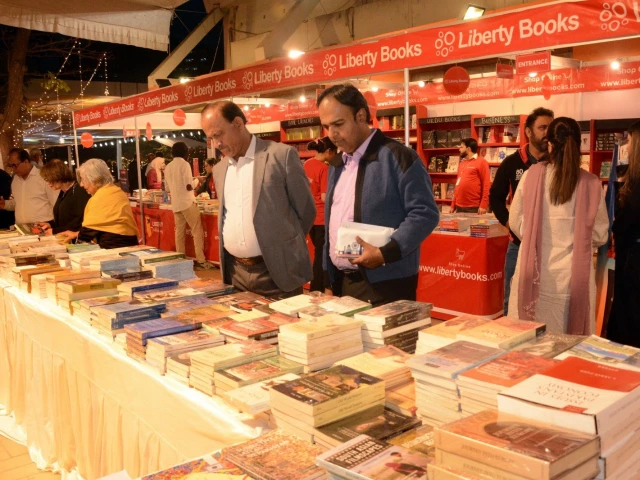
The second day of the 17th Karachi Literature Festival (KLF) 2026 drew packed sessions and animated debate as leading policymakers, economists, and business leaders called for deep structural reforms, policy continuity, and institutional strength to revive Pakistan's struggling economy.
Held under the theme "Literature in a Fragile World" at a luxury hotel, the festival's second day featured high-profile discussions on economic reform, governance, and institutional development, attracting a large and engaged audience.
Speaking at the session "Fixing the Fundamentals: Pakistan's Economic Reset," Minister of State for Privatisation Muhammad Ali said Pakistan's economic problems cannot be solved through short-term strategies alone. He stressed that sustainable growth requires comprehensive structural reforms, full documentation of the economy, and a functional tax system. He said the government should not be running businesses and attributed high electricity and gas prices to excessive state involvement. He also emphasised boosting exports, increasing women's workforce participation, empowering local governments, and addressing regional disparities.
Former Minister for Investment Azfar Ahsan stressed the need for honesty and consistency, saying economic growth is impossible without continuity in policies.
Former Federal Minister Miftah Ismail described Pakistan as being trapped in economic stagnation, citing terrorism, unchecked population growth, weak productivity, and governance failures as key obstacles. He called for reforms in the NFC Award, reduction in government expenditures, privatisation of power and gas distribution companies, and stronger local governments.
He said creating smaller provinces would be meaningless without effective local governance and warned that development would remain elusive without eliminating terrorism.
Former Finance Minister Asad Umar said Pakistan's export base remains weak because the country is not producing what global markets demand. He emphasised the need for competitiveness, reduced uncertainty, and effective democratic systems, adding that curbing government influence across sectors is more important than privatisation alone.







This material may not be published, broadcast, rewritten, redistributed or derived from. Unless otherwise stated, all content is copyrighted © 2026 The Express Tribune.



COMMENTS
Comments are moderated and generally will be posted if they are on-topic and not abusive.
For more information, please see our Comments FAQ